

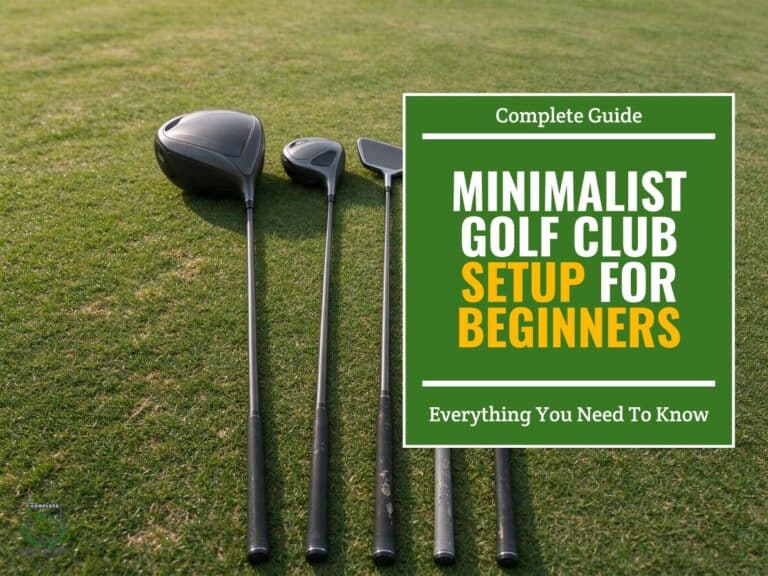
A minimalist golf club setup for beginners covers every shot you need with 5 to 7 clubs, not the full 14. You play better when you carry fewer clubs, learn them faster, and spend less upfront.
Start with a driver, one fairway wood or hybrid, a 7-iron, a pitching wedge or sand wedge, and a putter. Add a 9-iron and a gap wedge as you build a 7-club set. Game-improvement irons with larger heads and wider soles help you get the ball airborne.
Below you will find step-by-step guidance on building your set, sample 5-, 7-, and 9-club lineups, and advice on buying complete sets versus individual clubs on a budget.
- 1) Clubs Needed to Cover Every Shot Type
- 2) Step-by-Step: Building a Minimalist Set
- 3) Sample 5-, 7-, and 9-Club Setups
- 4) Complete Set or Individual Clubs
- 5) Choosing Budget and Used Clubs
- 6) Common Mistakes to Avoid
-
7)
Frequently Asked Questions
- 7.1) How Many Clubs Does a Beginner Need to Play Golf?
- 7.2) Do Minimalist Golf Club Setups Work for Beginners?
- 7.3) What Clubs Should a Beginner Include in a Minimalist Set?
- 7.4) Should a Beginner Buy a Complete Set or Individual Clubs?
- 7.5) What Are Effective 5-, 7-, or 9-Club Setups for Beginners?
- 7.6) Which Clubs Are Easiest for Beginners to Use?
- 7.7) How Much Should a Beginner Spend, and Is Used Okay?
- 8) Final Thoughts
Clubs Needed to Cover Every Shot Type

A minimalist golf club setup for beginners works because you only need clubs that cover the shots you actually hit. Most beginners do well with 8–10 clubs, not the full 14. You can play a complete round with far fewer if you choose them carefully.
Tee Shots and Long Shots
You start most holes with a tee shot, so a driver belongs in your bag. The driver has the largest head and longest shaft, and it launches the ball highest for maximum distance off the tee.
For long shots from the fairway, you have two options. A fairway wood is a wood with a smaller head than the driver, built for distance from the ground.
A hybrid combines features of woods and irons: it has a wood-like head shape but plays more like an iron, making it easier to hit solid contact. Either one fills the gap between your driver and your irons.
Approach Shots and Iron Play
Approach shots carry the ball toward the green from 100 to 200 yards out. This is where game-improvement irons earn their place.
These irons are designed for beginners and mid-to-high handicappers. They use larger heads, perimeter weighting, and wider soles, which move weight to the edges and sole to help you get the ball airborne on off-center hits.
A practical beginner iron selection runs from a 6-iron through a 9-iron. This range covers most approach distances without forcing you to carry clubs you cannot hit consistently. Adding a pitching wedge gives you a club for shorter approach shots and controlled chips around the green.
Short Game and Putting Coverage
Your short game covers chips, pitches, and bunker shots within roughly 50 yards of the green. A pitching wedge or sand wedge handles these shots. The sand wedge has more bounce on the sole, which helps the club slide through sand instead of digging in.
Every hole ends on the green, so a putter is non-negotiable. The putter has a flat face and a short shaft, and it rolls the ball along the surface toward the hole.
A minimalist bag that covers every shot type needs: a driver, one fairway wood or hybrid, irons from 6 through 9, a pitching wedge, and a putter. That is seven clubs. Add a sand wedge and you reach eight, which sits in the 8–10 club range most beginners play well with.
For more on where beginners go wrong with their bag composition, see our guide on too many irons, too few wedges. Curious how a hybrid differs from a fairway wood? Read what a hybrid golf club is.
Step-by-Step: Building a Minimalist Set
A minimalist golf club setup for beginners works because you play better with fewer choices. Carrying 14 clubs forces you to decide between similar options mid-round. Five to seven clubs remove that friction and let you focus on swing execution.
Step 1: Cover Each Shot Type
Every set must handle four jobs: tee shots, long shots from the fairway, approach shots toward the green, and putting. Your clubs need to cover driving, distance, accuracy into greens, chipping and pitching, and rolling the ball on the green.
A typical beginner-friendly build uses a driver, fairway wood, hybrid, 6-iron through 9-iron, a wedge, and a putter. Most beginners do well with 8 to 10 clubs, not the full 14 allowed in competition.
A fairway wood is a club with a larger head than irons, designed to hit the ball from the fairway with distance and a higher trajectory. A hybrid combines features of woods and irons: it has a wood-like head shape but plays more like a long iron, making it easier to hit from various lies.
A pitching wedge is the shortest iron in a typical set, built for approach shots and short chips around the green. Game-improvement irons are designed for beginners and mid-to-high handicappers; they often use larger heads, perimeter weighting, and wider soles to help you get the ball airborne.
If you want to understand each club's role before you buy, our golf club types and uses guide breaks down every option.
Step 2: Pick Forgiving Clubs
Forgiveness matters more than distance when you are learning. Game-improvement irons give you larger sweet spots and wider soles that resist digging into the turf. Look for cavity-back designs with weight pushed to the perimeter. These features reduce the penalty for off-center hits.
For your long clubs, a hybrid often outperforms a long iron for beginners. The hybrid's design launches the ball higher with less effort. If you struggle with a 4-iron or 5-iron, replace them with a hybrid or a higher-lofted fairway wood.
Step 3: Build Around Common Shots
Most of your strokes happen in predictable places: the tee box, the fairway at distance, the approach zone, and around the green. Build your set so each zone has a reliable club. Your driver covers tee shots.
A fairway wood or hybrid handles long fairway lies. Your mid-irons cover approach shots from 100 to 200 yards out.
A wedge handles chips, pitches, and bunker shots. Your putter finishes every hole.
Start with the shots you hit most often. If you rarely reach par-5 greens in two, you may not need a 3-wood. If you play courses with tight fairways, a driver plus hybrid may serve you better than driver plus fairway wood.
Step 4: Add Clubs Only When Gaps Appear
Play with your minimal set until you notice a distance gap you cannot solve with a different swing. If you consistently land 20 yards short of the green with your longest iron and cannot reach with your hybrid, that is a real gap. Add one club to close it, then play several rounds before adding another.
Resist filling your bag because a complete set came with 14 clubs. Extra clubs add weight, slow down your decision-making, and rarely improve scores for beginners. A lean set keeps you moving and thinking clearly from the first tee to the final putt.
Sample 5-, 7-, and 9-Club Setups

A minimalist golf club setup for beginners starts with shot coverage. You need clubs for tee shots, long shots into the green, approach shots from 100 to 200 yards, short game around the green, and putting.
The more clubs you carry, the more decisions you face mid-round. Trimming your bag forces you to commit to the shots you hit well.
Building a 9-Club Setup
Nine clubs give you the widest coverage and match what most beginners actually need. Most beginners do well with 8 to 10 clubs, not the full 14. A 9-club build uses every category without overlap:
- Driver for tee shots on long holes
- Fairway wood for long shots from the fairway or rough. A fairway wood has a smaller head than a driver and sits flat on the ground.
- Hybrid for easier long shots. A hybrid combines an iron-like head with a wood-like shape, making it more forgiving than a long iron.
- 6-iron through 9-iron for mid-range approach shots. Game-improvement irons help here. They use larger heads, perimeter weighting, and wider soles to launch the ball higher and straighter on off-center hits.
- Pitching wedge for short approach shots and chips. The pitching wedge has the most loft in a standard iron set.
- Putter for rolling the ball on the green
This setup covers every shot type and leaves room to grow. If you buy a complete set, it usually includes a driver, fairway wood, hybrid, irons, wedges, a putter, and a golf bag. You can also pick individual clubs to match your gaps.
Trimming Toward a 7-Club Setup
Dropping to seven clubs is a trimming exercise. The exact composition varies by player, but the goal is the same: remove clubs that duplicate distance or that you rarely hit well. A practical approach removes one iron and either the fairway wood or hybrid, keeping the club you trust more off the tee and from the fairway.
Start with your 9-club build. Identify the two clubs you hit least often or that produce similar distances to neighbors. Remove those. You now carry seven clubs with no major gaps in coverage.
Considering a 5-Club Setup
Five clubs is the most aggressive minimalist build. It works if you are new to the game, playing short courses, or still developing consistent distances. There is no single verified 5-club lineup, so build conservatively:
- Driver or hybrid for tee shots
- One middle iron, such as a 7-iron, for most approach shots
- A pitching wedge or sand wedge for short shots
- A putter
This leaves one slot open. Add a fairway wood if you struggle with driver accuracy, or a second wedge if you play firm greens. Five clubs force you to shape shots and pick targets carefully.
Most beginners find this too limiting for full 18-hole rounds, but it works for practice, par-3 courses, or your first few rounds. For your first time on the course, see our minimal setup for round one.
The right number depends on how often you play and how consistent your distances are. Start with nine, trim as you learn your game, and add back only when a gap costs you strokes.
Complete Set or Individual Clubs
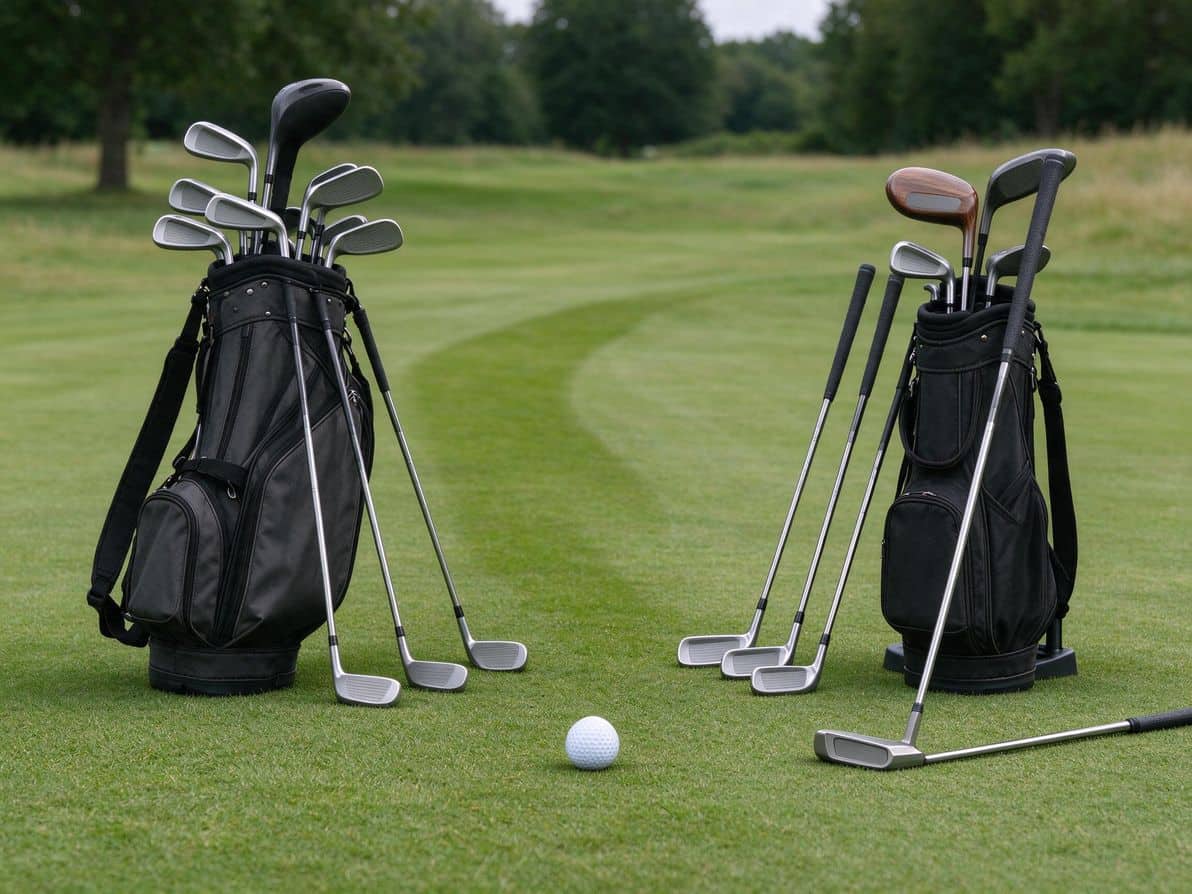
You have two paths to build your minimalist golf club setup for beginners: buy a complete set off the shelf, or select each club yourself. Each route has trade-offs worth weighing before you spend money.
What a Complete Set Usually Includes
A complete set gives you everything in one purchase. Most packages include a driver, a fairway wood, a hybrid, a set of irons, one or two wedges, a putter, and a golf bag to carry them.
This covers every shot type you need: tee shots with the driver, long fairway shots with the wood or hybrid, approach shots with the irons, short game work with the wedges, and putting on the green.
Complete sets work well for beginners who want to start playing immediately without researching individual clubs. The clubs are matched to work together, and the bag keeps everything organized. You trade some customization for convenience, since you cannot swap out a club you dislike or add a specific wedge later without buying separately.
When to Choose Clubs Individually
Buying clubs one at a time lets you follow the gap logic from the step-by-step build. You pick exactly the clubs that fill the distances you actually hit, and you skip anything redundant.
This approach suits you if you already know your typical shot distances, or if you want to upgrade one club at a time as your game improves.
Individual selection also lets you prioritize quality where it matters most. You might spend more on a putter you use on every hole, and save on a fairway wood you rarely hit. The trade-off is time: you need to research each club, and mismatched clubs can feel inconsistent until you complete the set.
Start with the core five clubs: driver, hybrid or fairway wood, 7-iron, pitching wedge, and putter. Add a 9-iron and a sand wedge once you can hit the core five consistently. This path builds your set around your actual game rather than a factory template.
Choosing Budget and Used Clubs
Starter Club Budget Considerations
You do not need to spend heavily to build a playable minimalist set. A complete beginner set costs less than piecing together premium individual clubs, and it covers every shot type you need on the course.
Complete sets usually include a driver, fairway wood, hybrid, irons, wedges, a putter, and a golf bag, so you get full coverage in one purchase.
Individual clubs give you more control over forgiveness and feel, but they cost more per club and require you to fill gaps yourself. If you buy individually, prioritize game-improvement irons with larger heads, perimeter weighting, and wider soles. These design features help you get the ball airborne and reduce the penalty on mishits.
Set a budget ceiling before you shop. Decide whether you want new clubs with warranty coverage or used clubs at a lower price point, then stick to that decision.
Buying Used Clubs Safely
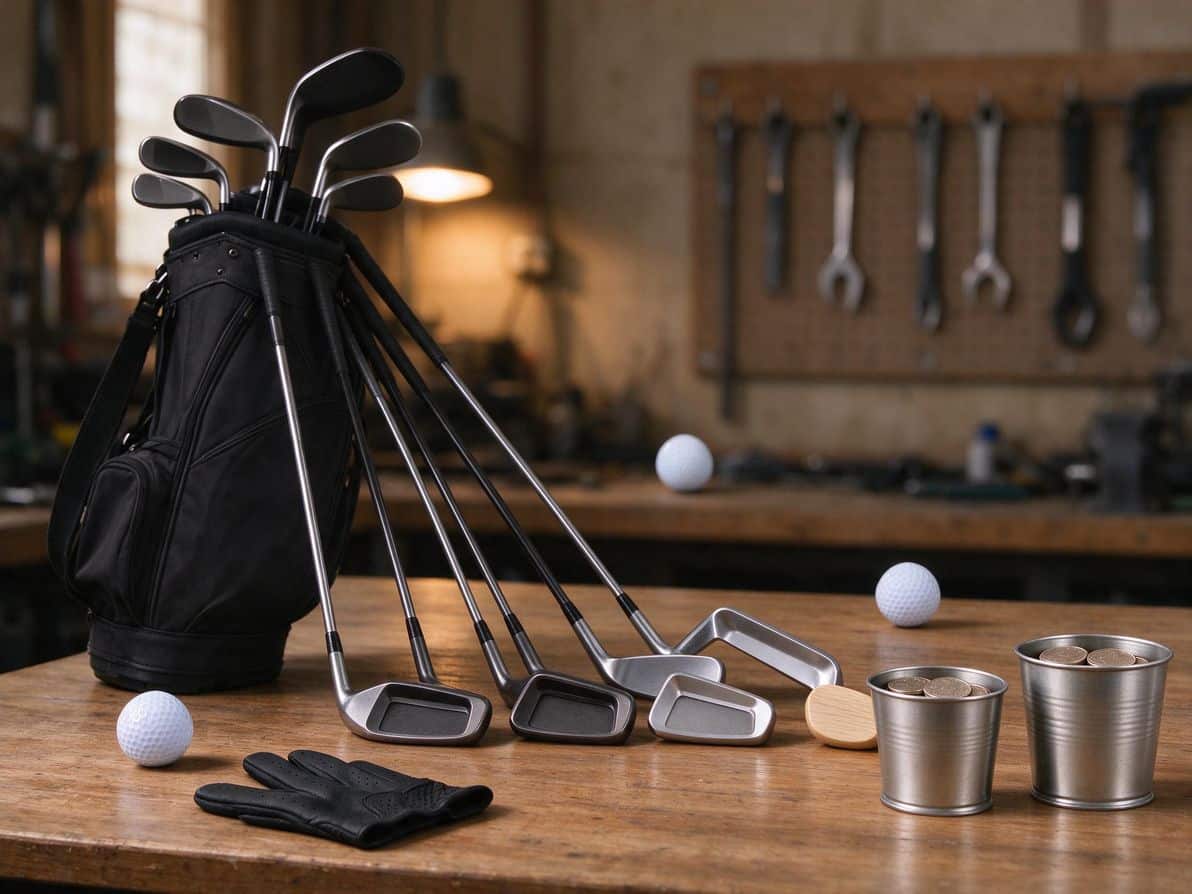
Used clubs cut your startup cost, but they carry risk. Inspect every club before you buy, whether you meet a seller in person or purchase online.
Check these points on any used club:
- Grip condition. Worn or hardened grips reduce control and should be replaced.
- Shaft integrity. Look for dents, rust, or bends along the shaft. Steel shafts rust; graphite shafts can crack near the head.
- Clubface wear. Grooves on irons and wedges wear down over time. Worn grooves reduce spin and consistency.
- Head condition. Check for cracks, deep dents, or sole damage that affects how the club sits on the turf.
Buy from sellers who accept returns. Avoid listings with no photos of the actual club, vague descriptions, or prices that look too low for the model. If you are unsure about a club's condition, ask the seller for close-up photos of the face, sole, and shaft.
For a deeper walkthrough of safe online buying, read our guide on buying used golf clubs safely.
Used game-improvement irons from recent years often perform close to new models at half the price. Focus on clubs with clean faces and intact grooves, and you will save money without sacrificing playability.
Common Mistakes to Avoid
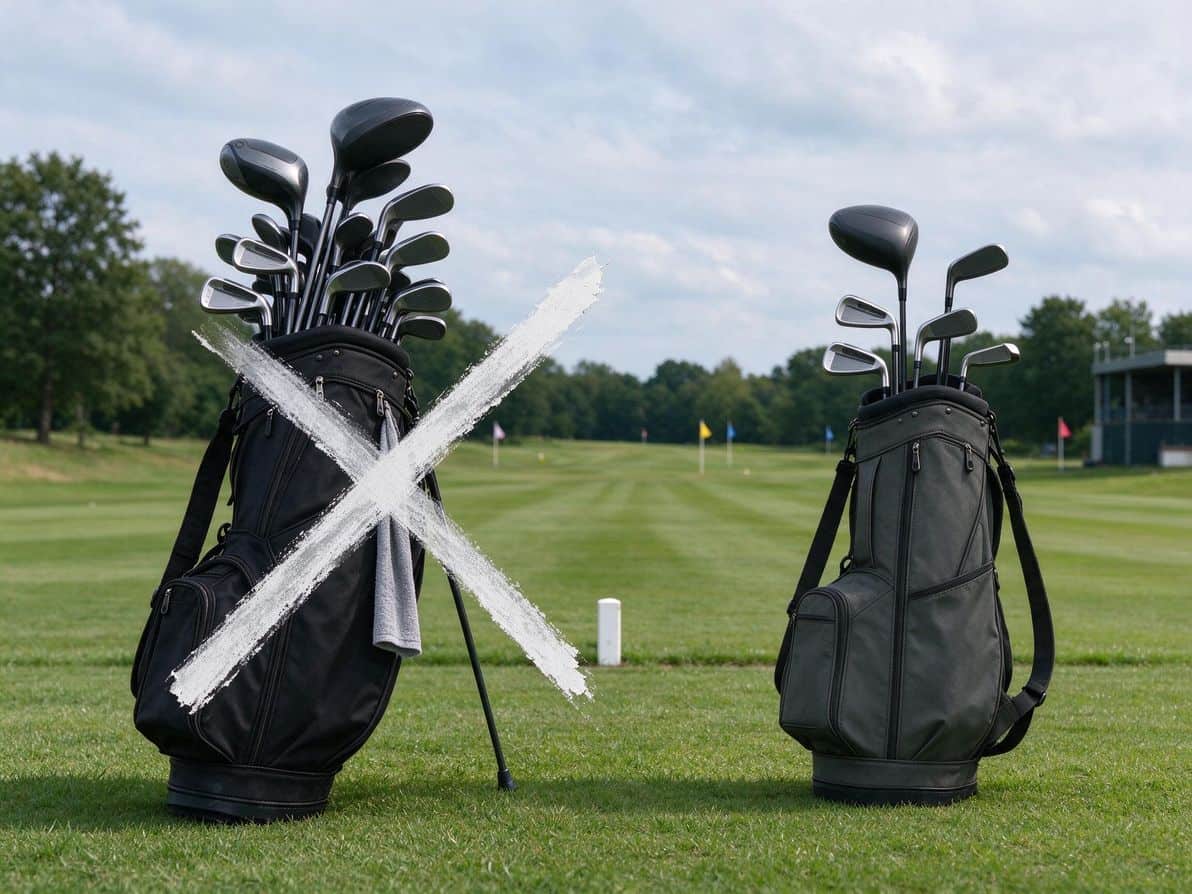
Starting your golf journey with the right mindset saves money and frustration. Four mistakes trip up many beginners before they ever hit their first shot.
Buying a Full 14-Club Bag Too Soon
You do not need 14 clubs to play your best golf. Most beginners do well with 8 to 10 clubs, and a minimalist setup works with 5 to 7.
Carrying a full bag forces you to choose between similar clubs mid-round, which slows play and muddies decisions. Start small, learn what shots you actually hit, then fill gaps as your game develops.
Skipping Putting and Short-Game Coverage
Some new golfers load up on long clubs and forget the ones that score. Your putter and wedges handle the shots that save strokes: putts on the green and chips around it. A bag without a putter or any wedge leaves you stranded near the hole.
Every minimalist setup needs at least one wedge and a putter. These clubs cover your short game, and your short game is where rounds are won and lost.
Choosing Long Irons Over Easier Options
Long irons, like the 3-iron and 4-iron, demand clean contact and swing speed that most beginners lack. A typical iron set runs from a 4-iron to a pitching wedge, but you do not need the whole range to start.
Game-improvement irons offer larger heads, perimeter weighting, and wider soles, which help you get the ball airborne. A hybrid or a fairway wood often replaces long irons and delivers more consistent results from the same distances.
Overbuilding the Bag Early
Adding clubs feels like progress, but it often works against you. Extra clubs mean extra weight to carry and extra choices to make on every shot. The better path is to start with the clubs that cover your actual shots, play them until you know your distances, then add one club at a time to close a real gap.
This approach also keeps costs down and connects to a broader lesson about overspending on gear that catches many new golfers. Build your bag around need, not the number 14.
Frequently Asked Questions
How Many Clubs Does a Beginner Need to Play Golf?
Most beginners do well with 8–10 clubs, not the full 14. A minimalist setup of 5–7 clubs covers every shot type you need: tee shots, long shots, approach shots, short game, and putting. Fewer clubs mean fewer decisions on the course.
Do Minimalist Golf Club Setups Work for Beginners?
Yes. Carrying 14 clubs forces you to decide between similar options mid-round, which slows play and adds confusion. A minimalist setup removes that friction.
You still cover driver, fairway wood or hybrid, irons, a wedge, and a putter, so you can play a full round without gaps in your bag.
What Clubs Should a Beginner Include in a Minimalist Set?
Start with a driver, one fairway wood or hybrid, a 7-iron, a pitching wedge or sand wedge, and a putter. If you want more coverage, add a 9-iron and a 6-iron.
A fairway wood is a club designed for long shots from the fairway. A hybrid combines features of woods and irons for easier launch. A pitching wedge is a short iron used for approach shots and chips around the green.
Should a Beginner Buy a Complete Set or Individual Clubs?
Complete sets usually include a driver, fairway wood, hybrid, irons, wedges, a putter, and a golf bag, which gives you everything in one purchase. Individual clubs let you build a set around the gap logic above.
If budget is tight, a complete set is the simpler path. If you want a leaner bag, buy individual clubs as your game develops.
What Are Effective 5-, 7-, or 9-Club Setups for Beginners?
A 9-club build can follow the category list: driver, fairway wood, hybrid, 6-iron through 9-iron, a wedge, and a putter. A 7-club setup is a common minimalist starting point, though the exact composition varies by player.
Trim a 9-club set by removing clubs you rarely use, such as the 6-iron or hybrid. A 5-club setup is the leanest option: driver, one wood or hybrid, a mid-iron, a wedge, and a putter. The fewer clubs you carry, the more you rely on creative shots with the clubs you have.
Which Clubs Are Easiest for Beginners to Use?
Game-improvement irons are designed for beginners and mid-to-high handicappers. They use larger heads, perimeter weighting, and wider soles to help the ball launch higher and straighter.
Hybrids are easier to hit than long irons because they sit flatter on the ground and launch the ball more consistently. A putter with a mallet head offers more stability than a blade putter for most new players.
How Much Should a Beginner Spend, and Is Used Okay?
Pricing varies widely by brand, model, and condition, so set your budget based on how often you plan to play. Used clubs are a practical option for beginners.
A used game-improvement iron or hybrid from a recent model year performs nearly as well as new at a lower cost. Focus on forgiving designs rather than the newest releases. Check our used golf club guide for tips on what to look for when buying pre-owned.
Final Thoughts
A minimalist golf club setup gives you a clear path to the course without the confusion of a full 14-club bag. Start with five clubs: a driver for the tee, one fairway wood or hybrid for longer approach shots, a 7-iron for mid-range work, a pitching or sand wedge around the green, and a putter.
This covers every shot type you will face as a beginner. If you want more options, add a 9-iron and a second wedge to build a seven-club bag. Nine clubs is the upper limit you need before you understand your own distances and gaps.
Your next step is simple. Pick one setup from the sample builds in this guide and take it to the range. Hit each club and note how far the ball travels.
This tells you which gaps matter and which clubs you actually use. Buy a complete set only if it matches a minimalist build and fits your budget; otherwise, buy individual clubs, new or used, to fill your exact needs.
Avoid the trap of buying everything at once. A lean bag forces better decisions and builds confidence faster. You can always add clubs later once you know your game. Start small, play more, and let your scores tell you what to buy next.