

Shaft flex and launch fit for beginners comes down to matching how much the shaft bends to your swing speed and tempo. The right flex helps you launch the ball higher, hit it straighter, and gain distance. The wrong flex costs you both.
Shaft flex describes how much the shaft bends during your swing. It affects launch angle, spin, accuracy, distance, and feel. Slower swing speeds pair better with more flexible shafts, while faster speeds need stiffer shafts. Clubhead speed, tempo, and release point all factor into finding your fit.
You will learn how to spot a shaft that is too stiff or too flexible, how to test options before you buy, and which mistakes beginners make most often.
What Shaft Flex Does to Launch and Distance

Shaft flex is how much the shaft bends during your swing. That bend influences five things: launch angle, spin, accuracy, distance, and feel. Getting the flex right starts with understanding what each of those actually does to your shots.
How Flex Affects Launch and Spin
A shaft that bends at the right time helps the clubhead deliver the face squarely at impact. When the flex matches your swing, the ball launches higher with a spin rate that keeps it in the air longer. A too-stiff shaft resists bending, so the clubhead arrives at impact in a position that delofts the face.
You see lower launch, lower spin, and shots that fall short of where they should. If you want to understand how launch angle shapes your overall ball flight, our guide on launch angle explained breaks down the numbers and what they mean for your carry.
How Flex Affects Distance and Accuracy
Distance comes from efficient energy transfer. A shaft with the right flex stores and releases energy in sync with your swing, so more of your speed reaches the ball. A too-stiff shaft fights that transfer.
Your shots lose carry, and because the face does not square as consistently, accuracy suffers too. You end up with a double cost: shorter shots that also miss the target.
A shaft that is too soft for your speed can go the other way. The clubhead twists more through impact, and your dispersion widens even if the ball still flies far.
How Feel Changes With Flex
Feel is the feedback you get through your hands at impact. A shaft that is too stiff feels boardy and harsh, and you lose the sense of where the clubhead is during the swing. A shaft with more flex feels smoother and gives you a clearer sense of timing.
For beginners, that smoother feel often builds confidence, which leads to a more consistent swing. The goal is a stable, repeatable feel without feeling dead, so you can repeat the same motion shot after shot.
Matching Flex to Your Swing Speed and Tempo

Slower swing speeds generally perform better with more flexible shafts, while faster speeds usually need stiffer shafts. That relationship is the starting point for finding a flex that works for your game. This section walks you through measuring your speed, using a flex chart, accounting for tempo, and making a final call when the numbers sit on a boundary.
Measure Your Driver Clubhead Speed
Your driver clubhead speed is the first number you need. Use a launch monitor or a dedicated speed-measuring device to get it. Swing your driver normally, not at maximum effort, and take several swings to find a consistent reading.
Write the number down. This measurement, not how the club feels in your hands, is what you compare against flex guidance.
Use a Flex Chart as a Starting Point
Once you have your clubhead speed, compare it against a shaft flex chart. These charts match speed ranges to flex options: regular, stiff, senior, and others. Treat the chart as a starting point, not a final answer. Your speed places you in a flex neighborhood, and the next steps help you narrow it down.
Why Tempo and Release Point Matter
Clubhead speed is not the only fitting factor. Your tempo, how smoothly you transition from backswing to downswing, and your release point, when you unhinge your wrists through impact, also shape the right flex. A smooth, deliberate tempo often pairs well with a slightly more flexible shaft than raw speed alone suggests.
An aggressive, quick release may need more stiffness to stay controlled. Two golfers with the same clubhead speed can need different flexes because of these differences.
What to Do When Speed Falls Between Flexes
If your measured speed lands near the boundary between two flexes, compare both options directly. Hit clubs with neighboring flexes side by side. Pay attention to launch angle, spin rate, shot shape, distance, and dispersion.
The flex that produces a higher, more consistent ball flight with tighter grouping is the better fit, regardless of which side of the chart line your speed falls on. Testing beats guessing. If you are still unsure, a fitting session gives you structured data to decide.
A related factor worth understanding is your driver shaft length guide, since length and flex interact to affect how the club feels and performs through the swing.
Signs Your Shaft Is Too Stiff or Too Flexible
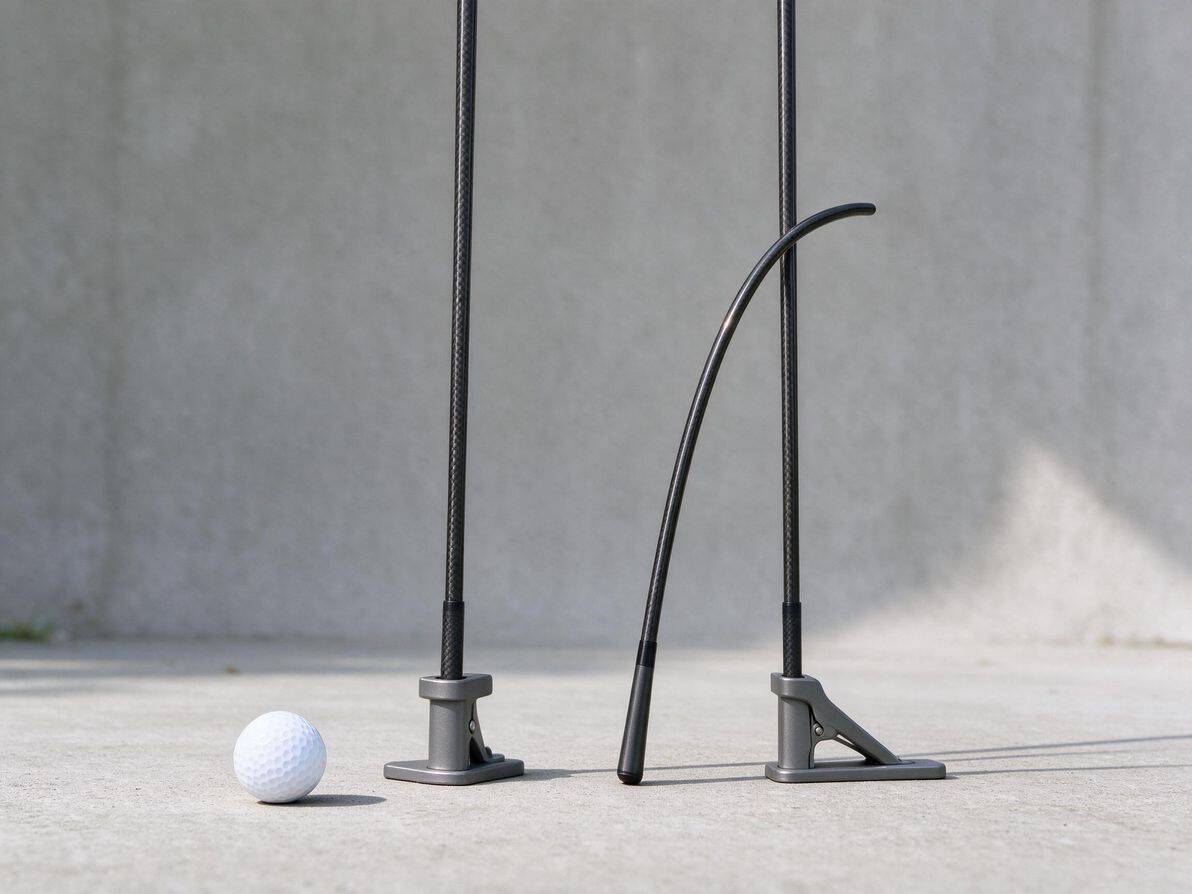
Your shaft flex is working when your shots launch at a usable height, land where you expect, and feel solid at impact. When it is not working, the symptoms show up in your ball flight and your contact quality. Recognizing these signs helps you decide whether to change shafts or adjust your fitting approach.
Signs a Shaft Is Too Stiff
A shaft that resists bending for your swing speed produces a distinct set of symptoms. You will notice them in the air and on the ground.
- Low ball flight. The ball stays below the height you need to carry hazards and hold greens.
- Reduced carry distance. Shots fall short of where they should land, even with a well-struck swing.
- Poor accuracy. The face does not square at impact, and shots drift offline more than your swing explains.
- Thin, harsh contact. Impact feels sharp and unsatisfying, with less feedback about where you hit the face.
These are symptoms to check, not a diagnosis. A low shot can come from other swing faults, so confirm the pattern across several shots before blaming the shaft.
Signs a Shaft Is Too Flexible
A shaft that bends too much for your speed creates its own problems, especially if you swing aggressively.
- Uncontrolled whip. The shaft bends and releases at a timing you cannot predict, and the clubhead arrives at impact inconsistently.
- Wider dispersion. Shots spray left and right because the face angle changes through the release.
- Late release feel. You sense the clubhead lagging behind your hands, which reduces solid contact.
- Loss of distance control. Some shots fly, others fall short, and you cannot repeat a number.
If you have a smooth tempo and moderate speed, a softer shaft may feel fine. The problems appear when your speed outruns the shaft's ability to stabilize. Test with your actual swing, not a range estimate.
Use these signs as a checklist during your next range session or fitting. Match what you see to your swing speed and tempo, and treat any change as a test, not a permanent fix.
How to Test Shafts Before You Buy
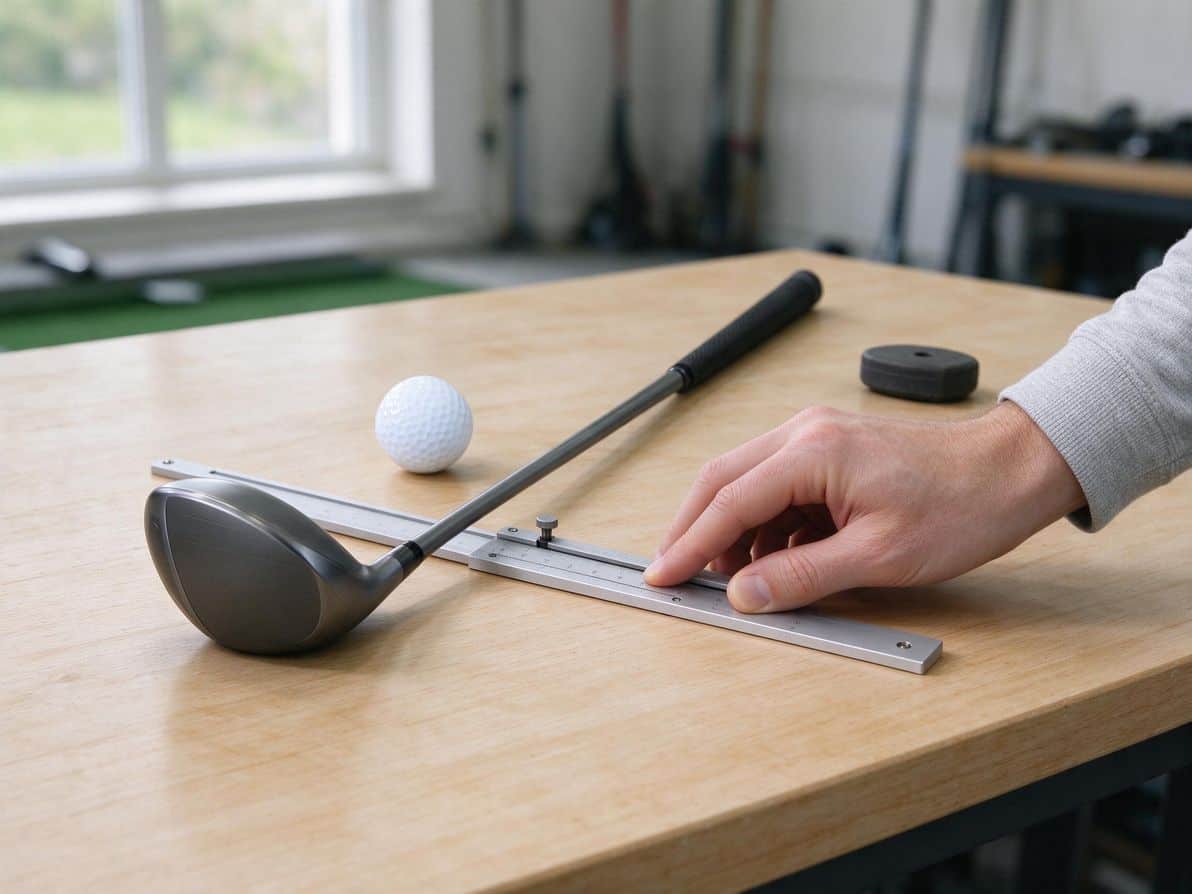
Testing before you buy saves money and frustration. You can check shaft fit yourself, or get help from a professional. Either way, judge the results by what the ball does, not by what the label says.
Tools and Materials You Will Need
Gather these before you start:
- A launch monitor or speed-measuring device to capture clubhead speed and ball flight data
- Several clubs with different test shafts, or access to a fitting cart with multiple flex options
- A range or open area where you can hit full shots and see ball flight
- A notebook to record launch angle, spin rate, shot shape, distance, and how each shaft feels
If you want deeper data, a launch monitor gives you the numbers. Many golf shops and fitting studios have them on site, and our guide to launch monitors for testing shots covers what to look for in a unit.
Judge Test Shots by Launch and Shot Shape
Hit at least five to ten shots with each shaft. Watch for these five things:
- Launch angle: Is the ball getting airborne at a usable height?
- Spin rate: Is the ball spinning too much or too little for your swing?
- Shot shape: Are shots drawing, fading, or going straight?
- Distance: How far does the ball carry, and how consistent is it?
- Dispersion: How wide is the spread from left to right?
A shaft that fits will launch the ball at a good height, keep spin in a playable range, and produce a tighter dispersion. If shots stay low and fall short, the shaft may be too stiff. If the ball balloons or scatters for an aggressive swing, it may be too flexible.
Get Fitted at a Fitting Session
A fitting session pairs you with a professional who measures your swing and matches you to a shaft. Bring your current clubs so the fitter can compare them against the test options. Ask for data on clubhead speed, tempo, and release point, since all three affect flex fit.
Many shops offer basic fittings at no charge when you buy. Independent fitters often charge a fee but provide a wider selection of test shafts. Either way, you leave with a recommendation based on your actual swing, not a guess.
Before you commit to a purchase, confirm the specs that matter to you. If you are comparing used options, check our guide on specs to check before buying used clubs to avoid surprises.
Testing takes time, but it is the only way to know how a shaft performs for your swing. Use the data, trust the ball flight, and buy with confidence.
Common Shaft Flex Mistakes Beginners Make
Getting your shaft flex wrong is one of the easiest ways to lose distance and accuracy without knowing why. These four mistakes come up constantly with new golfers, and each one pushes you toward a shaft that fights your swing instead of helping it.
Choosing Flex by Brand Label Alone
Flex labels are not consistent across manufacturers. A Regular flex from one brand can play stiffer or softer than a Regular flex from another. The letter on the shaft is a starting point, not a guarantee.
Two shafts with the same printed flex can bend differently because of how each maker builds the shaft. Treat the label as a rough guide and verify with actual testing or measurement before you commit.
Ignoring Tempo and Release Point
Swing speed matters, but it is not the whole picture. Tempo and release point change how the shaft loads and unloads through impact. A golfer with a smooth, deliberate tempo may need a different flex than a golfer with the same speed but an aggressive, quick transition.
If you only look at speed numbers, you can end up with a shaft that feels wrong even when the flex chart says it matches. Both factors belong in the fitting conversation.
Using One Flex for Every Club
Your driver, irons, and wedges do not swing the same way. Drivers are longer and built for speed, while irons are shorter and demand control. Assuming one flex works everywhere is a common error.
A flex that launches your driver well can feel dead in a mid-iron, and a flex that feels solid in irons can balloon your driver's spin. Test flex across club types rather than applying a single choice everywhere.
Blaming the Club for Low Launch
When shots stay low and carry falls short, the clubhead often gets the blame. But a too-stiff shaft is a frequent cause of low launch, reduced distance, and poor accuracy.
The shaft cannot bend enough to help the ball get airborne, so the shot comes out flat and loses carry. Before you replace the clubhead, check whether the shaft flex is the real problem.
A softer shaft may fix the launch without changing anything else. If you are building your first bag, a starter club setup for round one can help you avoid buying mismatched flexes from the start, and reading about beginner gear regrets shows how shaft mistakes fit into bigger buying errors.
Avoiding these mistakes saves you from buying the wrong shaft, then buying again. Measure, test, and adjust before you settle on a flex.
Frequently Asked Questions
How can a beginner choose the right shaft flex?
Start by measuring your driver clubhead speed with a launch monitor or a dedicated speed-measuring device. Compare that number against a flex chart to find your starting range, then test neighboring flexes if you sit near a boundary. Tempo and release point matter too, so treat speed as a starting point rather than the whole answer.
How does shaft flex affect launch, distance, and accuracy?
Shaft flex is how much the shaft bends during your swing, and that bend shapes launch angle, spin, accuracy, distance, and feel. A shaft that is too stiff can send shots low with reduced carry and worse accuracy. The right flex helps you launch the ball at a usable height, keep shots straighter, and gain distance.
How do swing speed and tempo help determine flex?
Slower swing speeds generally work better with more flexible shafts, while faster speeds usually need stiffer shafts. Tempo and release point add context beyond raw speed, so a smooth swinger and an aggressive swinger with the same clubhead speed may need different flexes.
What are signs that a shaft is too stiff or too flexible?
A shaft that is too stiff tends to produce low shots, reduced carry, and poor accuracy. A shaft that is too flexible can create uncontrolled whip and wider dispersion, especially for aggressive swingers. Treat these as symptoms to check during testing, not final diagnoses.
Should beginners get fit or test shafts before buying?
Yes. Testing with a launch monitor, a speed-measuring device, clubs with test shafts, or a fitting session gives you real data. Judge launch angle, spin rate, shot shape, distance, and dispersion rather than relying on labels alone. Your shaft is working when shots launch at a usable height, land where you expect, and feel solid at impact.
Final Thoughts
Finding the right shaft flex is one of the highest-impact changes you can make to your ball flight. A shaft that matches your swing speed and tempo helps you launch the ball higher, keep shots straighter, and add distance you already have but cannot access.
The wrong flex does the opposite: it costs you carry, spreads your dispersion, and makes solid contact harder to repeat.
Start with an honest measurement of your swing speed. A launch monitor or dedicated speed device gives you a number to work from, not a guess. Then pay attention to your tempo and how early or late you release the club.
Two players with identical speeds can need different flexes because their timing differs. Test before you commit.
Hit multiple shafts with the same clubhead and compare launch angle, spin, and shot shape side by side. Your best shaft is the one that produces a repeatable flight you can trust under pressure.
Avoid the traps beginners fall into. Do not pick flex by brand label alone, since one company's Regular may play like another's Stiff. Ignore tempo at your peril.
Do not keep fighting a shaft that is too stiff and blame the clubhead for low, weak shots. And do not assume the flex that works in your driver belongs in every club in your bag.
Your next step is simple: get measured, test two or three flex options, and choose the shaft that gives you the highest launch with the tightest dispersion. Do that, and you will hit better shots with the clubs you already own.