

Learning how to fix overlapping golf club distances starts with measuring your actual carry distances and spotting clubs that fly nearly the same yardage. When two clubs land within a few yards of each other, one is wasting a slot in your bag.
You fix the problem by building a distance chart, sorting clubs by carry, and targeting roughly 10 to 15 yards of separation between each one. A launch monitor makes this accurate, but careful range work with several shots per club works too. Once you see the gaps, you adjust loft, swap clubs, or change your bag makeup.
This guide walks through measuring carry distance, building your chart, setting loft spacing, and deciding when hybrids replace long irons. You will also find common gapping mistakes that create overlaps in the first place.
- 1) What Overlapping Distances Look Like
- 2) Measure Carry Distance Accurately
- 3) Build and Sort Your Distance Chart
- 4) Target Gap and Loft Spacing
- 5) Fix the Overlap: Loft, Swap, or Bag Makeup
- 6) Hybrids vs Long Irons for Beginners
- 7) Common Gapping Mistakes to Avoid
- 8) Frequently Asked Questions
- 9) Final Thoughts
What Overlapping Distances Look Like
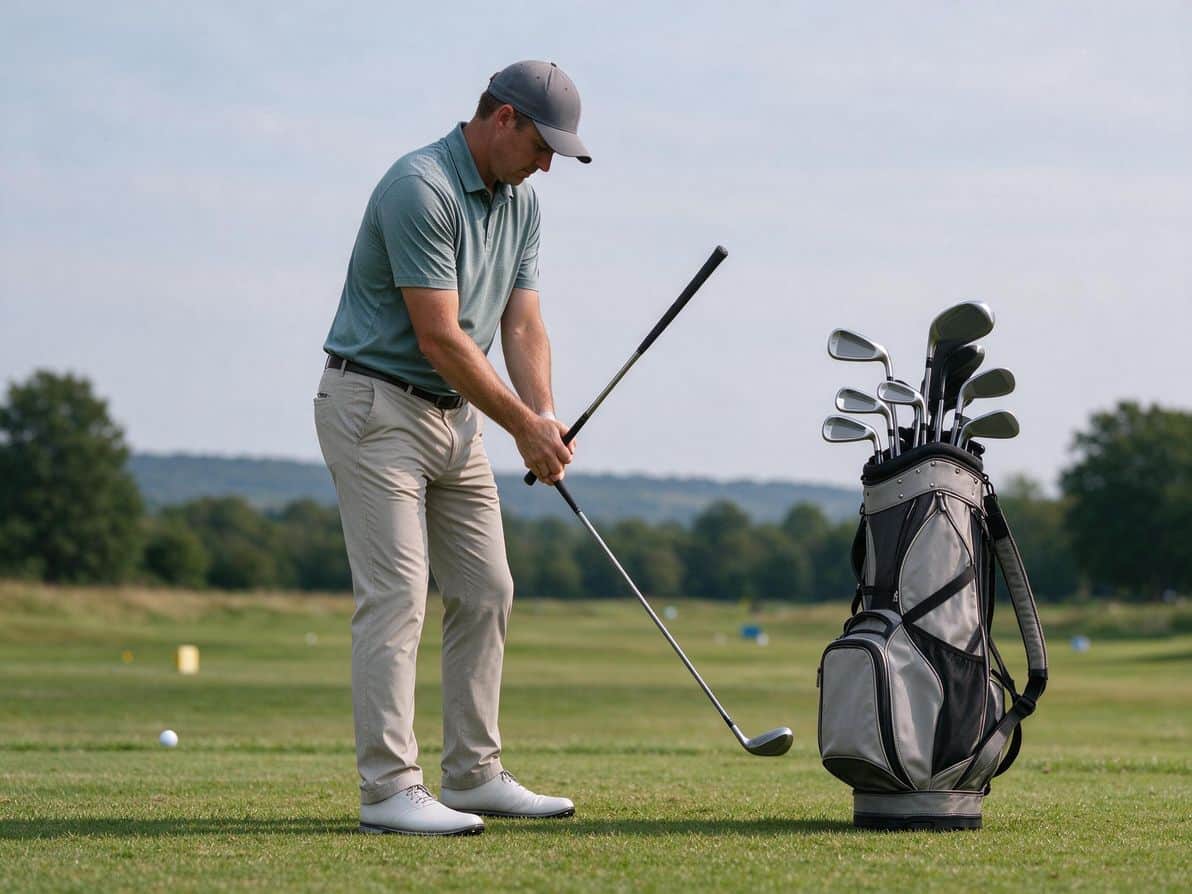
Overlapping distances happen when two clubs in your bag carry the ball nearly the same distance. When that occurs, one club is doing work the other already covers, and you are carrying equipment you do not need. Fixing this starts with recognizing what overlap actually looks like on the course and in your numbers.
Clubs That Carry the Same Distance
Two clubs overlap when their carry distance lands within a few yards of each other. Carry is how far the ball travels through the air before it hits the ground, not counting rollout.
This matters because total distance can hide problems: a club with more rollout might match another club's total even when its carry is shorter, leaving you with a gap on shots that stop quickly.
Watch for these patterns in your bag:
- Your 5-iron and 4-hybrid both carry 165 yards
- Your 9-iron and pitching wedge both carry 125 yards
- Two wedges in your setup produce identical carry numbers
When you find a pair like this, one club can usually be adjusted, replaced, or removed. The goal is gapping: spacing your clubs so each one covers a distinct distance band. Gapping is the spacing of carry distances between clubs, and consistent gapping lets you pick a club with confidence on every approach.
Spotting Overlap in Your Bag
You can spot overlap without any technology. Hit each club in your bag a few times and note where the ball typically lands. Write down the carry for each club, then look for pairs that sit close together on that list.
Overlap shows up in a few predictable places:
- Long irons that match hybrids in carry but launch lower
- Wedges that duplicate each other because lofts are too close
- A fairway wood and driver that produce the same carry on well-struck shots
Sources disagree on what counts as overlap. Some flag any pair under 5 yards apart; others use under 10 yards. Use your own judgment: if you cannot tell two clubs apart on a normal full swing, they overlap for your game.
Once you identify overlapping pairs, you have a clear target. The next step is measuring your carry distances accurately so you can see the real gaps, not guesses.
Measure Carry Distance Accurately

Before you can fix overlapping distances, you need honest numbers for every club in your bag. Carry distance is how far the ball flies through the air before it lands, not how far it rolls across the ground.
Gapping is the spacing between those carry distances from one club to the next. Two clubs with nearly identical carry distances overlap, which means one of them is not earning its spot in your bag.
Hit a Sample of Full Swings
Pick every club you normally swing full, including your driver, fairway woods, hybrids, irons, and wedges. Hit at least five normal full swings with each club. Record the carry distance for every shot.
Do not chase maximum distance on any swing; you want your typical shot, not your best one. A single perfect strike will skew your chart and hide the real overlap.
Remove Obvious Mishits
After you finish hitting, review your numbers and discard clear mishits. A topped 5-iron that carries 80 yards or a shanked wedge that travels 30 yards does not represent how you normally hit that club.
Remove those outliers so your chart reflects your real, repeatable distances. Keep the shots you would expect to hit on the course under normal conditions.
Using a Launch Monitor
A launch monitor is commonly used to measure carry distance and evaluate gapping. It tracks ball speed, launch angle, and spin rate, then calculates exactly where your ball would land. If you have access to one, use it.
You do not need to own a launch monitor to gap your clubs properly, but the numbers it produces remove guesswork. Many driving ranges and fitting studios offer launch monitor sessions.
Carry Versus Total Distance
Measure carry, not total distance. Total distance includes rollout, which varies with ground firmness, slope, and moisture. A ball that carries 150 yards might roll to 165 on a firm fairway or stop at 155 on soft turf.
Carry distance stays consistent from day to day and from course to course. When you build your distance chart, use carry numbers only. This is also why wedge distance-control practice matters: wedges are often used for precise carry distances to a target, and knowing your true carry gaps helps you choose the right club under pressure.
Build and Sort Your Distance Chart
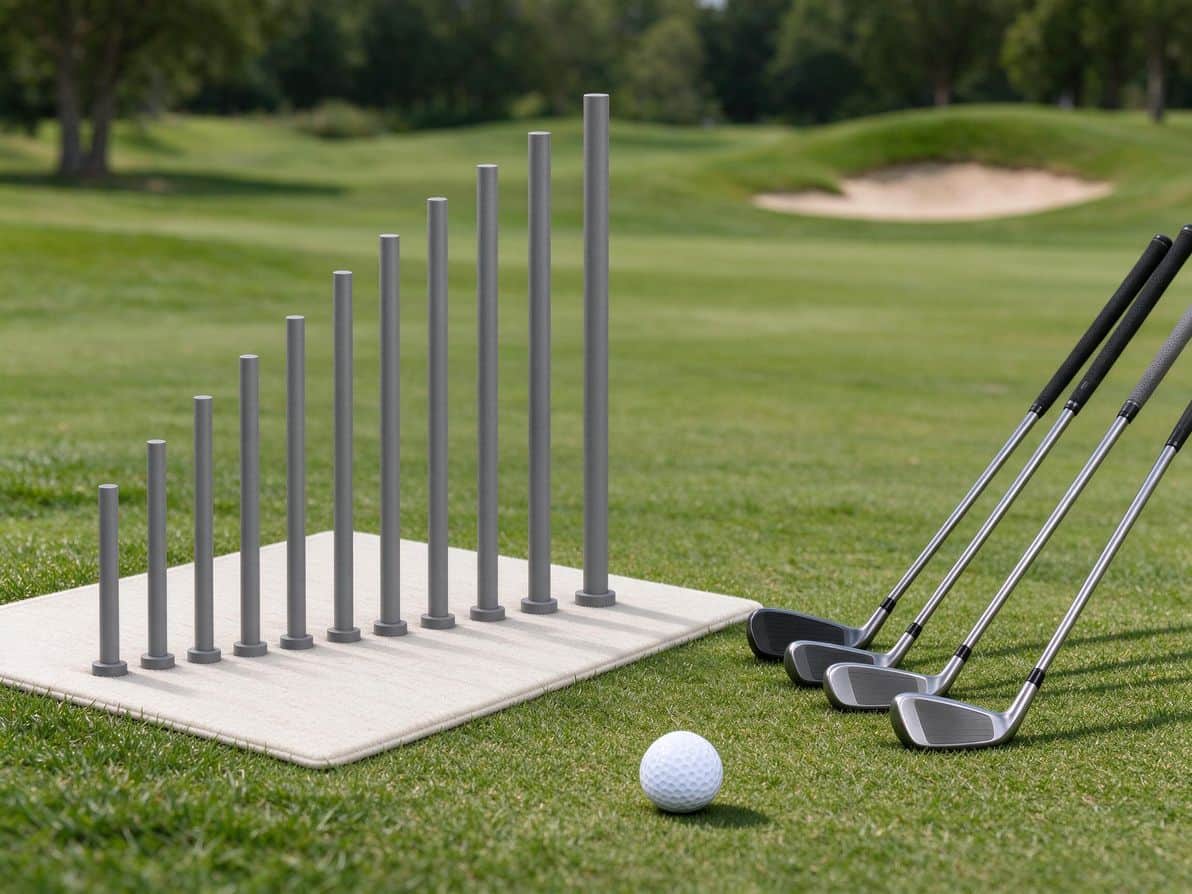
Once you have your carry numbers, the chart turns raw data into a working tool. Sorting and comparing is where overlapping clubs reveal themselves, and where gaps in your coverage become obvious.
Sort Clubs From Longest to Shortest
List every full-swing club you measured, starting with your driver or longest hybrid at the top and working down to your shortest wedge. Put the typical carry distance next to each club name.
This single column gives you the full picture of your bag at a glance. Include your wedges and hybrids in the same list; leaving them out is one of the most common reasons golfers miss problems in their bag.
Find Pairs Only a Few Yards Apart
Look for two clubs whose carry numbers sit close together. Some guidance flags any pair under 5 yards apart as an overlap; other sources use under 10 yards. Judge by your own chart and your own consistency.
If your 5-iron and 4-hybrid both carry 165 yards, you have a duplicate. One of those clubs is taking up a slot you could use for something else. The same applies lower in the bag: if your 9-iron and pitching wedge both carry 125 yards, you are carrying two clubs that do the same job.
Find Gaps With No Club Coverage
Scan the sorted list for jumps where no club covers the distance between two clubs. A 25-yard hole between your 7-iron and your hybrid means you have no reliable option for a shot in that range.
Large gaps force you to swing a club harder or softer than you should, which costs accuracy. Mark these holes clearly so you know where your bag needs another club or a loft adjustment.
A sorted chart takes ten minutes to build and tells you more about your bag than any amount of guessing at the range.
Target Gap and Loft Spacing
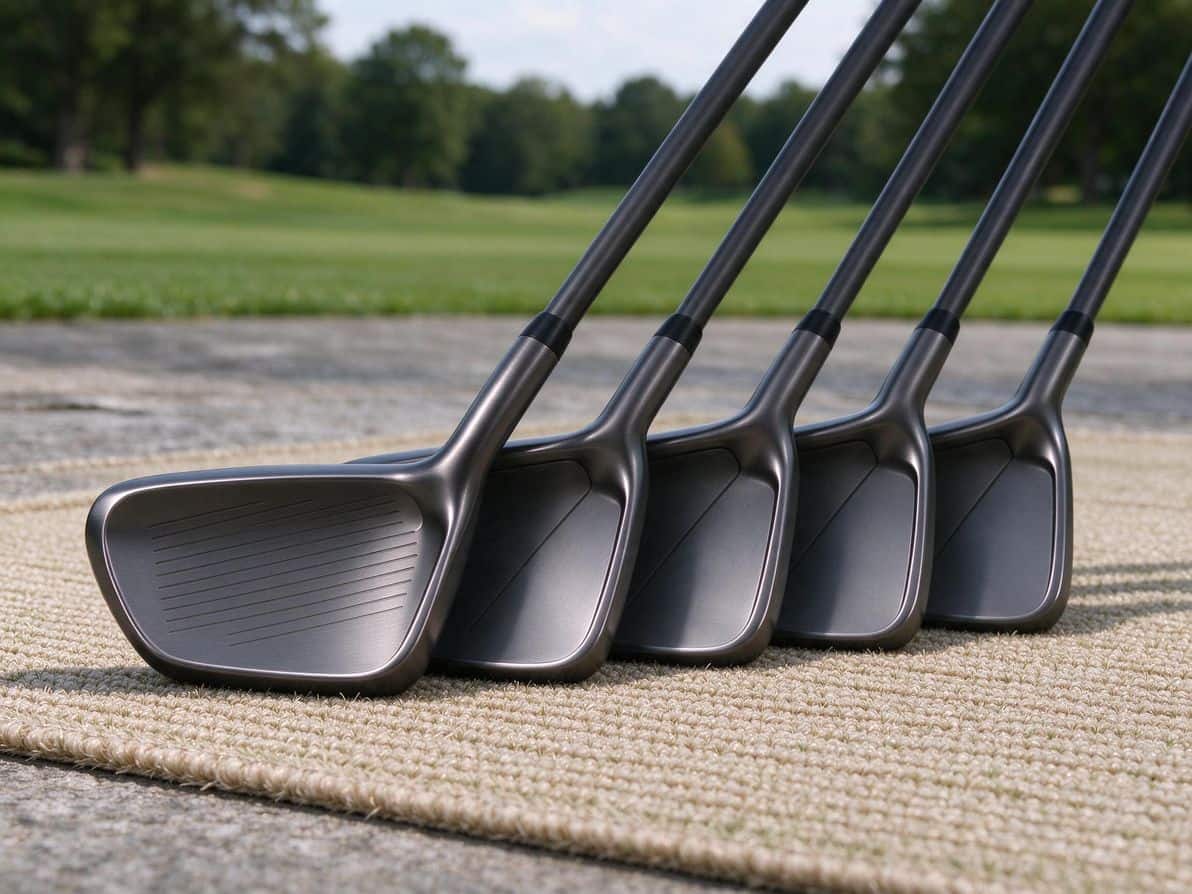
Once you have your distance chart sorted, the next step is setting a target for how far apart your clubs should fly. This is where many golfers get stuck: they know two clubs feel similar, but they are not sure how much separation counts as fixed.
The 10 to 15 Yard Carry Target
A common target for many golfers is roughly 10 to 15 yards of carry separation between clubs. This is not a universal rule. Some players prefer tighter gaps at the top of the bag and wider gaps in the scoring clubs. The point is consistency: each club should have a clear job.
Use your chart to check every adjacent pair. If your 7-iron and 8-iron both carry 145 yards, you have an overlap. If they carry 145 and 158 yards, the gap is reasonable for most amateur swings. Aim for separation you can feel on the course, not just on paper.
Loft Spacing in Wedges and Short Irons
In wedges and short irons, loft is the lever you pull. Some sources recommend 4 to 6 degrees of loft separation in these clubs. That spacing often produces the 10 to 15 yard carry gaps you are targeting.
Check your current setup. If you carry a pitching wedge at 46 degrees and a gap wedge at 50 degrees, that is 4 degrees of separation. If your 9-iron is 42 degrees, you have another 4-degree step.
That pattern usually works. Identical lofts guarantee overlap. If you find two wedges only 2 degrees apart, or a short iron and a wedge with identical loft, the overlap is built in before you swing.
You can adjust loft on some clubs by bending them one or two degrees. This changes launch and spin along with distance. For larger gaps, swapping a club or changing your set makeup is the cleaner fix. Match the loft spacing to your measured carries, not to what the set was sold with.
Fix the Overlap: Loft, Swap, or Bag Makeup
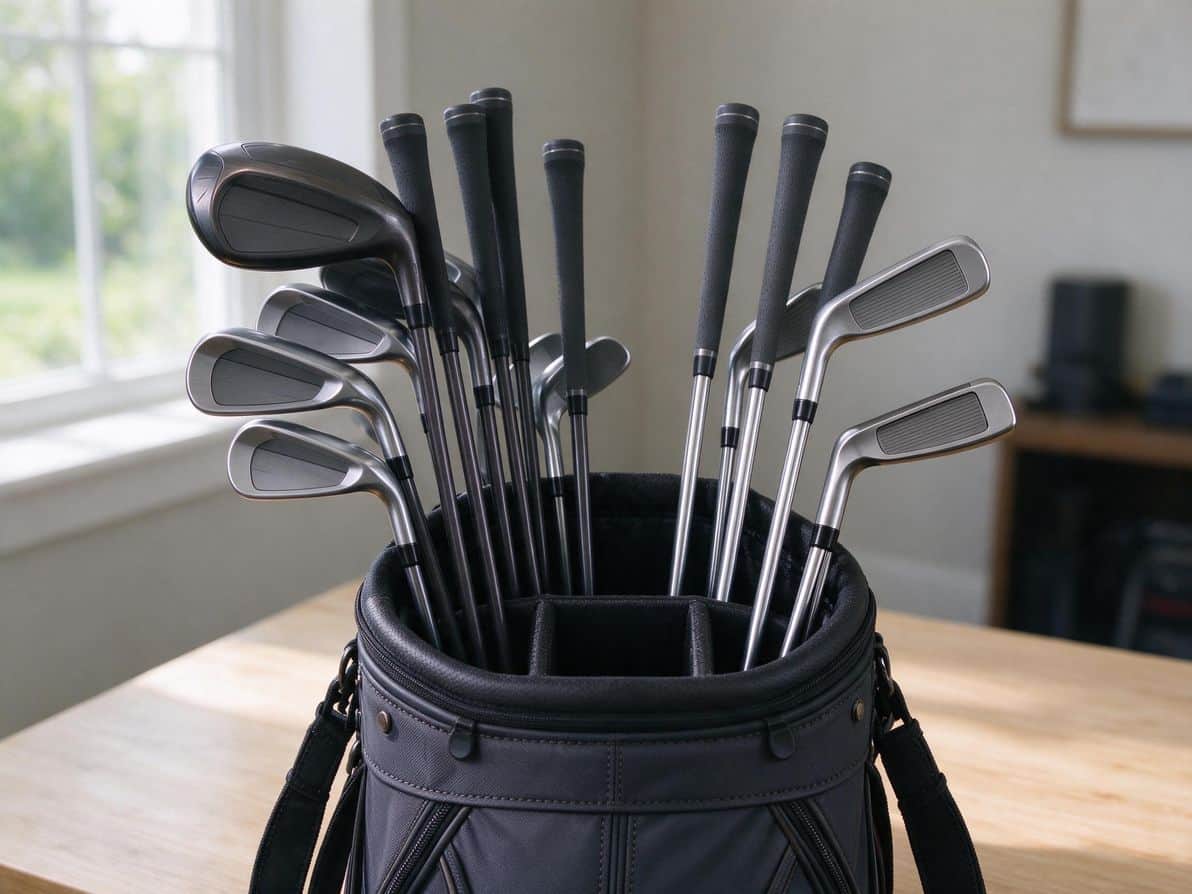
Once your distance chart shows a pair of clubs carrying nearly the same yardage, you have three practical ways to fix it. Start simple before you spend money on new equipment.
Adjust Loft First
Check your strike consistency and actual lofts before you change anything else. A club bent a degree or two stronger or weaker shifts its carry by several yards, which can open a gap that looked closed. Many golfers find that a bent club or worn grooves change distance more than they expect.
If your 7-iron and 8-iron both carry 140 yards, bending the 7-iron weaker by 2 degrees often restores separation. This costs less than a new club and keeps a set you already know.
Swap One Club
If loft adjustment does not work, replace one club in the overlapping pair. Your 5-iron and 4-hybrid might both carry 165 yards, but one of them duplicates the other. Keep the club you hit more consistently and swap the other for something that fills the gap above or below.
A 3-hybrid or a stronger-lofted driving iron often fits where a long iron and hybrid overlap. Match the replacement to your typical miss: if you struggle with long irons, a hybrid usually launches higher and lands softer.
Change Your Bag Makeup
Sometimes the overlap comes from carrying too many similar clubs. Four wedges with 4-degree spacing can crowd your short game, while two hybrids plus a 5-iron leave no room for a reliable 150-yard option. Rebuild your bag around your actual gaps.
Drop one club from the crowded area, then add a club that covers your largest hole. A common setup pairs a driver, 3-wood or hybrid, 5-iron through pitching wedge, and three wedges with even loft spacing. Your bag makeup should reflect the distances you actually hit, not a template from a tour pro.
Test any change with the same measurement process you used to find the overlap. Hit several shots with the new club, record carry, and confirm the gap now falls in your target range.
Hybrids vs Long Irons for Beginners
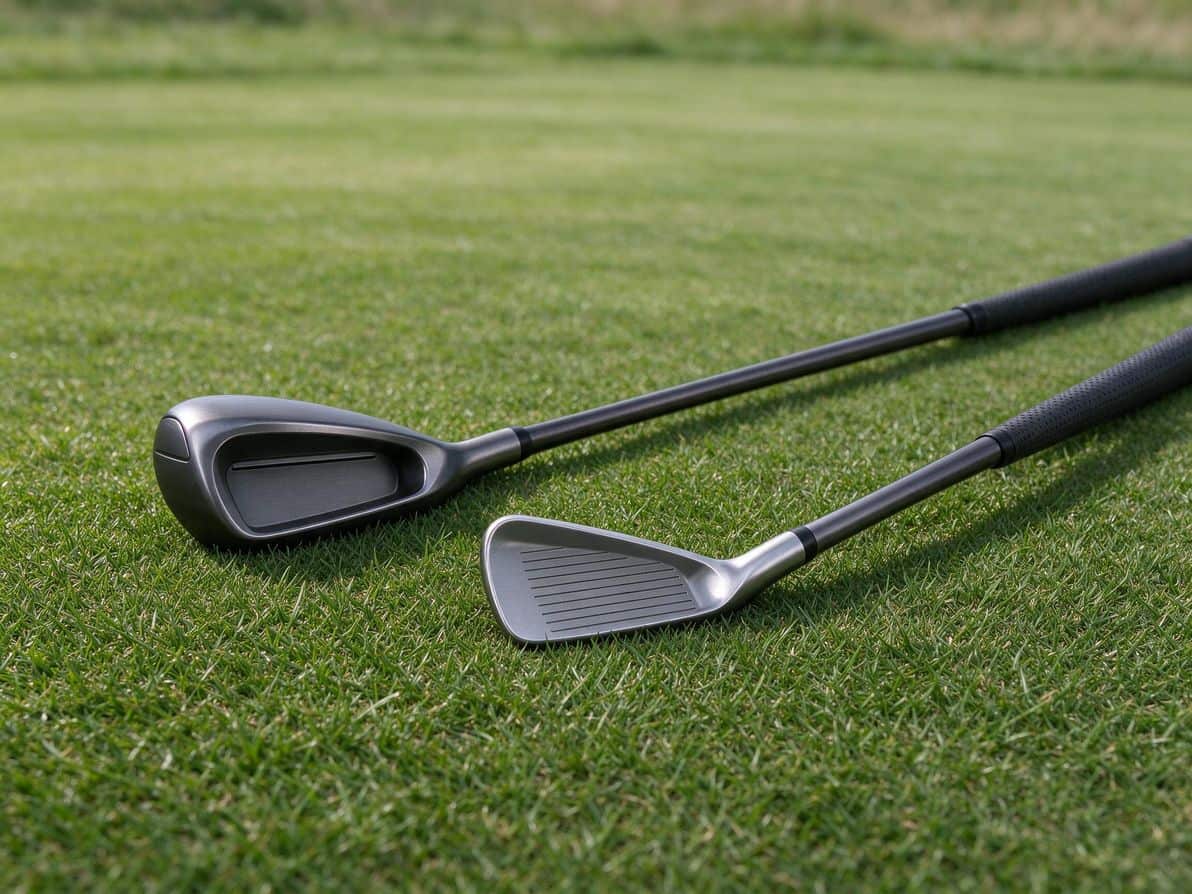
If you are working through overlapping distances in your bag, the long iron versus hybrid decision often sits at the center of the fix. Many beginners carry a 3-iron, 4-iron, or 5-iron they rarely hit well, and that club can crowd the distance chart next to a hybrid or short iron.
The question is not which club type is better in general. It is which one gives you a reliable, well-spaced shot at the distances you actually need.
Why Long Irons Are Hard to Hit
Long irons have less loft and a smaller head than hybrids. That design asks you to hit the ball with a sweeping motion and a centered strike to get it airborne.
For a beginner, that is a demanding combination. A slightly thin or low strike sends a long iron short of its intended carry, which can make two clubs land in the same part of your distance chart.
The result is overlap you did not plan for. Your 5-iron might carry the same distance as your 4-hybrid on a good day, and fall well short on an average day.
When you measure carry across several swings, the long iron often shows more variation than the hybrid beside it. That inconsistency is what turns a theoretical gap into a real one.
When a Hybrid Fills the Gap
A hybrid typically launches the ball higher with more forgiveness on off-center hits. For many beginners, that means more consistent carry distance across a set of swings.
If your distance chart shows your 4-iron and 5-iron bunched together, or your 3-iron matching a hybrid you trust, swapping the long iron for a hybrid can open up the spacing you need.
The goal is not to replace every long iron. The goal is to remove the club that duplicates another and adds little.
If you measure your carry and find a long iron sitting within a few yards of the club above or below it, that club is a candidate for replacement. A hybrid in that slot often gives you a steadier number and a clearer gap.
This is also where bag makeup matters. Carrying too many irons and too few wedges leaves you with crowded long clubs and open gaps near the green. If you are unsure what a hybrid golf club is and how it differs from an iron, that guide breaks down the design and the shots each club is built for.
Before you buy anything, check strike consistency and loft. A long iron that overlaps because you hit it thin is a swing issue, not a bag issue. Measure first, then decide whether a hybrid or a different loft solves the overlap you found.
Common Gapping Mistakes to Avoid
Even a careful gapping session can go sideways if you build your chart on flawed data or change equipment before you understand the root cause. These four mistakes cost you time and money, and they are easy to avoid once you know what to watch for.
Judging Gaps From One Perfect Shot
One pure strike tells you almost nothing about how a club performs for you. You might flush your 7-iron once and watch it carry 160 yards, then build your entire chart around that number. Three weeks later, your average 7-iron carry is 148 yards, and your so-called gap to the 6-iron has vanished.
Hit at least five to ten shots with each club. Record the carry on each shot, then discard obvious mishits: the topped drive that rolls 80 yards, the shanked wedge that travels 30 yards.
What remains is your typical carry, and that is the number your distance chart needs. A single perfect shot is a highlight, not a data point.
Ignoring Wedges and Hybrids
Your distance chart is incomplete if it stops at the 5-iron. Wedges and hybrids fill the gaps where full-swing irons bunch up or leave holes in coverage. Skipping them means you miss the exact overlaps that cause trouble on the course.
Measure every club you swing at full speed, including your pitching wedge, gap wedge, sand wedge, and any hybrids in the bag. Hybrids often overlap with long irons, and wedges frequently duplicate each other if you carry multiple similar lofts.
Include them in your chart, sort them alongside your irons, and flag any pair that lands within a few yards of each other.
Assuming One Yardage Gap Fits Everyone
A 10-yard target works for many golfers, but it is not a universal law. Your swing speed, strike consistency, and the clubs in your bag all shape what gap makes sense for you. A slower swing speed compresses distances between clubs, while a faster, more consistent strike can stretch them out.
Some sources flag any pair under 5 yards apart as an overlap. Others use under 10 yards. Read your own chart and judge by what you see. If two clubs regularly land within 3 yards of each other across multiple sessions, that is an overlap for you, regardless of what a generic threshold says.
Changing Clubs Before Checking Strike
You spot an overlap between your 4-hybrid and 5-iron, and your first instinct is to swap the hybrid for a 3-iron. Before you spend money, check whether your strike is consistent.
If you hit fat shots with one club and thin shots with another, the distance data is unreliable, and a new club will not fix a swing flaw.
Review your strike pattern first. If you consistently hit one club fat, work on our guide to fixing fat golf shots before you change equipment.
Then check the lofts on your clubs; a bent or non-standard loft can create a fake gap or overlap. Check strike before changing clubs. Only after strike and loft are confirmed should you adjust loft on an existing club, swap a club, or change your set makeup.
Fix the cause before you fix the bag.
Frequently Asked Questions
How do I spot clubs that overlap in distance?
You spot overlap when two clubs carry nearly the same distance, so one could be replaced or adjusted. Build a distance chart first: hit several normal full swings with each club, record the carry for each, and discard obvious mishits. Sort the list from longest to shortest.
Flag any pair only a few yards apart. Thresholds differ by source, so judge by your own chart rather than a fixed number.
What carry gap should I aim for between clubs?
A common target for many golfers is roughly 10 to 15 yards of carry separation between clubs. This is not a universal standard. Some sources also recommend 4 to 6 degrees of loft separation in wedge and short-iron setups. Your own swing speed and strike consistency determine what works.
How can a launch monitor help with gapping?
A launch monitor measures carry distance accurately, so you can compare clubs without guessing. It shows the ball flight before rollout, which is the number that matters for gapping. Careful range work with several shots per club and a repeatable setup works too, but a launch monitor removes the guesswork from identifying overlaps.
Should I fix overlaps with loft changes or new clubs?
Check your strike consistency and current lofts before buying anything. If the gap stays inconsistent after that, adjust loft, swap a club, or change your set makeup. Changing clubs is the last step, not the first.
When are long irons better replaced by hybrids?
Long irons are harder to hit consistently than hybrids for many golfers. If you struggle to get a 3-iron or 4-iron airborne with repeatable distance, a hybrid in that slot often fills the gap more reliably. Base the swap on your own distance chart, not on what other players carry.
Final Thoughts
Overlapping distances in your bag cost you strokes. When two clubs fly the same number, you face a choice on every approach, and hesitation leads to poor contact. The fix is simple: measure what each club actually does, then adjust your setup so every club earns its place.
Start with carry distance, not total yardage. Roll and bounce vary wildly by course and conditions, but carry tells you what the club does in the air. Hit at least five solid shots with each club and average the results.
Drop the mishits. One pure 7-iron does not represent your gapping.
Aim for roughly 10 to 15 yards between clubs. Some gaps can be tighter in the scoring irons; longer clubs often spread wider naturally. Check your wedges too. Many golfers gap their irons well and ignore the bottom of the bag, leaving a 20-yard hole between pitching wedge and sand wedge.
If overlap persists, change something. Adjust lofts, swap a club, or rethink your bag makeup. Hybrids often replace long irons for consistent distance; stronger-lofted irons can close gaps at the top. Match the fix to your swing, not to what a tour pro carries.
Your next step is clear. Grab a launch monitor or head to the range with a notebook. Build your chart, sort your clubs by carry, and find the overlaps.
Fix them before your next round. The right gap in your bag removes doubt on every shot, and that confidence shows up on the scorecard.