

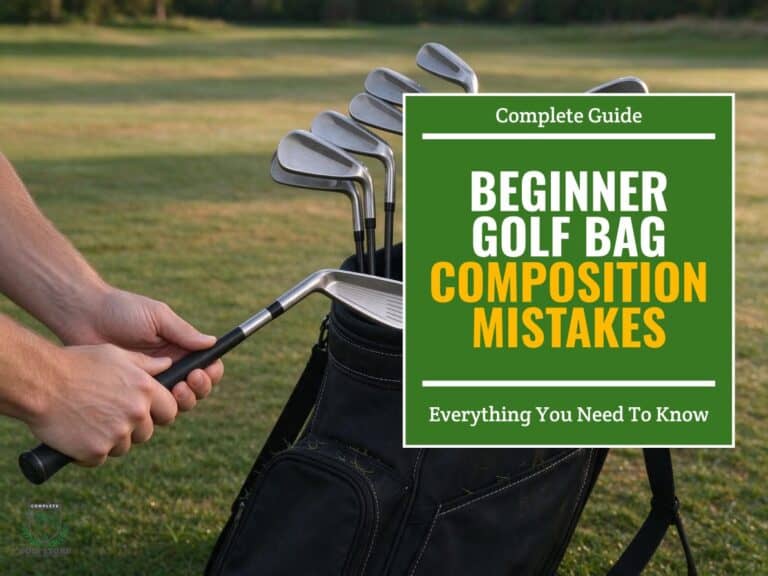
You bought the starter set, grabbed a bag, and headed to the range. By the third hole, your 3-iron had sent three balls into the woods and your only wedge sat uselessly in the pocket. Sound familiar? You're not alone. Most beginners walk onto the course with a bag that works against them, not for them.
The problem is simple: beginner golf bag composition mistakes cost you strokes before you even swing. Too many long irons leave you staring at shots you can't make. Too few wedges leave you helpless around the green. The irons in your boxed set feel like the only option, but they're often the wrong ones for where your game actually is.
This guide fixes that. You'll learn why long irons trip up new players, which clubs belong in your bag instead, and how to build a setup that matches your current skill level. We'll walk through a step-by-step beginner bag composition, flag the most common mistakes, and answer the questions every new golfer asks about wedges and hybrids.
By the end, you'll know exactly what to carry, what to leave at home, and how to avoid the distance gaps that turn par-4s into double bogeys. Your scores will thank you.
Why Long Irons Trip Up Beginners
Less Loft and Longer Shafts
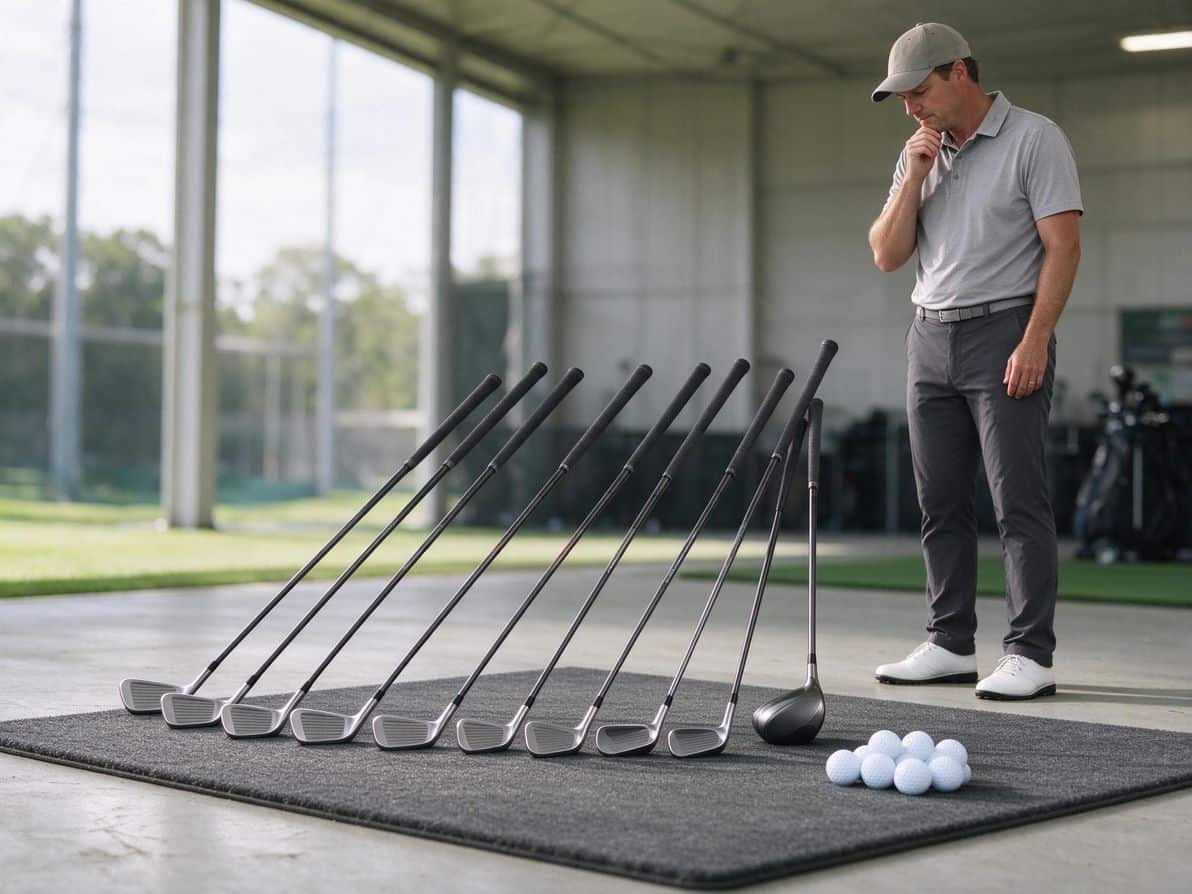
Long irons are harder to hit than they look. A 3- or 4-iron has less loft and a longer shaft than the shorter irons and wedges in your bag. Less loft means the ball launches lower and needs more clubhead speed to get airborne.
A longer shaft demands a more precise swing path to make solid contact. Most beginners do not generate enough consistent speed or strike quality to get value from these clubs. The result is thin shots, low trajectories, and balls that never reach the green.
You end up carrying clubs that punish every swing instead of helping your score.
Why Beginners Switch to Hybrids
Hybrids solve the problem that long irons create. They combine a clubhead shape closer to a fairway wood with the shaft length of an iron. The design launches the ball higher with less effort, and the wider sole helps the club glide through the turf instead of digging in.
You do not need to abandon irons entirely. The shift is about matching clubs to your actual swing. A hybrid in place of your 3- or 4-iron often produces better results on the same swing you already make.
If you are still building consistency, irons for high handicappers are worth a look to see which models forgiveness actually matters for at your stage.
Hybrids can replace anywhere from a 2-iron through a 5-iron, depending on which long irons you struggle to strike and where your distance gaps sit. Start by replacing the longest iron you hit worst, then adjust from there based on what you see on the course.
Tools and Clubs Needed for a Beginner Bag
Your bag carries up to 14 clubs, but you do not need to fill every slot on day one. Most beginners play better with 9 to 12 clubs that match their actual swing. Start with the clubs you can hit consistently, and add more only when you spot a real gap in your distances.
Hybrids and Irons From 5 or 6 Through 9
Long irons trip up beginners because they have less loft and longer shafts than the shorter irons and wedges in your bag. A 3- or 4-iron demands a clean strike you have not built yet.
Hybrids solve this. They launch higher and forgive mishits on the same swing you already make. Carry a hybrid in place of the longest iron you struggle to strike.
Depending on your comfort and distance gaps, hybrids can replace 2-, 3-, 4-, or even 5-irons. Pair that with irons from about 5 or 6 through 9. This range covers most approach shots without forcing you to swing a club that fights back.
If you want a full set of matching clubs, our guide to the best golf clubs for beginners walks through complete starter options.
Pitching Wedge and Sand Wedge
Two wedges earn their spots in every beginner bag. The pitching wedge handles approach shots and chips around the green. The sand wedge gets you out of bunkers and gives you a reliable option for short, high shots.
Learn to hit a pitching wedge before you worry about anything else in this slot. For a step-by-step approach, see how to hit a pitching wedge. Practice your bunker escapes with the sand wedge until they feel automatic.
Hold off on gap or lob wedges until you identify a real distance or scoring need. Adding them too early just crowds your bag with clubs you swing once a round.
Putter
Your putter is the club you use most. It rolls the ball on every green, and it closes out every hole. Pick one that fits your eye and your stroke, then keep it.
A putter you trust under pressure saves strokes no other club can touch.
Build your bag this way, and you avoid the classic beginner error: carrying clubs that punish your swing instead of helping it.
How to Build a Beginner Bag Step by Step
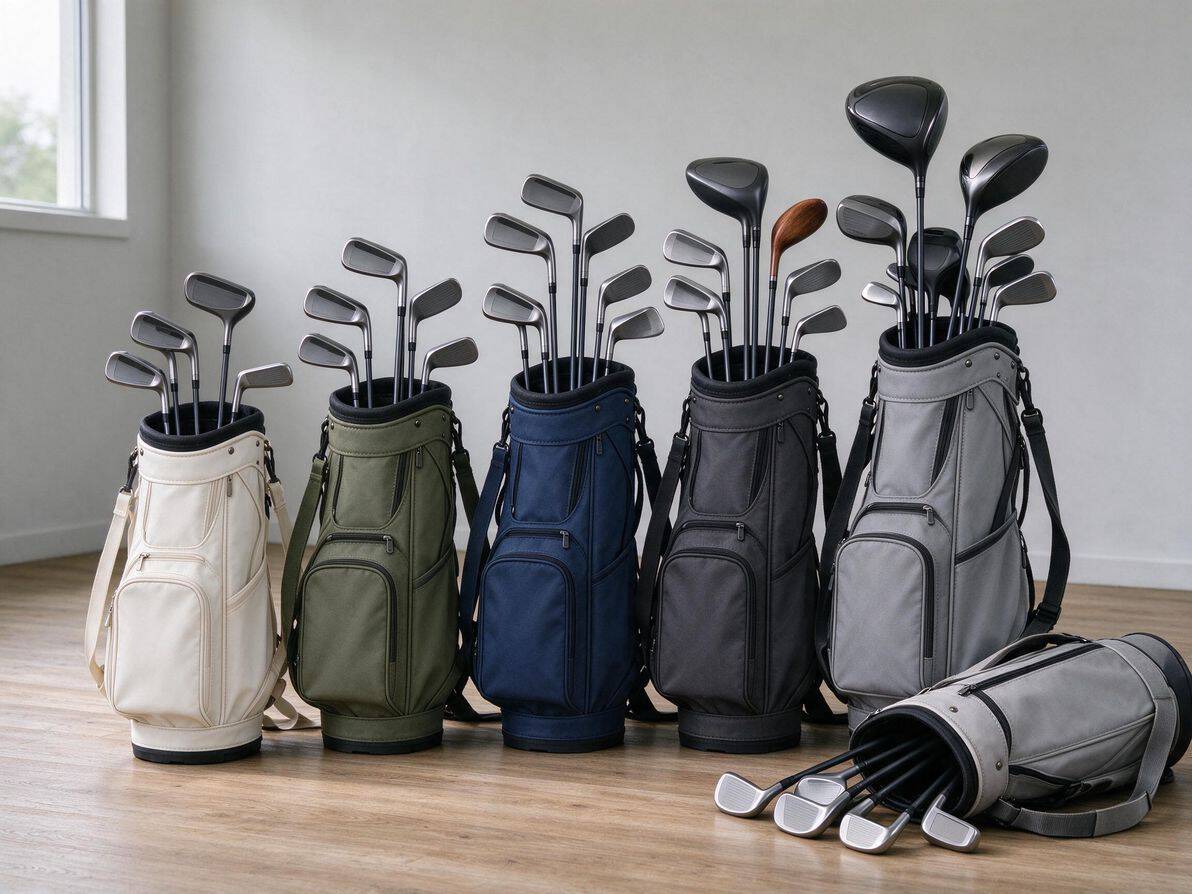
Building a beginner bag that works with your swing comes down to a few deliberate choices. Start with the clubs you can hit consistently, and build out from there.
Start With Easy-to-Hit Clubs
Begin with the clubs that give you the most confidence. For most beginners, that means starting with a driver, a fairway wood or hybrid, and your mid-to-short irons.
A 5-, 6-, or 7-iron is easier to strike than a 3- or 4-iron because it has more loft and a shorter shaft. If you find yourself avoiding a club every round, it does not belong in your bag yet.
Swap Hard Long Irons for Hybrids
Long irons trip up beginners because they combine less loft with longer shafts, which makes solid contact harder to repeat.
A hybrid in place of your 3- or 4-iron often produces better results on the same swing you already make. Hybrids launch the ball higher and are more forgiving on mishits. Depending on your comfort and the distance gaps you see, a hybrid can replace anywhere from a 2-iron through a 5-iron.
Keep a Pitching Wedge and Sand Wedge
Carry both a pitching wedge and a sand wedge. These two clubs cover approach shots and bunker play, two areas where beginners lose strokes fast.
The pitching wedge handles full and partial shots into greens, while the sand wedge gets you out of bunkers with a higher, softer trajectory. Skipping either leaves a gap in your short game. If you want the technique, read how to hit out of the bunker with a sand wedge.
Add Gap or Lob Wedges When Needed
Add a gap wedge or lob wedge only after you identify a real distance or scoring need. A gap wedge fills the space between your pitching wedge and sand wedge.
A lob wedge helps with high, soft shots over hazards or when you need to stop the ball quickly on the green. If you are not consistently reaching the distances where these clubs matter, wait.
Recheck the Bag for Overlapping Distances
Lay your clubs out and check for duplicated distances. Two clubs that fly the ball the same yardage waste a slot.
A beginner bag of 9 to 12 clubs that matches your actual swing plays better than a full 14-club set with gaps and overlaps. If you carry a hybrid that replaces your 4-iron, drop the 4-iron. Keep the bag lean and purposeful.
When you are ready to fine-tune your wedge setup, our guide to wedges for high handicappers covers which lofts and grinds suit developing swings.
Common Beginner Bag Mistakes to Avoid
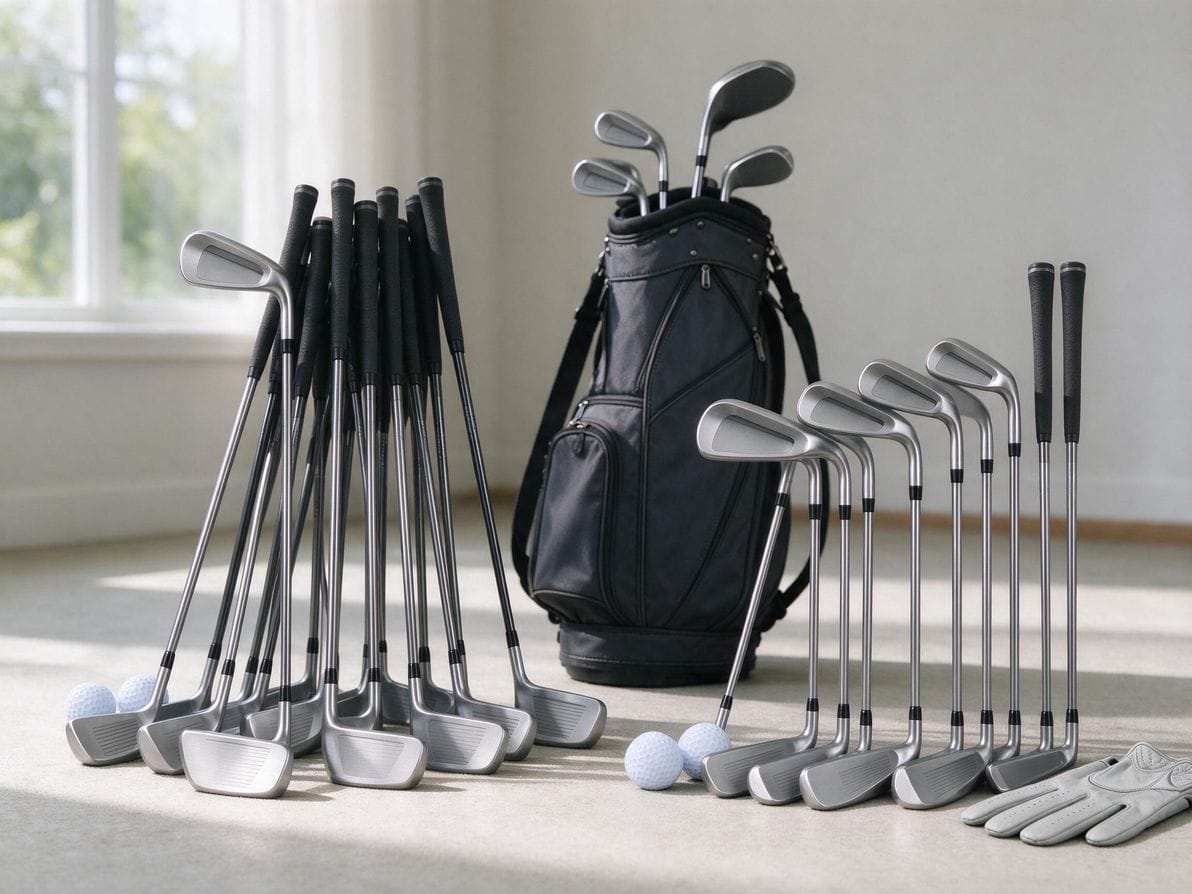
Carrying Long Irons You Cannot Strike
Long irons have less loft and longer shafts than your shorter irons and wedges. That combination makes them harder to hit consistently, especially when you are still building a repeatable swing. Many beginners carry a 3- or 4-iron because it came in a starter set. They watch shots sail low and disappear into trouble.
A hybrid in place of your 3- or 4-iron often produces better results on the same swing you already make. Hybrids launch higher and are easier to strike solidly, which means more greens in regulation and fewer penalty strokes.
Leaving Out the Sand Wedge
Skipping the sand wedge is one of the costliest mistakes you can make. Without a sand wedge, you have no reliable club for bunkers, tight lies, or shots where you need the ball to stop quickly. Your pitching wedge alone cannot cover every short-game situation.
Carry at least a pitching wedge and sand wedge before you add anything else. This pair gives you a foundation for scoring, and you can build on it later.
Adding Specialty Wedges Too Early
Gap wedges and lob wedges have their place, but they are not a starting point. Adding them before you identify a real distance or scoring need creates confusion. They take up slots you could fill with clubs you hit more often.
Wait until you can name the specific gap in your game that a specialty wedge would solve. Until then, your pitching wedge and sand wedge handle most situations around the green.
Building Around Distance Over Forgiveness
It is tempting to load your bag with the longest-hitting clubs you own. Distance matters, but forgiveness matters more when you are learning. A driver you cannot keep in play costs you strokes on nearly every hole.
Prioritize clubs that get the ball airborne and keep it straight, even if they do not carry as far. You can chase distance later, once your contact is consistent.
Keeping Clubs With Overlapping Yardage
Carrying two clubs that fly the same distance wastes a slot and creates decision fatigue on the course. Before each round, check your bag for duplicates. If your 5-iron and your hybrid both travel the same yardage, one of them stays home.
Every club in your bag should earn its place by covering a gap no other club fills.
When you are ready to refine your setup further, read our guide on 5 Beginner Golf Regrets and how to avoid overspending on gear to see how bag mistakes often lead to buying the wrong equipment.
Frequently Asked Questions
How many long irons should a beginner carry?
Carry zero long irons if they give you trouble. A 3- or 4-iron has less loft and a longer shaft than the shorter irons and wedges in your bag, which makes it hard to get the ball airborne. Most beginners play better starting with a 5- or 6-iron as their longest iron.
Which clubs should replace hard-to-hit long irons?
A hybrid is the standard replacement. It launches higher and feels easier to strike on the same swing you already make. Depending on your comfort and distance gaps, a hybrid can stand in for a 2-, 3-, 4-, or even 5-iron.
How many wedges does a beginner really need?
Start with two wedges: a pitching wedge and a sand wedge. Add a gap or lob wedge only after you notice a real distance or scoring need on the course. More wedges help only when you can actually hit them consistently.
What is a simple beginner bag setup?
A workable setup is a driver, one hybrid, irons from about 5 or 6 through 9, a pitching wedge, a sand wedge, and a putter. That gives you 10 clubs. Sources describe beginner bags of about 9 to 12 clubs, well within the 14-club maximum for a full set.
How do you avoid distance gaps in a beginner bag?
Check for duplicated distances before you buy or borrow another club. If two clubs fly the ball the same yardage, one of them is taking up a slot you need. Build your bag from the easiest-to-hit clubs first, then fill gaps only when you can measure them on the course.
Final Thoughts
Your bag setup shapes every round you play. Carry a 3-iron you cannot strike cleanly, and you lose balls, confidence, and strokes before you reach the turn. Leave out a sand wedge, and you stand helpless in bunkers while your score climbs. The fix is straightforward: build around forgiveness, not distance.
Start with the clubs you hit well. A typical beginner bag runs from 5-iron through pitching wedge, with a hybrid filling the gap where a long iron used to sit. Add a sand wedge early; it pays off immediately around the greens. Skip the extra lob wedge and the specialty clubs until your scores drop and your gaps become clear.
Audit your current bag this week. Pull any club you mishit more often than you pure. Note the distance between each club you keep. If two clubs fly the same yardage, one of them is dead weight. Replace it with something that fills an actual hole in your game.
You do not need 14 clubs to play well. Nine to twelve well-chosen clubs beat a full bag of strangers every time. Build slowly, add only what your swing earns, and let your scores tell you what belongs.
The right bag will not fix your swing, but it removes the obstacles that make practice feel like punishment. Choose wisely, carry light, and walk off the 18th knowing your equipment finally works with you, not against you.