


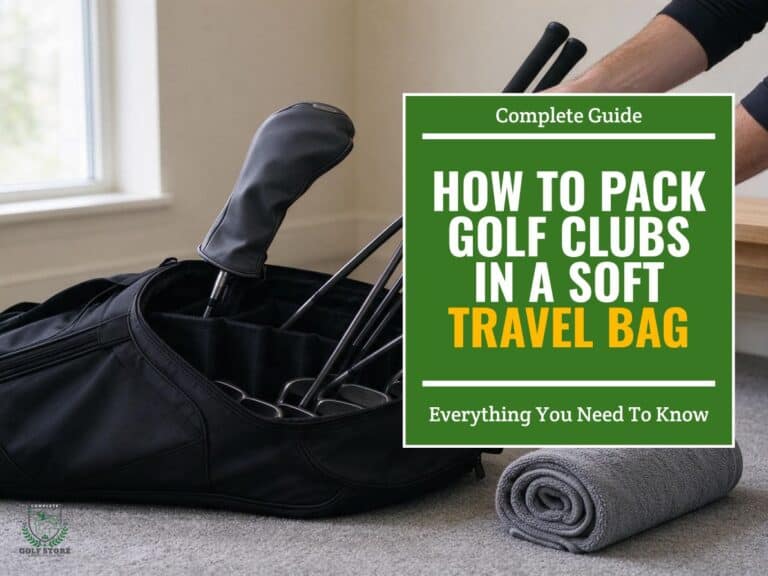
Knowing how to pack golf clubs in a soft travel bag keeps your gear intact through baggage handling. A soft bag is lighter and easier to store than a hard case, but it needs padding and support to prevent shaft and head damage. This guide walks you through each step.
You'll gather the right tools, mark and remove adjustable club heads, and protect heads and shafts before loading. Then you'll secure the clubs, add top protection, and check airline rules and fees. We also cover the mistakes that lead to bent shafts and cracked heads.
Follow these steps and your clubs arrive ready to play.
- 1) Tools and Materials to Gather Before Packing
- 2) Remove and Mark Adjustable Club Heads
- 3) Protect Club Heads and Shafts
- 4) Add Top Protection to the Bag
- 5) Load and Secure the Clubs
- 6) Airline Rules and Fees for Golf Bags
- 7) Common Packing Mistakes to Avoid
-
8)
Frequently Asked Questions
- 8.1) How do I keep clubs from shifting inside a soft travel bag?
- 8.2) Should I remove adjustable club heads before packing?
- 8.3) What should go in the bag besides clubs?
- 8.4) What airline rules and fees apply to golf bags?
- 8.5) What should I look for in a golf travel bag?
- 8.6) Is a hard case better than a soft-sided bag?
- 9) Final Thoughts
Tools and Materials to Gather Before Packing
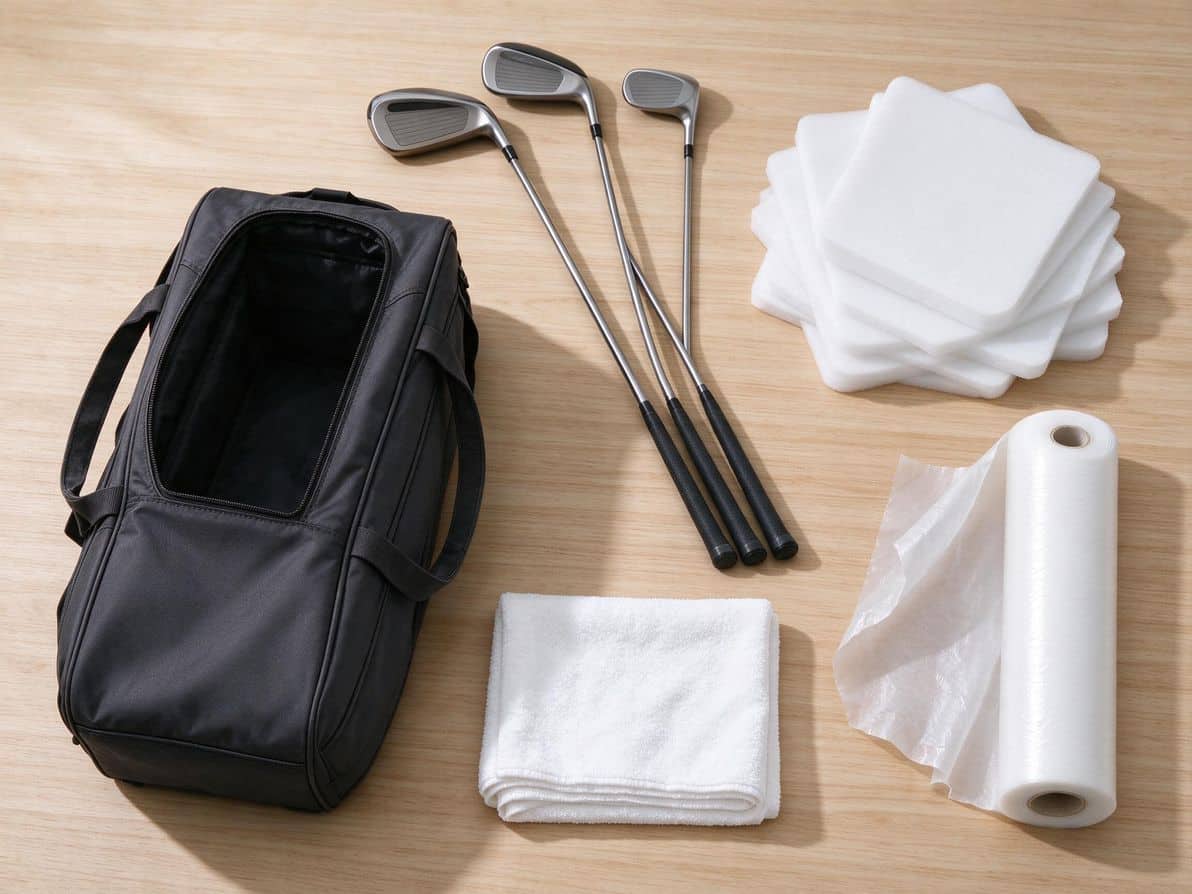
Before you zip a single club into a soft travel bag, gather everything you'll need. A soft bag flexes under the weight of other luggage, so the padding and support you add do the work a hard shell would otherwise handle. Here's what to collect first.
Soft travel bag basics
You'll need a soft-sided golf travel bag with enough length and internal room for your full set. Look for padded side walls and at least one exterior pocket for accessories. If you're still building your setup, our first-time golf gear checklist covers the essentials worth bringing on the road.
Bubble wrap and headcovers
Bubble wrap and your regular headcovers are the first line of defense for club heads. Wrap driver and wood heads in a layer of bubble wrap, then slide the headcover over the top. Irons and wedges can travel in their standard covers. The wrap absorbs knocks during handling.
Stiff arm for top protection
A stiff arm or similar protector slides into the top of the bag and absorbs impacts. It also reduces top-to-bottom compression, the force that snaps shafts when bags get stacked. You can buy a dedicated stiff arm or use a rigid rod cut to the bag's interior length.
Bring a golf towel or two to wrap shafts and wedge heads. A shipping tag or luggage tag with your name and contact info goes on the outside handle. Use a tag that won't tear off in transit.
Your materials list:
- Soft travel bag
- Bubble wrap
- Headcovers
- Stiff arm or rigid protector
- Golf towels
- Shipping or luggage tag
Once everything is on the floor in front of you, packing goes faster and you're less likely to skip a step. Set the stiff arm aside for now; it goes in after the clubs are loaded.
Remove and Mark Adjustable Club Heads
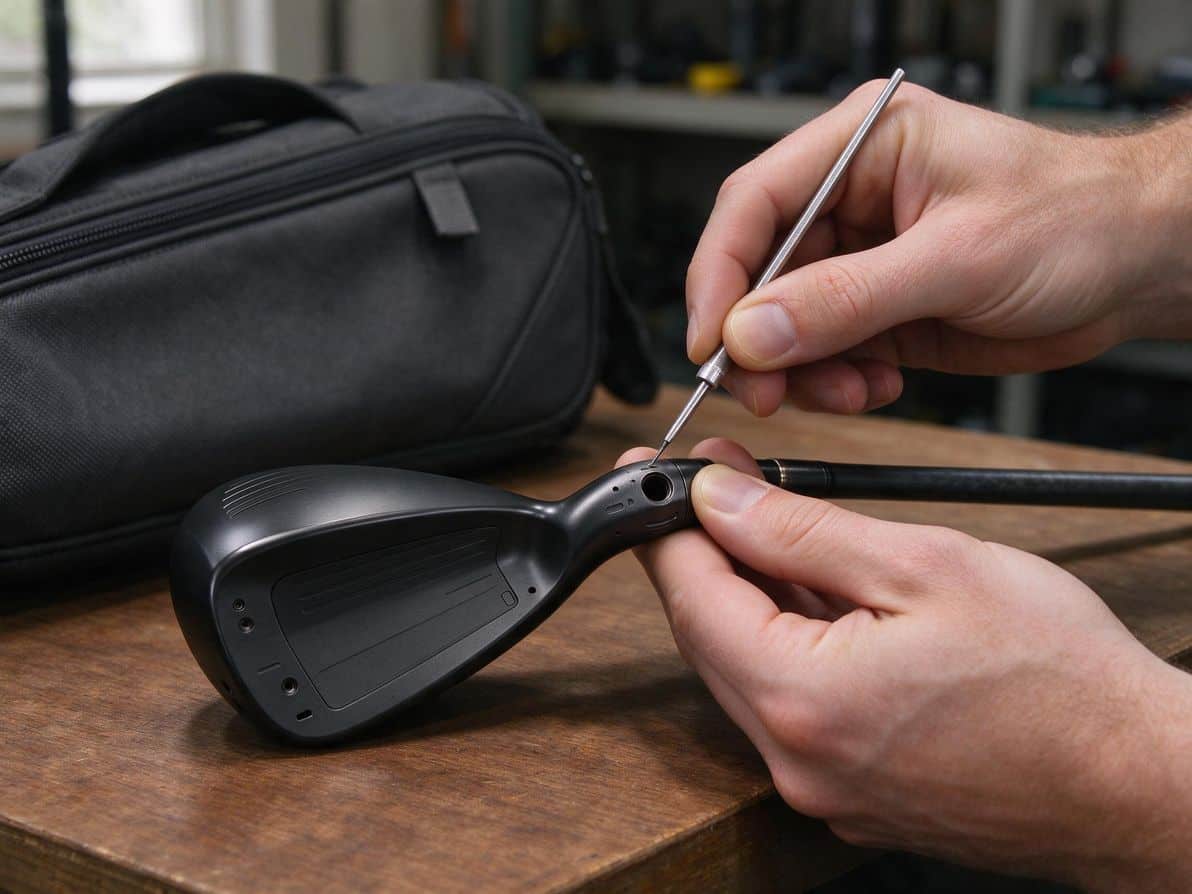
Adjustable heads are the easiest part of your set to lose or knock out of tune in transit. Handle them before anything else goes in the bag.
Decide if heads should come off
Not every adjustable head needs to come off. Check your club model first: some manufacturers build heads that detach with a torque wrench, others do not.
- If your driver or wood has a removable head, take it off. A detached head cannot be sheared off by a shifting bag.
- If it does not detach, leave it on and plan to pad it heavily in the next step.
- A head that comes off also shortens the club, which reduces leverage on the shaft tip inside a flexible bag.
Mark settings before removal
Once a head is off, the loft and lie settings are easy to forget. Record them before you touch the wrench.
- Note the loft, lie, and weight positions on your phone or a piece of tape.
- Take a photo of the hosel and sleeve alignment.
- Loosen, remove, and place the screw and washer in a zip bag so they do not vanish in a pocket.
Store removed heads safely
Loose heads rattle against shafts and each other. Give each one its own cushion.
- Wrap every head in bubble wrap or slide it into a headcover.
- Tuck wrapped heads into a side pocket or the middle of your golf towel.
- Keep screws with their matching heads so reassembly at the course takes minutes, not a search.
Marking settings first saves you a fitting session later. If you are unsure whether your model allows removal, check the manufacturer's page before you pack.
Protect Club Heads and Shafts
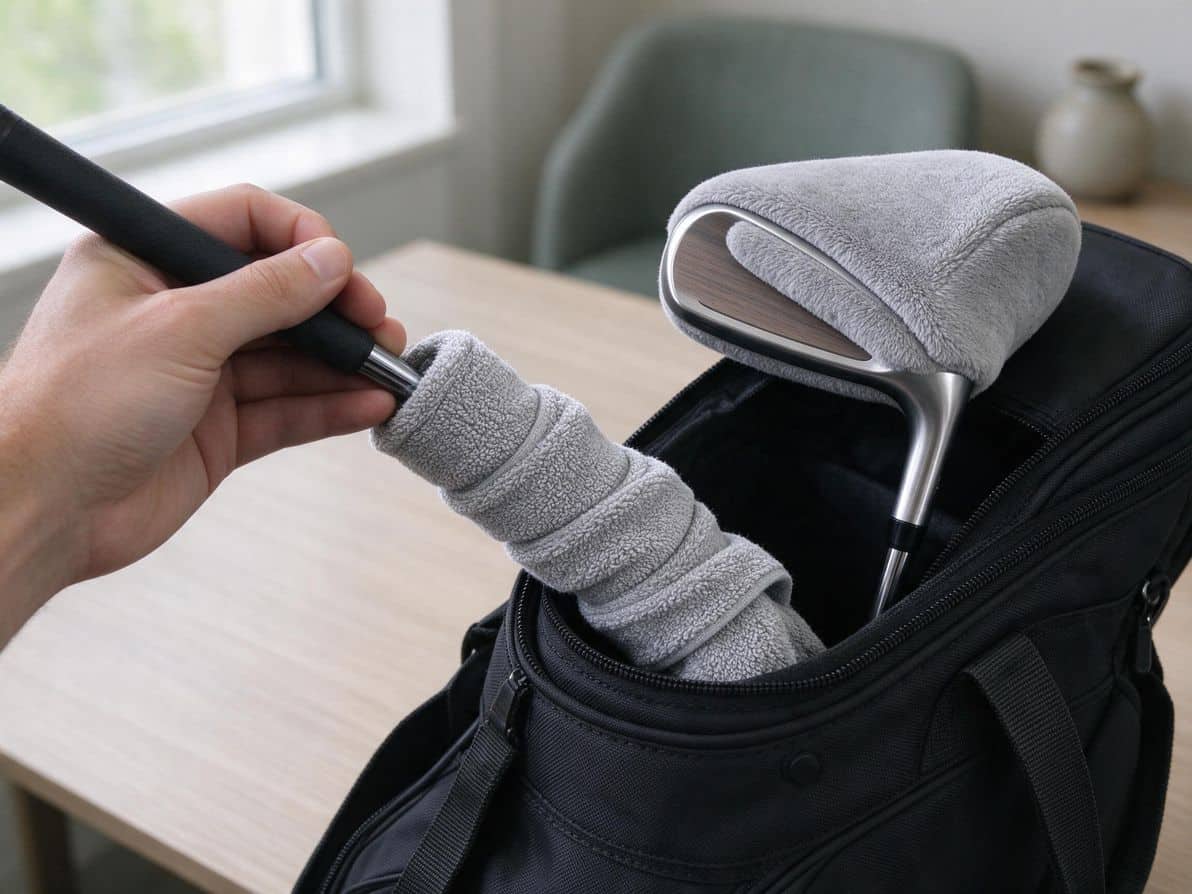
Once your adjustable heads are off, the next job is padding. Club heads and shafts take the worst of the knocks in a soft bag, so the padding you add here is what keeps them straight and dent-free. Work through the three steps below in order.
Wrap club heads in bubble wrap
Bubble wrap gives each head a cushion against contact with other clubs and the bag walls. Tear off a sheet large enough to cover the full head, then wrap it around the clubface and sole so no hard edge is exposed.
Tape the wrap in place so it does not slide off in transit. If you removed an adjustable head, wrap it separately and tuck it into a side pocket or a padded pouch.
Cover each head with a headcover
A headcover adds a second layer and keeps the bubble wrap from tearing. Slip a headcover over every wrapped head, including irons and wedges. This is the step most people skip, and it is the most common padding mistake.
A bare iron head can scratch a driver crown or crack a graphite shaft tip on impact. Headcovers are cheap insurance, so use one on every club in the bag.
Wrap shafts with a towel
Shafts are the longest, thinnest part of the club and the easiest to bend or snap. A golf towel wrapped around the shaft bundle adds soft padding between clubs and stops them from rubbing. Lay the towel along the shafts, then wrap it around the group and secure it with a strap or tape.
For extra protection, slide a section of foam pipe insulation over the longest shafts. The goal is to stop metal from touching metal.
With heads and shafts padded, your clubs are ready for the support that protects the top of the bag.
Add Top Protection to the Bag
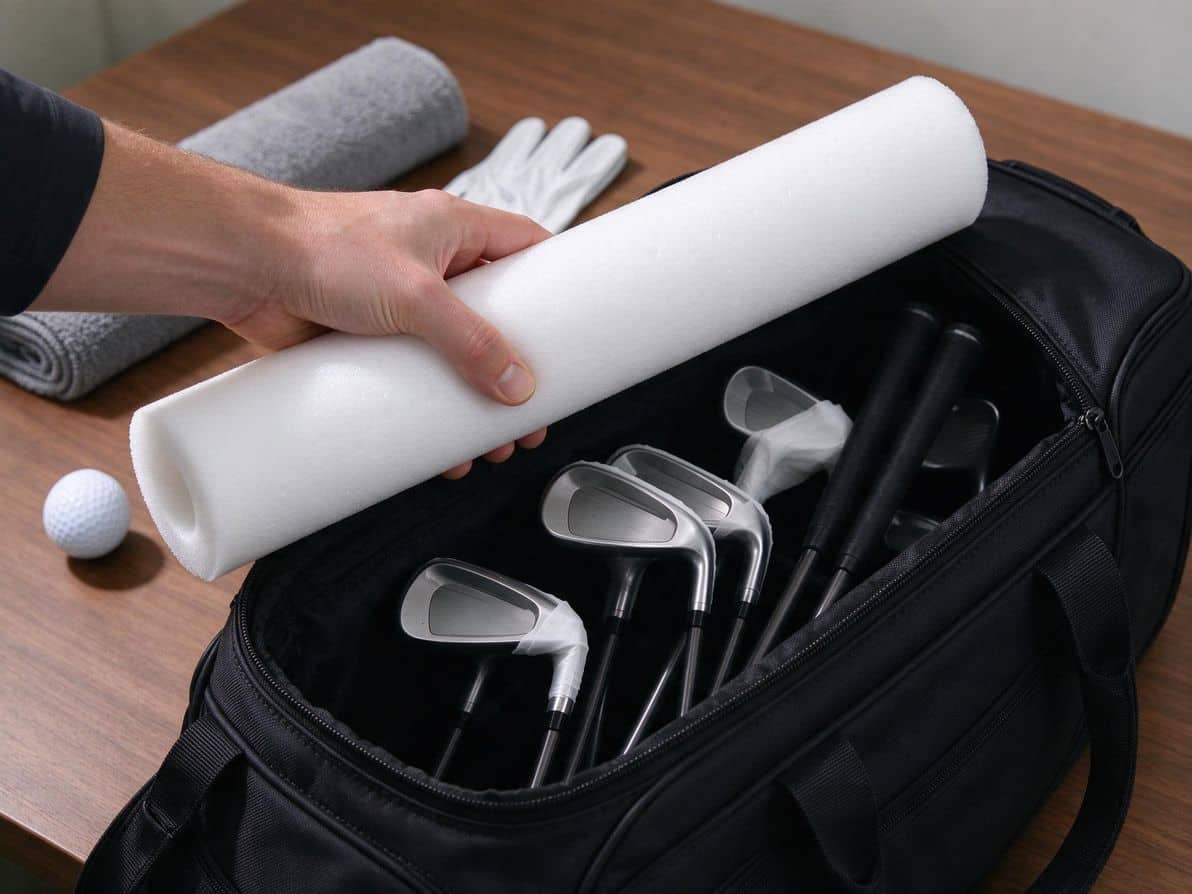
Packing the bottom of the bag is only half the job. The top of a soft travel bag takes the most abuse from overhead bins, baggage carts, and stacked luggage. A stiff arm or similar protector gives the clubheads and shaft tips a rigid spine that resists bending.
Install a stiff arm
A stiff arm is a rigid rod that runs from the base of the bag to above the top of the clubheads. It absorbs impacts and reduces top-to-bottom compression. You can buy a dedicated protector or use a rigid rod cut to the bag's interior length.
- Measure the interior depth of your bag from the base to just above the longest clubhead.
- Slide the stiff arm into the center of the bag so the clubs stand around it.
- Seat the bottom of the arm firmly against the base padding.
- Confirm the top of the arm sits higher than the tallest clubhead so it takes the first hit.
How a stiff arm reduces compression
A soft bag flexes when other luggage presses against it. Without a rigid spine, that flex transfers downward and can bend shafts or snap wood heads. The stiff arm creates a load path that carries force around the clubs instead of through them.
Placement matters. The arm should run the full interior height and stand near the center of the bag, with the clubs around it. If the arm is too short, the top of the bag collapses onto the clubheads. If it sits loose, it shifts during transit and loses its protective value.
Once the stiff arm is in place, the top of the bag holds its shape. That rigidity is what keeps clubheads from pressing against each other and against the bag's upper rim. Check the arm after you close the bag: it should not move when you press down on the top.
With the spine installed, you can load the clubs knowing the top of the bag has a hard line of defense.
Load and Secure the Clubs
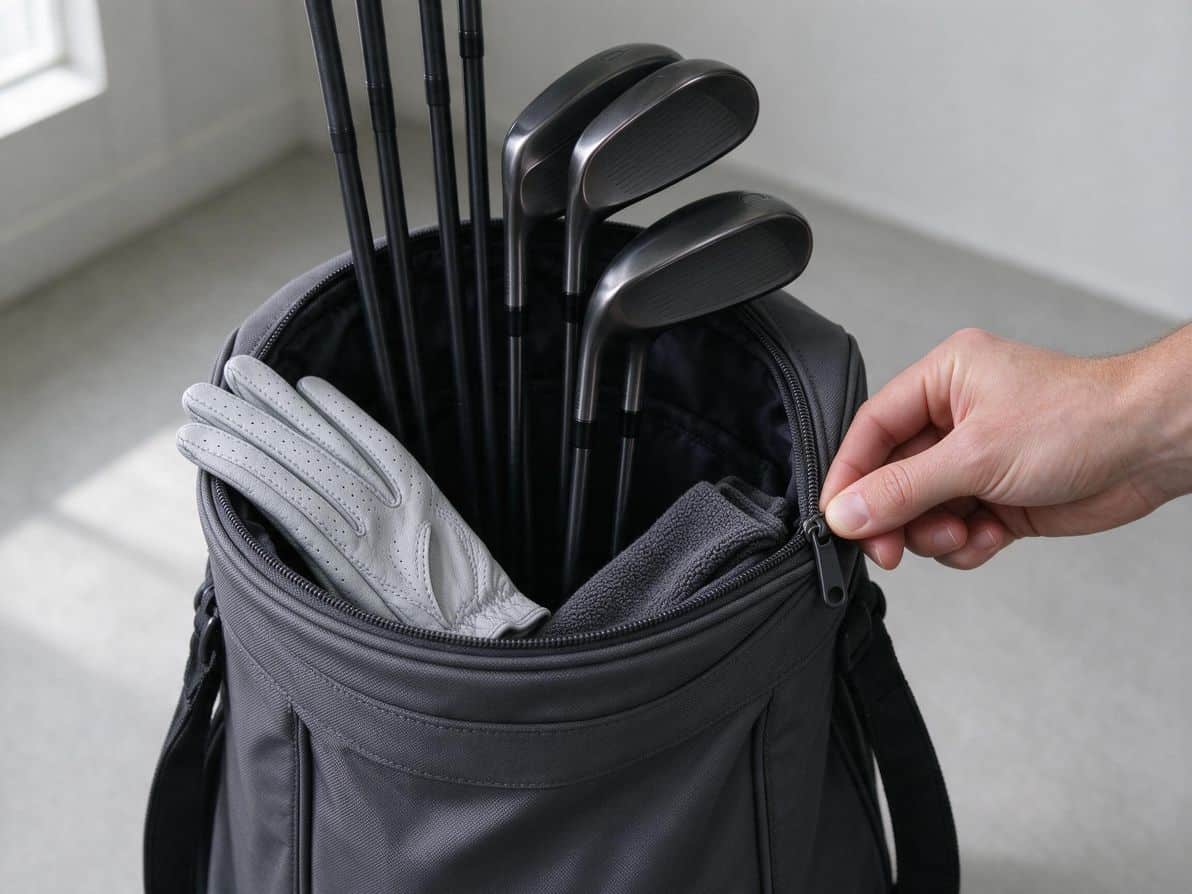
With the heads wrapped and the top protection in place, the last stage is getting everything into the bag so it stays put. A packed bag that rattles and shifts in transit is how shafts bend and heads crack.
These three steps take a few minutes and make the difference between clubs that arrive ready to play and clubs that arrive damaged.
Place clubs carefully into the bag
Slide clubs in grip-first, grouping them by length so the longest clubs sit at the outer edges. A driver or fairway wood goes in last, with its wrapped head resting against the top protection.
If the bag has external pockets, use them for shoes, balls, and tees instead of stuffing those items in the main compartment where they can press against shafts. Keep the main compartment for clubs only so nothing hard presses on graphite.
Keep clubs from shifting
Movement is the enemy. Once clubs are in, fill the gaps around the top with a golf towel, extra headcovers, or soft clothing. The goal is a snug fit where nothing rattles when you shake the bag gently.
Push the stiff arm or backbone into position so it runs the full interior length and holds the top of the bag rigid. A protector like this absorbs impacts and reduces top-to-bottom compression, which is what a soft bag needs most.
Zip and buckle every closure
Close every zipper on the main compartment and any pockets, then fasten all buckles, straps, and clips. Attach a luggage tag with your name and contact details to an exterior handle.
If your bag has a rain hood, pull it over the top and secure it. Loose straps catch on conveyor belts and carousel equipment, so take a moment to tuck or clip anything dangling.
Before you zip the main compartment, it is a good time to check that your clubheads are clean and dry, since grime left on heads during travel can set in. Our guide on how to clean your golf clubs covers that routine when you get home.
Once the bag is zipped and buckled, give it a gentle shake. If you hear rattling, open it back up and add more padding. A quiet bag is a well-packed bag.
Airline Rules and Fees for Golf Bags
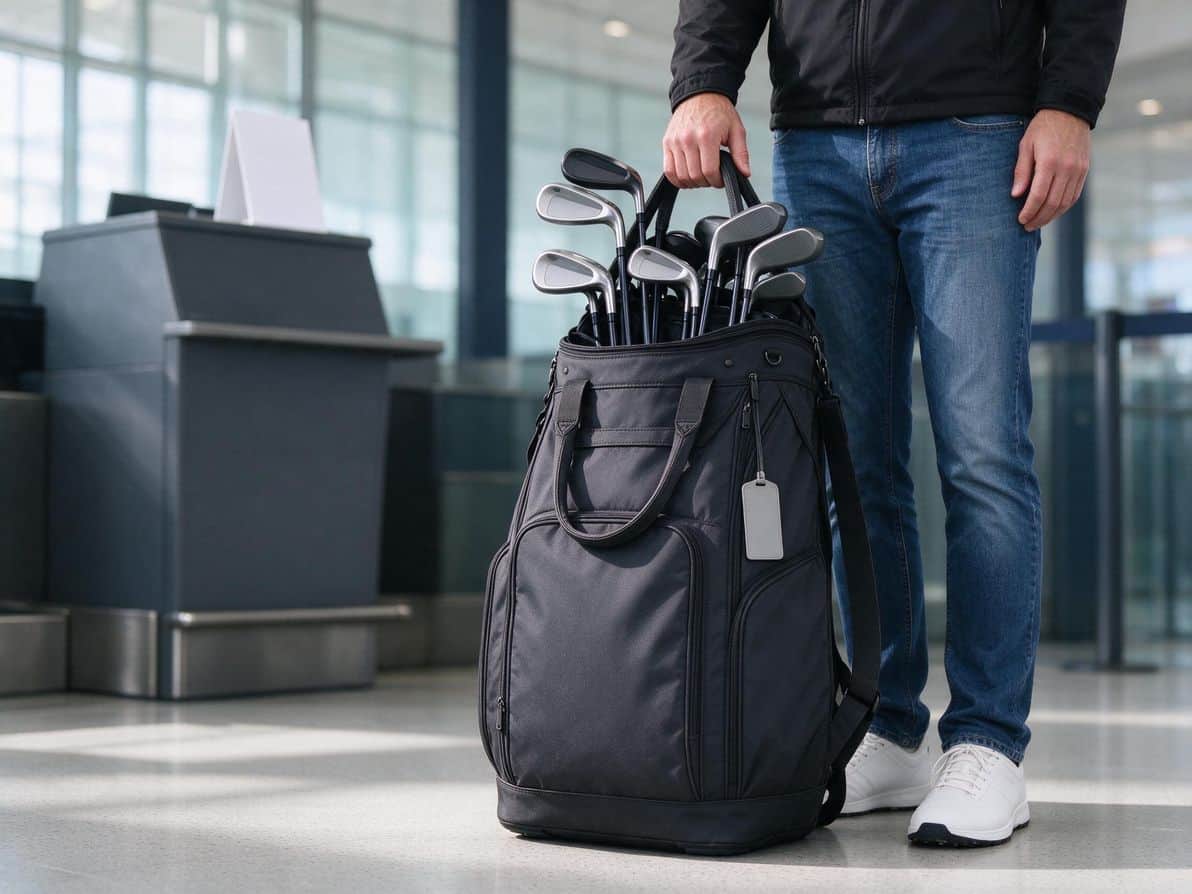
Airlines treat golf bags as checked baggage, and the rules change by carrier. Check your airline's policy before you fly so you know what counts as one bag, what it can hold, and what fees apply.
Check the airline golf bag allowance
American Airlines allows one golf bag containing clubs, balls, tees, and one pair of golf shoes. That counts as your checked bag, so standard checked-bag fees apply.
United allows one set of golf clubs in a hard-sided or soft-sided case. The case must be within the airline's weight and size limits for checked bags.
Confirm the current allowance on your airline's site before packing. Policies change, and the gate agent applies the rule in effect on your travel date.
Hard-sided vs. soft-sided cases
A hard shell offers more crush protection than a soft-sided case. Soft cases are lighter and easier to store, but they need padding and a stiff arm to handle impact.
United accepts both hard-sided and soft-sided cases for golf clubs. If you fly with a soft case, expect to sign a liability release.
Soft cases and liability release
United requires a limited liability release for soft-sided golf cases. That release limits the airline's responsibility if the clubs are damaged in transit.
A hard case does not guarantee full protection, but it removes the release requirement on United. If you pack a soft bag, add padding and top protection so the clubs can handle normal baggage handling.
Overweight and checked-bag charges
United says overweight bag charges may apply, and standard checked-bag rules can still affect golf bags. Weigh your packed bag at home before you leave for the airport.
If the bag is over the limit, you can move items to a carry-on or pay the overweight fee. Check your airline's current weight limit and fee schedule, because neither is the same across carriers.
Common Packing Mistakes to Avoid
Most soft-bag damage traces back to a few packing habits, not the bag itself. The four mistakes below show up often, and each one is easy to fix before you zip up.
Loose clubs that rattle in transit
A club that shifts inside the bag hits its neighbors for the whole trip. Shafts and heads take the worst of it. Pack clubs so they sit tight against one another, then fill the gaps with a towel or extra padding. Rattle means add more padding.
If a club still moves when you shake the bag gently, add more material around it. Rattle is the signal that something needs more support.
Skipping top protection
Clubs sit lowest in the bag, so the top takes the load when baggage handlers stack other luggage on it. A stiff arm or similar protector absorbs impacts and reduces top-to-bottom compression. Top protection prevents compression damage. Without one, the bag flexes and the club heads carry the force.
Add the protector before you close the bag, not after. It is the single step that does the most work in a soft-sided case.
Skipping airline-specific rule checks
Airlines treat golf bags differently, and the rules change. American Airlines allows one golf bag containing clubs, balls, tees, and one pair of golf shoes. United allows one set of clubs in a hard-sided or soft-sided case, but soft cases need a liability release.
United also notes that overweight charges may apply. Check your airline's current policy before you fly, since fees and limits vary.
Too little padding around heads and shafts
Heads and shafts are the parts most likely to bend or crack. Wrap each head in bubble wrap or a headcover, and wrap shafts with a towel or similar soft padding. Padding that only covers the top of the bag leaves the shafts exposed.
Give the whole club length some cushioning. If you ever need to file a damage claim after a trip, our golf club warranty and repair guide walks through the process.
Fix these four habits and your soft bag does its job. The padding and support you add are what keep clubs intact from curb to carousel.
Frequently Asked Questions
How do I keep clubs from shifting inside a soft travel bag?
Pack clubs so they sit snug against one another, then pad any gaps with towels or bubble wrap. A stiff arm or similar protector adds top-to-bottom support and absorbs impacts. Secure every zipper and buckle so nothing loosens in transit.
Should I remove adjustable club heads before packing?
Remove the head only if your model allows it, and mark your settings first so you can return them after the trip. A detachable driver or wood head stores better in a separate pocket, but leaving it on is fine if you wrap it well.
What should go in the bag besides clubs?
A golf bag typically carries clubs, balls, tees, and one pair of golf shoes. Add a towel for padding, and attach a luggage tag with your contact details. Check your airline's rules for anything beyond that.
What airline rules and fees apply to golf bags?
Most airlines treat a golf bag as a standard checked item, but rules vary. United allows one set of clubs in a hard-sided or soft-sided case, and soft cases need a limited liability release. Overweight charges may apply, so confirm your airline's current policy before you fly.
What should I look for in a golf travel bag?
Padding, durability, and transport ease are the three features that matter. A stiff arm or built-in backbone helps absorb impacts and reduce compression at the top. If you carry extra gear, look for outside pockets and reinforced zippers.
Is a hard case better than a soft-sided bag?
A hard case offers more crush protection than a soft-sided bag, but it weighs more and takes up more storage space. A soft bag with good padding and a stiff arm works well for most trips. Pick based on how much protection you need and how often you travel.
If you're still sorting out what goes in the bag itself, our beginner golf bag mistakes guide covers club selection basics.
Final Thoughts
Packing a soft travel bag well comes down to a few habits. Remove and mark adjustable heads, wrap every head and shaft, add top protection like a stiff arm, then load and secure the clubs so nothing shifts in transit. Each step builds on the last, and skipping one leaves a gap that baggage handling will find.
Before you fly, check the rules for your specific airline. Soft-sided cases often require a limited liability release, and overweight charges can apply even when a golf bag counts as your checked item. A quick call or a look at the carrier's baggage page saves surprises at the counter.
The mistakes that cause damage are predictable: loose clubs that rattle, no top protection, thin padding around heads and shafts, and assumptions about airline policy. Avoid those four and your soft bag does the job a hard case would, at a fraction of the weight.
Your next steps:
- Gather your padding, stiff arm, and head covers before you start.
- Walk through the packing sequence once at home, then again before the trip.
- Confirm your airline's golf bag policy and any fees.
- Consider a dedicated travel bag with reinforced top and side padding.
Pack the clubs securely once, and you can focus on the round instead of the baggage claim.