


You pull your favorite 7-iron out of the bag and notice the grooves look smoother than they used to. The ball still launches, but that crisp backspin you remember has faded. Sound familiar? Knowing your golf club lifespan and replacement timeline saves money and strokes. Replace too early and you waste cash on gear that still performs. Wait too long and worn equipment costs you shots around the green and off the tee.
Most golfers have no clear answer for when a club is actually done. You might keep swinging a driver with a cracked face, or toss irons that still have years of life left. Different clubs wear out at different rates.
Irons commonly last about 7-10 years for most golfers, while drivers typically last 3-5 years. Wedges wear fastest, often needing replacement every 1-3 years for regular players. Putters are the exception: they can last 10+ years and may last a lifetime with good care.
This guide walks you through what actually wears out and when. You’ll learn to spot groove wear on irons and wedges, check shafts and grips for damage, and run a simple inspection process on your own bag. We’ll cover when a repair makes sense versus when you need new clubs, plus the common mistakes that lead golfers to replace gear at the wrong time. By the end, you’ll know exactly how to evaluate every club in your bag and make a confident call on your next upgrade.
- 1) How Long Golf Clubs Typically Last
- 2) Groove Wear on Irons and Wedges
- 3) Shaft, Grip, and Head Damage to Check
-
4)
Step-by-Step Club Inspection Process
- 4.1) Check the clubface for worn grooves, scratches, dents, or smooth spots
- 4.2) Inspect shafts for cracks, bends, or other damage
- 4.3) Check grips for slipping, slickness, or visible deterioration
- 4.4) Compare current shot results to past performance for distance, spin, and consistency
- 4.5) Replace the club when wear or damage affects performance or safety
- 4.6) Basic cleaning and storage tools: soft brush, mild soap and warm water, microfiber towel, cool dry storage
- 5) Repair Versus Replacement
- 6) Common Mistakes When Deciding to Replace Clubs
- 7) Frequently Asked Questions
- 8) Final Thoughts
How Long Golf Clubs Typically Last
Every club in your bag ages differently. The material, how often you play, and how hard you swing all change the timeline. Understanding what a realistic golf club lifespan and replacement schedule looks like helps you budget for upgrades and spot wear before it costs you strokes.
Irons: commonly about 7-10 years for most golfers
Irons are the workhorses of your bag. Cast or forged from steel, they take the most swings and the most ground contact. Most golfers get 7-10 years from a set before performance drops off.
Heavy ball-strikers or players who hit range mats daily may see wear sooner. The face grooves wear down first, which reduces spin and makes distance control harder. Once the grooves are smooth, the club cannot grip the ball the way it did when new.
Drivers: commonly about 3-5 years
Drivers take the hardest hits in golf. The thin titanium or carbon composite face flexes on every swing, and that repeated stress eventually fatigues the material. Most golfers need a new driver every 3-5 years.
Signs include a dead sound at impact, visible face cracking, or a drop in ball speed even when you strike the center. Modern drivers also change quickly, so older models lose out on new speed and forgiveness features.
Wedges: commonly about 1-3 years for regular players
Wedges wear fastest. You use them for full shots, chips, and bunker play, often on abrasive lies. Grooves fill with sand and wear smooth quickly.
Regular players often replace wedges every 1-3 years to keep spin rates high around the green. If your wedge shots roll out more than they check up, the grooves are likely the cause.
Putters: 10+ years and possibly a lifetime with good care
Putters see the least abuse. The face rarely takes a full-force swing, and the head is usually milled or cast from durable steel or aluminum. With basic care, a putter lasts 10+ years, and many golfers keep the same one for decades.
Replace a putter only when the face insert degrades, the shaft bends, or you want a different feel. Fit matters more than age here.
Key terms: grooves, lie, and loft and why they affect lifespan
Three specs determine whether a club still performs as designed:
- Grooves: The channels on the clubface that create spin. Worn grooves mean less spin, less control, and more roll-out on chips and pitches. This is the main reason irons and wedges need replacement.
- Lie: The angle between the shaft and the ground when the club sits flat. Over time, repeated swings can bend the shaft or change the head’s lie angle, making shots pull or fade unexpectedly. A club fitter can adjust lie, but extreme changes signal it is time for new clubs.
- Loft: The angle of the clubface that controls launch and distance. Loft does not wear down like grooves, but manufacturing tolerances drift over years of use. If your 7-iron flies the same distance as your 6-iron used to, loft may have weakened from bending or wear.
Check these three specs when you suspect a club has aged out. If you are curious about how each club type is built and what parts make them up, our guide on golf club types and components breaks down the anatomy of every club in your bag.
Knowing these timelines gives you a baseline. The next step is recognizing the specific signs that a club is done, regardless of its age.
Groove Wear on Irons and Wedges
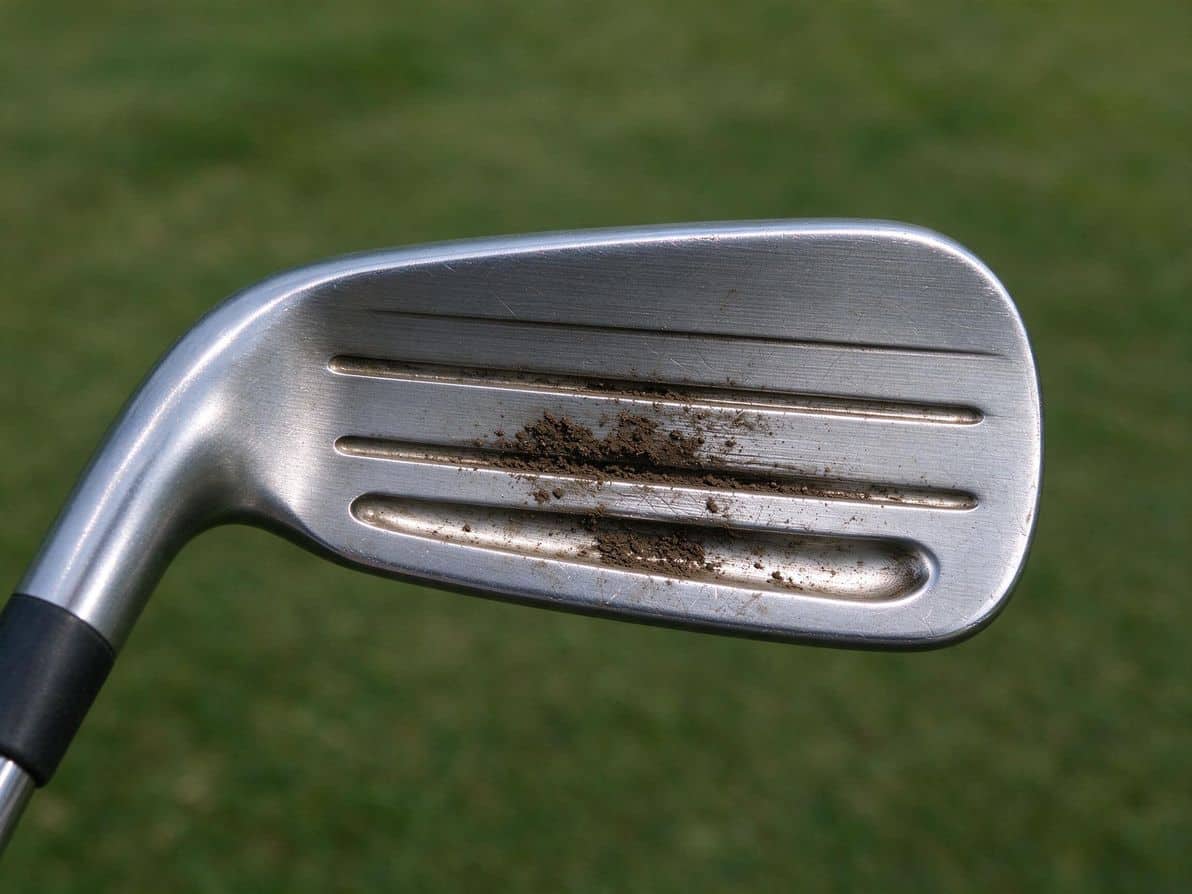
Grooves are the small channels cut into the face of your irons and wedges. They do more work than most golfers realize.
Why grooves generate spin and control
Grooves channel water and debris away from the ball at impact. This keeps the clubface in cleaner contact with the ball, which creates backspin. More backspin means the ball stops faster on the green and holds its line better in the air. Without sharp grooves, your shots fly lower, spin less, and roll out unpredictably.
On a wet morning or from a tight lie, you will feel the difference immediately.
Visual and touch signs of worn grooves
Check your grooves before every round. Look for these signs:
- Rounded edges: Fresh grooves have sharp, defined edges. Worn grooves look rounded or flattened, like a riverbed instead of a channel.
- Shiny metal: The bottom of the groove often turns shiny where the ball has polished it smooth.
- Clogged channels: Dirt packed into the grooves blocks their function even if the edges are still sharp. A groove cleaning tool or an old tee fixes this in seconds.
- Smooth face feel: Run your fingernail across the grooves. If it slides over them without catching, the edges are gone.
Clean your grooves after every round. Dirt and grass reduce spin just as effectively as worn metal.
Why wedge grooves wear faster than other clubs
Wedges take more abuse than any other club in your bag. You hit full shots, half shots, chips, and bunker shots with them. You also use them on abrasive surfaces: sand, hardpan, and cart paths. Every strike grinds the face against the ball and the ground.
A wedge used twice a week can show visible groove wear within one to three years. Irons see less sand and fewer partial shots, so their grooves typically hold up longer.
When groove wear means replacement rather than cleaning
Cleaning helps only when the grooves are dirty but structurally intact. Replace the club when you see these conditions:
- Rounded or flattened groove edges that a fingernail cannot catch
- Shiny, polished bottoms across multiple grooves
- Measurable spin loss: your 100-yard wedge shot now carries the same distance but stops 10 or more feet short on the green
- Inconsistent ball flight: shots that used to stop now release and roll through the green
Some golfers try groove sharpening tools. These can restore edges temporarily on irons, but they remove metal and void most manufacturer warranties. For wedges, replacement is almost always the better choice. A new wedge costs less than a round at a premium course, and the spin you regain pays for itself in strokes saved.
Track your wedge performance every few months. Hit five shots to a green from 100 yards and note where they stop. When the stopping distance creeps longer by more than five feet, the grooves have done their job and it is time for a new one.
Shaft, Grip, and Head Damage to Check
Your clubs take a beating every round. Knowing what to inspect helps you catch problems before they cost you shots or send a club flying into the rough.
Shaft cracks, bends, and other damage
Run your fingers along each shaft from grip to head. Feel for dents, dings, or rough spots that signal impact damage. Steel shafts dent more easily than graphite, but graphite can crack without visible warning.
Check for these specific problems:
- Cracks or splinters in graphite shafts, often near the hosel or ferrule where stress concentrates
- Dents or creases in steel shafts, usually from bag chatter or hitting the ground hard
- Bends that change the club’s lie angle or make the head sit unevenly at address
- Rust pitting on steel shafts, which weakens the metal over time
A bent shaft changes how the clubface meets the ball. A cracked shaft can fail completely on a full swing. Either problem warrants replacement, not repair.
Loose or damaged heads
Wiggle each clubhead where it meets the shaft. Any movement means the epoxy bond has failed. A loose head can detach mid-swing, damaging the club and creating a safety hazard.
Inspect the clubface and sole for:
- Cracks in the face, common on thin-faced drivers after heavy use
- Dents or deep scratches on the sole that affect how the club sits on the turf
- Separation between the head and shaft, visible as a gap or dark line at the hosel
- Broken or missing screws on adjustable drivers and fairway woods
A loose head sometimes can be reattached by a club fitter. A cracked face cannot be repaired and the club needs replacement.
Grip slipping, slickness, or visible deterioration
Grips are the only part of the club you touch on every shot. Worn grips force you to grip harder, which creates tension and reduces feel.
Test your grips with these checks:
- Slip test: Hold the club with your normal grip and twist. If your hands move, the grip is worn
- Visual inspection: Look for shine, smooth spots, or cracks in the rubber
- Tackiness test: A good grip feels slightly sticky. A slick grip feels hard and polished
- Age check: Most grips last 40 to 60 rounds. If yours are older, replace them regardless of appearance
Hard or cracked grips reduce control and can cause blisters. Replacing grips costs far less than new clubs and often restores confidence immediately. If you want to tackle this yourself, our guide on how to regrip your clubs walks you through the process step by step.
Replace grips when they slip, shine, or crack. Replace the whole club when you find shaft damage, a loose head, or face cracks.
Step-by-Step Club Inspection Process

You do not need special equipment to inspect your clubs. A few minutes with each club, done twice a year, tells you more than any marketing claim. Here is how to check every part of your set.
Check the clubface for worn grooves, scratches, dents, or smooth spots
Grooves create spin. Without them, the ball slides up the face and loses control. Run your fingernail across the grooves on your irons and wedges. If your nail catches, the grooves still have bite. If they feel smooth or rounded, spin is already dropping.
Look for shiny, polished bands in the center of the face. This is where you strike the ball most often, and it signals heavy wear. Deep scratches, dents, or dings from bag chatter also affect ball flight.
A wedge with smooth grooves might lose 20-30% of its spin, turning a 100-yard shot into an unpredictable low spinner.
Inspect shafts for cracks, bends, or other damage
Shafts take stress every swing. Check steel and graphite shafts near the hosel, where the shaft meets the clubhead. This area flexes the most and cracks first. Look for hairline fractures, paint chips that expose the material underneath, or a visible bend when you lay the club flat.
Grip the shaft just below the grip and twist gently. Any creaking, cracking, or movement between shaft and head means the bond is failing. Graphite shafts can develop splinters that feel rough or look fuzzy. Steel shafts can rust inside the hosel, causing looseness you cannot see.
A damaged shaft changes how the clubhead arrives at impact, and a crack can fail mid-swing.
Check grips for slipping, slickness, or visible deterioration
Grips harden and lose tackiness over time. Press your thumb into the grip surface. It should feel slightly sticky and yield to pressure. If the surface feels hard, shiny, or slick, the rubber has dried out.
Look for cracks, tears, or a glossy polish where your hands sit most. Golfers who play often need new grips every 1-2 years. Sweat, dirt, and sun exposure speed up wear.
A slick grip forces you to squeeze harder, which tightens your forearms and hurts your swing tempo. Replacing a grip costs far less than replacing a club, and it restores confidence immediately.
Compare current shot results to past performance for distance, spin, and consistency
Your body remembers what your clubs used to do. If your 7-iron used to carry 150 yards and now reaches 135, something changed. Track three numbers: distance, shot shape, and dispersion.
Hit five shots with the same club and note where they land. Compare that to your typical numbers from a year ago. A drop of 10+ yards, a loss of spin that makes balls roll out too far, or a wider spread all point to worn equipment.
Launch monitor data helps if you have access to it, but careful observation on the course works too.
Replace the club when wear or damage affects performance or safety
Use this decision rule: if a club no longer performs the way it did when you trusted it, or if it could break during a swing, replace it. Cracked shafts and loose heads are safety issues. Worn grooves and dead grips are performance issues. Both justify replacement.
Do not wait for a club to fail completely. A driver with a cracked face can shatter on impact. A wedge with no grooves will cost you strokes every round. When inspection shows real wear, act before your next round.
Basic cleaning and storage tools: soft brush, mild soap and warm water, microfiber towel, cool dry storage
Clean clubs last longer. Keep a soft brush with plastic bristles, a bottle of mild soap, a microfiber towel, and a cool, dry storage spot. After each round, brush the grooves with warm water and soap. Dry the head and shaft with the towel. Never soak graphite shafts, and never leave clubs in a hot car trunk, where heat degrades grips and epoxy.
For a deeper clean at home, follow our guide on how to clean your golf clubs. Proper cleaning protects your investment and keeps inspection accurate, since dirt hides real wear.
Run this inspection every spring and fall. It takes 15 minutes per club and gives you a clear replacement schedule based on your actual equipment, not guesswork.
Repair Versus Replacement
The right choice between fixing a club and retiring it depends on what failed and how much life remains in the head and shaft. Some problems cost little to fix and restore full performance. Others signal that the club has reached the end of its useful life.
Situations where a repair or regrip may be enough
A worn grip is the most common and cheapest fix. Grips lose tackiness over time, and a fresh one costs far less than a new club. Regripping takes minutes at home or at any golf shop.
A loose shaft in the hosel can often be re-epoxied by a club fitter. The same goes for a ferrule that has cracked or slid up the shaft. These repairs restore the club to playable condition without replacing any major component.
Minor dents or scratches on the sole or toe rarely affect performance. You can keep playing a cosmetically imperfect club for years. A light polish or touch-up paint job handles the appearance without touching the club’s function.
A bent lie angle or loft is adjustable on most modern irons. A club fitter can bend the head back to your specs. This matters if your swing has changed or the club was never fit properly in the first place.
Situations where wear or damage calls for replacement
Rounded or flattened groove edges you cannot catch with a fingernail mean the club has lost spin and control. Groove wear is the clearest performance-based reason to replace irons and wedges. Once the edges are gone, no repair restores the original groove geometry.
A cracked or delaminated face on a driver or fairway wood is terminal. Modern multi-material faces cannot be repaired once the bond between layers fails. The club loses trampoline effect and becomes unpredictable.
Shaft fatigue shows up as inconsistent distances and a loss of the crisp feel you remember. Graphite shafts in particular degrade over time, and the breakdown is not visible. If your drives feel dead and dispersion has widened, the shaft may be the culprit.
A head that has been bent multiple times or shows stress marks near the hosel is at risk of failure. Repeated adjustments weaken the metal. At that point, replacement is safer than another repair.
Note: discovery data on repair-specific thresholds is limited
Exact round counts or timeframes for when a specific repair becomes uneconomical are not well documented. The decision often comes down to cost versus remaining value. If a repair costs more than half the price of a comparable replacement club, replacement usually makes more sense.
Check your club’s warranty coverage for defects before paying out of pocket. Many manufacturers cover manufacturing flaws for one to two years, and some offer extended protection. A defect claim can turn a replacement into a free fix.
When in doubt, have a club fitter inspect the club. They can measure groove depth, check shaft integrity, and tell you whether the club still performs to spec. That assessment costs little and removes the guesswork from your decision.
Common Mistakes When Deciding to Replace Clubs
Knowing when to upgrade your golf clubs saves money and strokes. Most golfers make the same errors when timing replacements, and those mistakes cost performance on the course.
Waiting for calendar age instead of checking actual wear and performance
Your clubs do not expire on a schedule. A driver you play twice a month ages differently than one in daily use. Check the face for cracks, dents, or hot spots.
Watch your ball flight for changes in distance or launch. If your drives still carry the same yardage and feel solid, the club is not done. Calendar age matters less than actual condition and on-course results.
Ignoring groove wear on wedges and irons
Grooves do the work of creating spin. When they wear smooth, your shots lose control around the greens. Run your fingernail across the grooves. If it slides without catching, the edges have rounded off.
Shiny, polished faces on irons and wedges signal the same problem. Reduced spin means harder stops, more roll-out, and tougher up-and-downs. Test your wedges by hitting five shots to a green from 100 yards and noting where they stop.
If they release past the pin instead of checking, new grooves will help immediately.
Overlooking shaft cracks or loose heads
Damage hides in places you do not look. Check graphite shafts for splintering near the grip and the head. Steel shafts can develop rust pitting or small cracks at stress points.
Wiggle the head on drivers and woods. Any movement, clicking, or rattling means the bond has failed. A loose head changes swing weight and can send the head flying.
Catch these problems early. A cracked shaft or loose head is a safety issue, not just a performance one.
Assuming all clubs wear out at the same rate
Your bag contains clubs with different jobs and different lifespans. Wedges take the hardest abuse and often need replacement every 1-3 years for regular players. Irons typically last 7-10 years.
Drivers wear faster than fairway woods because of higher swing speeds and more face stress, commonly lasting 3-5 years. Putters can last 10+ years or a lifetime with basic care.
Replace each club on its own timeline based on its wear, not the age of the set.
Frequently Asked Questions
How long do golf irons last?
Most golfers get 7 to 10 years from a set of irons before performance drops off. The exact lifespan depends on how often you play, how well you clean the grooves, and whether you store clubs in a dry place. Casual golfers who play a few rounds per year often stretch irons past 10 years.
Frequent players may see wear sooner.
When should golf clubs be replaced?
Replace a club when you see rounded or flattened groove edges that a fingernail cannot catch, shiny polished backs from bag wear, or dents and cracks in the face. Performance decline is another signal.
If your shots lose distance or consistency without a change in your swing, the club may be worn out. For most golfers, that means new irons every 7 to 10 years and a new driver every 3 to 5 years.
What signs show wedge groove wear?
Worn wedge grooves look smooth, rounded, or shiny instead of sharp and defined. Run your fingernail across the grooves: if it catches, the edges still have bite; if it slides, the grooves are worn.
You may also notice less spin and more roll-out on shots around the green, or balls that release low instead of checking up. Wedges for regular players typically need replacement every 1 to 3 years.
Do drivers wear out faster than irons?
Yes. Drivers typically last 3 to 5 years, while irons last 7 to 10 years. The driver face takes repeated high-speed impact, and the thin titanium or composite materials fatigue over time.
Shaft and head bonding can also degrade, leading to cracks, rattles, or loss of pop. Irons see slower swing speeds and more durable steel or cast construction, so they hold up longer.
When is repair enough versus replacement?
Repair works for loose grips, damaged shafts, or minor dents that do not affect the face. Replacing a grip or reshafting a club costs far less than buying new and can add years of life.
Replace the club when the face is cracked or the grooves are worn smooth. If repair costs approach half the price of a new club, replacement usually makes more sense.
Final Thoughts
Knowing when to replace your golf clubs comes down to watching wear, not the calendar. Irons last 7-10 years, drivers need refreshing every 3-5 years, and wedges wear fastest at 1-3 years for regular players. Putters are the exception, often lasting a lifetime with basic care.
The smartest move you can make is inspecting your clubs twice a year. Run your fingernail across the grooves. If it slides without catching, spin and control are gone. Check shafts for cracks near the hosel and wiggle every head to confirm it stays tight.
Hit five wedge shots from 100 yards and see where they stop. If they roll out past where they used to, the grooves are done.
Repair beats replacement when the damage is small. New grips cost little and feel like new clubs. A loose head or cracked shaft might be fixable. But when grooves wear flat or the face shows deep damage, no repair restores performance. Replace the club.
Avoid the common traps. Do not wait for a set number of years. Do not assume every club wears at the same pace. Do not ignore a wedge that suddenly releases shots instead of spinning them.
If you are shopping replacements on a budget, buying used clubs safely opens doors to better gear for less. Check our guide on how to buy used golf clubs online safely before you click purchase.
Your clubs tell you when they are done. Listen, inspect often, and replace with confidence.