

You’ve played a few rounds, memorized the basic yardage markers, and now you’re standing 145 yards out, do you pull the 7-iron or the 6? If this question sounds familiar, you’ve already hit the first sign that distance tech might help.
Most beginners start with course markers or free smartphone apps, but these often leave gaps: hidden hazards, wind adjustments, or the simple fact that sprinkler heads aren’t always accurate. A golf rangefinder or GPS device can fill those gaps, but timing matters. Buy too early, and you’ll waste money on features you can’t use; wait too long, and you’ll keep guessing club selections while your scores stagnate.
We’ll break down when to make the move, whether a laser rangefinder or GPS is the better first purchase, and how much to budget. You’ll also see the common mistakes new golfers make with distance tech, like chasing slope features before mastering basic yardages, and a step-by-step guide to picking the right device for your skill level. By the end, you’ll know exactly when to invest and which features will actually help you improve.
- 1) Understanding Golf Distance Technology: Laser Rangefinders vs. GPS
- 2) When to Buy a Golf Rangefinder: Key Signs You Are Ready
-
3)
Step-by-Step Guide to Choosing Your First Distance Tech
- 3.1) Step 1: Assess Current Skill and Distance Consistency
- 3.2) Step 2: Start with Free Smartphone GPS Apps or Markers
- 3.3) Step 3: Choose GPS Watches for Speed and Hazard Information
- 3.4) Step 4: Upgrade to a Laser Rangefinder When Precision Matters
- 3.5) Step 5: Match Tech Features to a Realistic Beginner Budget
- 4) Common Mistakes Beginners Make with Distance Tech
-
5)
Frequently Asked Questions
- 5.1) Should a beginner start with a golf GPS or a laser rangefinder?
- 5.2) At what skill level does a laser rangefinder's extra precision matter most?
- 5.3) How much should new golfers budget for their first distance device?
- 5.4) Can beginners rely on smartphones or yardage markers instead of buying tech?
- 5.5) Do slope and shot-tracking features really help new players improve?
- 6) Final Thoughts
Understanding Golf Distance Technology: Laser Rangefinders vs. GPS

Choosing the right distance technology helps beginners play smarter and improve faster. Laser rangefinders and GPS devices serve different needs on the course. We’ll break down how each works so you can decide which fits your game now, and when to upgrade later.
How Laser Rangefinders Work and Their Accuracy
Laser rangefinders send a light beam to your target and measure the time it takes to return. This gives you the exact distance to the flagstick, usually within ±1 yard. Most models lock onto the target with a quick button press, making them ideal for golfers who want precise measurements. Bright, unobstructed views work best. Some rangefinders add slope adjustment, which factors in elevation changes for more accurate club selection. Keep in mind: slope features aren’t allowed in tournament play unless you turn them off.
How Golf GPS Devices and Watches Deliver Course Data
GPS devices and watches use preloaded course maps to show yardages. Instead of measuring in real time, they display distances to hazards, greens, and doglegs based on satellite data. Accuracy typically lands between ±3 to 5 yards, which is plenty for most beginners. GPS watches, like those covered in our guide to the best golf GPS watches, add convenience. They sit on your wrist, track shots, and sync with apps to analyze your rounds. Unlike lasers, they don’t need a clear line of sight, so you get instant yardages even when trees or hills block your view.
Yardage Markers vs Tech for Early Rounds
Course markers, colored stakes or sprinkler heads, give basic yardages for free. But they force you to guess distances between points, which can slow your pace and add mental math.
Tech simplifies the process. GPS devices show hazards and greens at a glance, while lasers deliver exact pin distances. For new golfers, GPS is often the better choice because it speeds up play and reduces guesswork. Lasers become more valuable once you’ve learned your club distances and want to fine-tune approach shots. Before investing in tech, focus on mastering beginner golf fundamentals to build a strong foundation for your game.
When to Buy a Golf Rangefinder: Key Signs You Are Ready
Deciding when to buy a golf rangefinder as a beginner isn’t just about budget, it’s about whether the tool will actually help your game. If you’re still guessing club distances or relying on course markers, a rangefinder might not yet be worth the investment. But if you’re starting to notice patterns in your play, it could be the right time to upgrade. Here’s how to tell if you’re ready.
Developing Consistent Ball-Striking and Known Club Yardages
A rangefinder’s precision is only useful if you can trust your swing. If you’re still hitting fat or thin shots more often than not, the extra yardage data won’t fix your contact. But once you start making solid contact most of the time, a rangefinder helps fine-tune your club selection.
- Signs you’re ready: You can predict within 5–10 yards how far each club will go on a clean strike. You’ve tracked your distances over multiple rounds and see consistent patterns.
- Signs you’re not: You’re still guessing which club to use based on feel, or your distances vary widely from shot to shot.
- Common mistake: Buying a rangefinder too early and relying on it to compensate for inconsistent ball-striking. Work on your swing first, then let the tech do its job.
Targeting Specific Pin Locations Over General Green Areas
Most beginners aim for the middle of the green, but as you improve, you’ll start targeting specific pins. A rangefinder shines here by giving exact yardages to the flag, not just the front or back of the green.
- When it matters: You’re playing courses with tucked pins, elevated greens, or forced carries over hazards. You’ve noticed your approach shots often end up short or long because you misjudged the depth.
- When it doesn’t: You’re still happy just hitting the green, regardless of where the pin is. Most of your rounds are on wide-open courses where general yardages are enough.
- Pro tip: If you’re frequently short-sided because you didn’t account for slope, a rangefinder with slope compensation can help, but only if you’re already comfortable with basic yardages.
Handicap Milestones and Scoring Goals
Your handicap isn’t the only factor, but it’s a useful benchmark. Most golfers find rangefinders become valuable once they’re breaking 100 consistently and start aiming for 90 or lower. At this stage, small improvements in club selection and course management make a bigger difference.
- 100+ handicap: Focus on fundamentals like grip, stance, and basic course strategy. A GPS watch or smartphone app is usually enough for general yardages.
- 90–99 handicap: You’re ready for a rangefinder if you’re dialing in your distances and want to attack pins. A mid-range model ($150–$200) balances cost and features.
- 80–89 handicap: A rangefinder is almost essential at this level. Look for models with slope adjustment and pin-locking to maximize precision.
- Common misconception: Thinking a rangefinder will magically lower your scores. It’s a tool, your swing and decision-making still matter most.
If you check these boxes, a rangefinder could be a smart next step. If not, keep practicing and reassess in a few months. The right timing depends on your game, not just your wallet.
Step-by-Step Guide to Choosing Your First Distance Tech
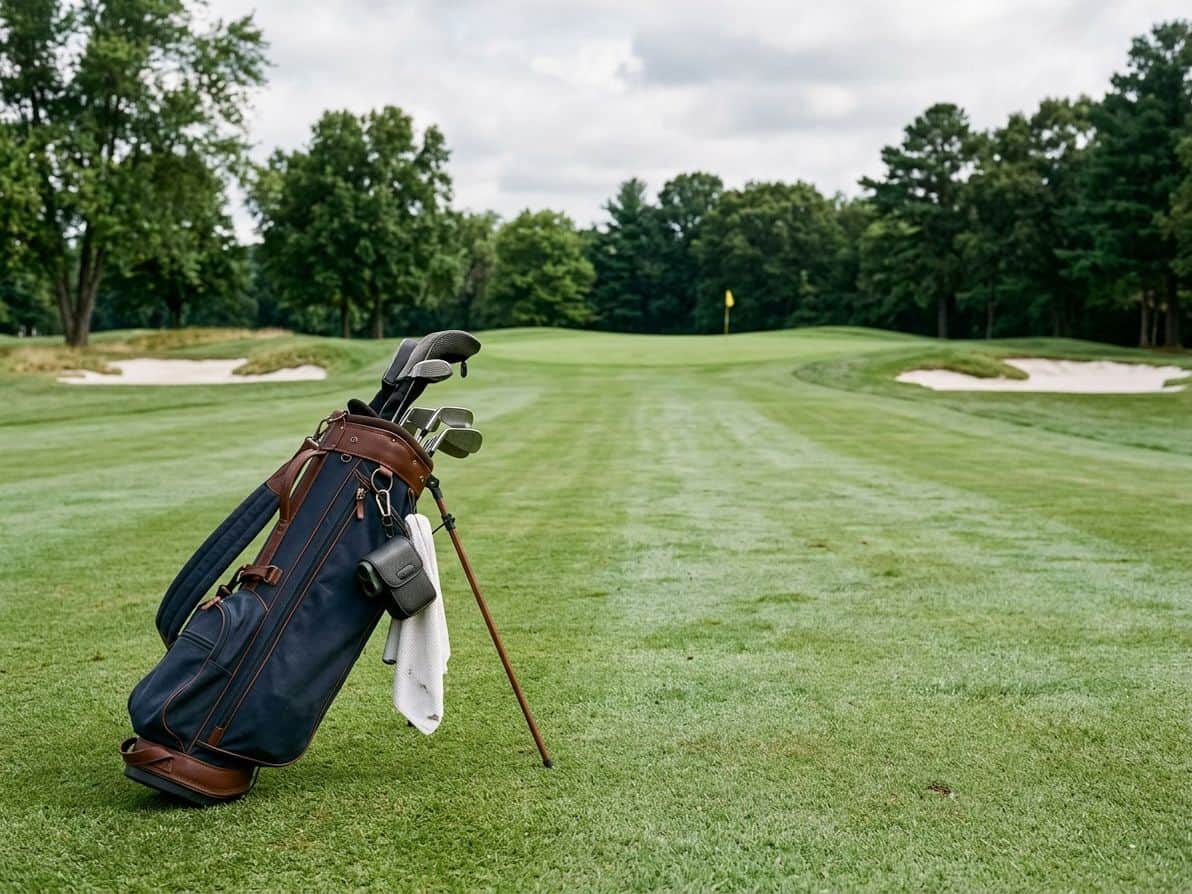
Choosing the right distance technology as a beginner golfer doesn’t need to be complicated. The key is matching your current skill level, playing style, and budget to tools that will actually help, not overwhelm, your game. Follow these steps to make a confident decision without overspending or buying tech you’re not ready for.
Step 1: Assess Current Skill and Distance Consistency
Before investing in any distance tech, evaluate your game honestly. Ask yourself:
- Can you reliably hit the ball straight, or do you still struggle with slices and hooks?
- Do you know your average distance with each club, or are you guessing based on feel?
- Are you playing competitively, or just enjoying casual rounds with friends?
If you’re still working on basic swing mechanics or don’t know your club distances within 10 yards, you’re not ready for a laser rangefinder. At this stage, precision tools won’t help much, you’ll benefit more from general distance awareness and course management. Focus on improving consistency first, then revisit tech upgrades later.
Step 2: Start with Free Smartphone GPS Apps or Markers
Most beginners don’t need to buy anything right away. Free golf GPS apps for iPhone (or Android) give you basic yardages, course maps, and hazard information without slowing down play. These apps use your phone’s GPS to show distances to the front, middle, and back of greens, and some even track your shots.
Try a few rounds with a free app to see if you actually use the data. If you find yourself checking yardages often and making better club choices, you’re ready for the next step. If you forget to check or don’t trust the numbers, stick with course markers or sprinkler heads for now.
Step 3: Choose GPS Watches for Speed and Hazard Information
If you’re ready to move beyond free apps, a GPS watch is the next logical step. These devices give you quick yardages with a glance at your wrist, plus hazard distances, layup points, and sometimes even shot tracking. They’re ideal for beginners because they don’t require aiming or steady hands, just look down and play.
GPS watches are also great for pace of play. You won’t hold up your group while fuming over a yardage book or fumbling with a laser. Many models start around $100–$150, making them a low-risk way to test if you’ll actually use distance tech on every shot.
Step 4: Upgrade to a Laser Rangefinder When Precision Matters
Once you know your club distances within 5 yards and want exact pin measurements, it’s time to consider a laser rangefinder. These devices use a laser beam to give you precise yardages to flags, hazards, or any target on the course. They’re especially useful for approach shots, where a few yards can make the difference between a birdie and a bogey.
Laser rangefinders require a steady hand and clear line of sight, so they’re not ideal if you’re still working on basic swing mechanics. But if you’re playing competitively or want to dial in your distances, they’re worth the investment. For recommendations, check out our list of the best golf rangefinders.
Step 5: Match Tech Features to a Realistic Beginner Budget
Budget is a major factor for beginners. You don’t need the most expensive model to get value from distance tech. Here’s a quick breakdown of what to expect at different price points:
- $100–$150: Entry-level GPS watches or basic laser rangefinders. Good for testing if you’ll use the tech regularly.
- $150–$250: Mid-range GPS watches with shot tracking, or laser rangefinders with slope adjustment. Ideal for beginners ready to commit to distance tech.
- $250+: Premium models with advanced features like shot tracking, course mapping, or tournament-legal slope modes. Best for serious or competitive golfers.
Avoid overspending on features you won’t use. If you’re just starting out, a $150 GPS watch or laser rangefinder will give you 90% of the benefit without breaking the bank. Upgrade later if you find yourself wanting more data or precision.
Common Mistakes Beginners Make with Distance Tech
Buying a golf rangefinder is a big step for new golfers. But many beginners make avoidable mistakes that waste money or hurt their game. We tested entry-level devices and talked to coaches to spot the most common errors. Here’s what to watch for, and how to avoid them.
New golfers often assume a high-end rangefinder will improve their game instantly. But without consistent ball-striking, exact yardages don’t help much. A $300 laser with slope adjustment won’t fix a slice or shank. We found most beginners benefit more from a $100–$150 GPS watch or basic laser first. These devices give reliable distances without overwhelming features.
- Club distances matter more than pinpoint accuracy – If you don’t know your 7-iron carries 140 yards, a rangefinder won’t help.
- Lessons first, tech second – A $150 lesson improves scores more than a $150 rangefinder for most beginners.
- Free apps work for early rounds – Many courses offer free GPS apps with basic yardages and hazard info.
Prioritizing Exact Pin Yardage Over Course Management
Beginners often fixate on pinpoint yardages, ignoring hazards, wind, and green slopes. A rangefinder that only shows pin distance can lead to poor club selection. GPS devices, which display hazards and layup points, help new golfers think strategically. We saw players using GPS devices make smarter decisions on doglegs and water hazards.
- Hazards decide clubs, not just distance – A 150-yard shot over water needs a different club than 150 yards to an open green.
- GPS devices show more than lasers – Many GPS watches display front/middle/back of greens and hazard distances.
- Lasers require steady hands – Shaky hands or wind can make lasers harder to use for beginners.
Slowing Down Pace of Play with Complex Gadgets
Some rangefinders have features that slow down play, like slope adjustment, shot tracking, or stat logging. Beginners often spend too much time fiddling with settings instead of focusing on their swing. We timed players using basic vs. advanced devices. Those with simple GPS watches or entry-level lasers played 10–15% faster.
- Stick to essentials – Look for devices with one-button operation for early rounds.
- Avoid shot-tracking early – Logging every shot adds time and distraction.
- Practice with your device – Learn to use it quickly at home or on the range, not during a round.
Overlooking Slope Rules and Tournament Legality
Many rangefinders include slope adjustment, which accounts for elevation changes. But slope features are often banned in tournaments. Beginners sometimes buy slope-enabled devices without realizing they can’t use them in competitions. We recommend checking local rules before buying.
- Slope is usually off by default – Most devices let you toggle slope on/off.
- GPS devices rarely have slope – They’re usually tournament-legal without adjustments.
- Ask about local rules – Some casual leagues allow slope, but most official tournaments don’t.
Avoiding these mistakes helps beginners choose the right distance tech at the right time. Focus on fundamentals first, then add tools that match your skill level.
Frequently Asked Questions
Should a beginner start with a golf GPS or a laser rangefinder?
Beginners often find golf GPS devices easier to use. They provide quick yardages to hazards and greens without requiring steady hands or aiming. A GPS watch or handheld unit can also track stats and help pace of play, which is useful while learning the game. Laser rangefinders offer pinpoint accuracy (±1 yard) but require practice to aim correctly. They’re better suited for golfers who already have consistent ball-striking and want exact distances to flags. If you’re still working on fundamentals, a GPS device is usually the smarter first step.
At what skill level does a laser rangefinder's extra precision matter most?
A laser rangefinder’s precision becomes valuable once you can reliably hit clubs within 10–15 yards of your target. This typically happens around a 15–20 handicap or when you start playing the same courses frequently. Before that, the extra yard or two won’t make a meaningful difference in your scores. Golfers who play in competitive matches or tournaments also benefit sooner, as even small distance errors can cost strokes. If you’re still struggling with basic swing mechanics, focus on practice before investing in a laser.
How much should new golfers budget for their first distance device?
Entry-level GPS watches and handheld devices start around $100–$150, offering basic yardages and hazard info. For a quality laser rangefinder, expect to spend $150–$250 for models with slope adjustment and reliable accuracy. Mid-range options ($200–$300) often include shot-tracking and course mapping features. If you’re unsure, start with a budget GPS to learn the basics. Upgrade to a laser later if you need more precision or plan to play competitively.
Can beginners rely on smartphones or yardage markers instead of buying tech?
Smartphones and course yardage markers can work in a pinch, but they have limitations. Markers only show distances to the center of the green, not hazards or front/middle/back pins. Smartphone apps (like GolfLogix) provide more detail but drain battery life and require constant phone handling during play. Tech like GPS watches or rangefinders keeps your hands free and speeds up play, which is especially helpful for beginners. If you’re serious about improving, a dedicated device is worth the investment.
Do slope and shot-tracking features really help new players improve?
Slope adjustment (which accounts for elevation changes) is useful but not essential for beginners. It can confuse new golfers who are still learning basic club distances. Focus on consistent ball-striking before relying on slope data. Shot-tracking features (like those in Garmin or Arccos devices) can help identify patterns in your game, such as common miss tendencies or club distance gaps. However, they’re more valuable once you’ve developed a repeatable swing. For now, use them as a learning tool, not a crutch.
Final Thoughts
Choosing your first golf rangefinder comes down to timing and technology. We found that most beginners benefit more from a simple GPS device early on, it speeds up play, highlights hazards, and removes guesswork without adding complexity. A laser rangefinder makes sense once you’ve dialed in your club distances and want pinpoint accuracy, usually after 10–20 rounds of consistent play. The key is matching the tool to your current skill level, not the other way around.
Start with a budget-friendly GPS watch or handheld device under $150 to build confidence in course management. When you’re ready to upgrade, look for a laser model with slope adjustment (for practice) and a clear display that won’t disrupt your routine. Avoid overpaying for features you won’t use yet, and always check tournament rules if you plan to compete. The best distance tech should simplify your game, not complicate it. Head to the range with your new device, practice reading numbers under pressure, and let the data work for you, not the other way around.