

A stiff arm for golf travel bag is a telescoping rod that sits above your longest club to absorb vertical impact and top-down compression during transit. It protects clubheads from being crushed when bags are stacked or loaded overhead, which is the most common cause of travel damage.
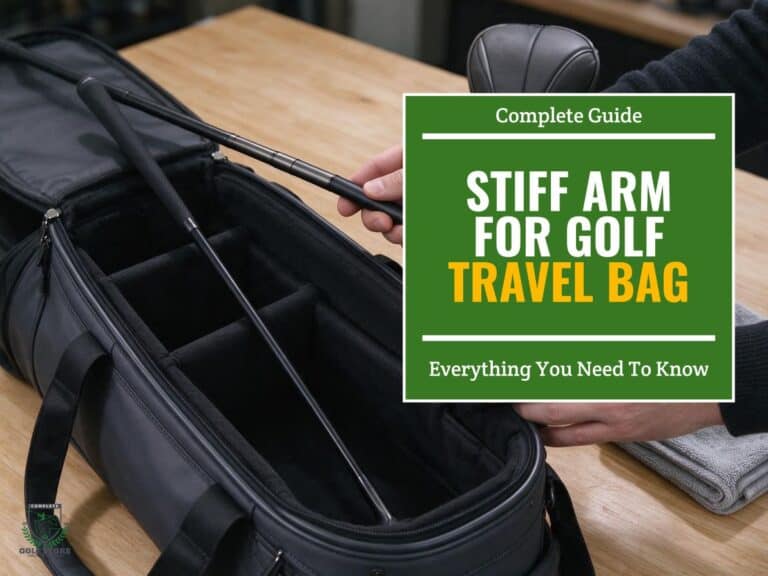
The stiff arm works by creating a rigid support column between your clubs and the top of the travel cover. You extend it slightly above your tallest club, usually the driver, so the rod takes the impact instead of the clubhead. It slides into the bag like a club and adjusts to fit different bag heights.
This guide covers what the stiff arm protects against, the tools you need for setup, how to match the arm length to your driver, common installation mistakes, and how to store the rod after you return home.
What a Stiff Arm Protects Against
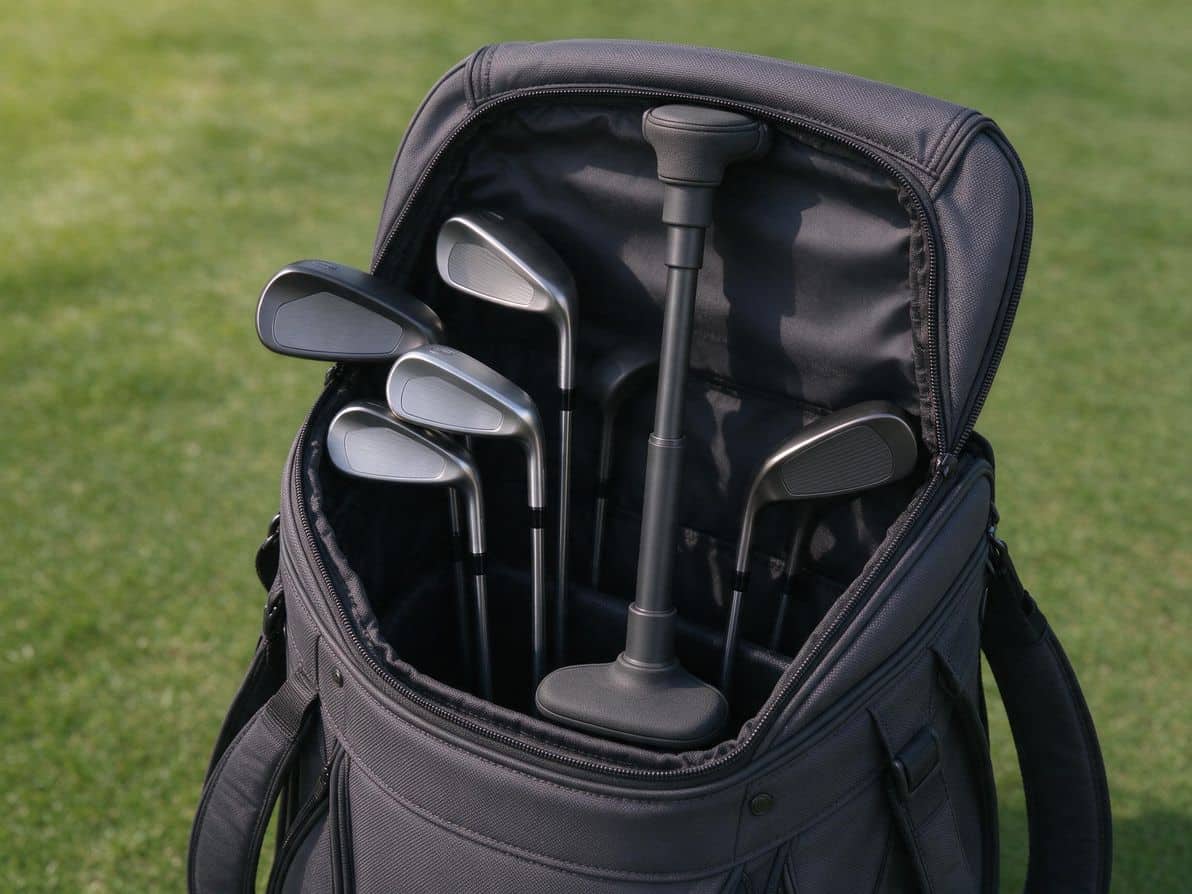
A stiff arm is a telescoping support rod that sits above your longest club inside a travel bag. Its job is specific: it absorbs vertical impact and resists top-down compression when bags are stacked, dropped, or pressed from above during transit.
What Top-Down Compression Means
Top-down compression happens when weight lands on the bag from above. Airlines stack luggage. Hotel carts tip.
Rental car trunks pile bags. Without support, that force travels straight through the travel cover and into your clubheads, shafts, and grips.
A stiff arm creates a rigid column between your clubs and the top of the cover. When something presses down, the rod takes the load instead of your driver head or irons.
What a Stiff Arm Does Not Protect Against
You need to know the limits. Manufacturers describe the stiff arm as protection against vertical impact and top-down compression, not horizontal crushing. Side impacts, bags falling on their side, or pressure squeezing the bag from the sides can still damage clubs. The rod runs vertically, so it does nothing for lateral force.
This matters if you travel with a soft-sided bag. Soft bags flex and deform under side pressure.
A stiff arm helps with the top, but you still need padding around the sides and a bag that resists crushing. If you fly frequently or check a bag through rough handling, pair a stiff arm with a hard-shell travel case or a reinforced soft bag.
The stiff arm also does not protect against theft, loss, or mishandling by baggage systems that drop bags from height onto their sides. It solves one problem well: keeping weight off your clubs from above.
A stiff arm mainly guards the club heads and shafts against knocks and crushing during baggage handling, so it's worth comparing options in our guide to golf bags for walking.
A stiff arm mainly shields your clubs from knocks, crushing, and bent shafts during baggage handling, and it works alongside golf bag organizers to keep your gear in place inside the bag.
Tools and Materials You Need
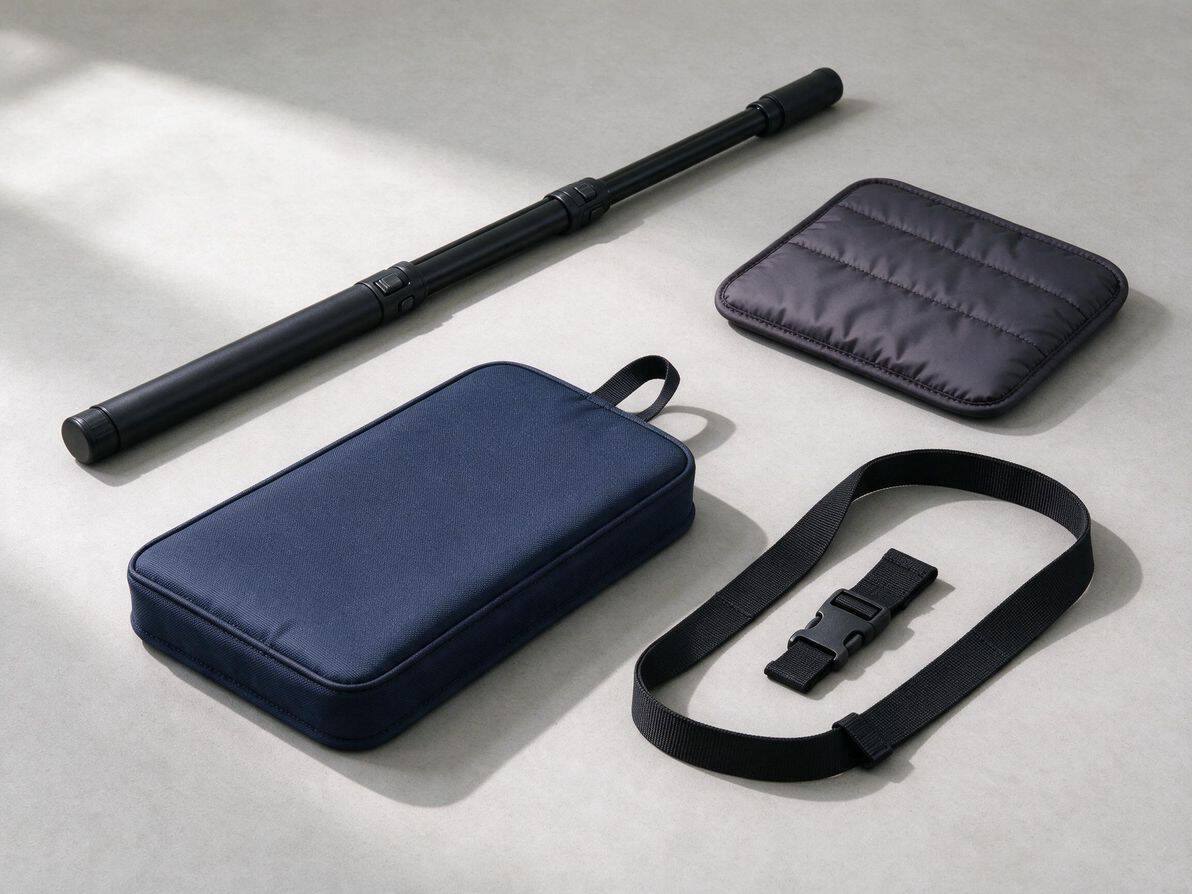
A Stiff Arm or Support Rod
You need a telescoping support rod designed for travel bags. The Club Glove Stiff Arm is a common example: a fully adjustable, 3-piece rod with a soft cushion rubber bottom foot cap.
Other options include the Backbone, Club Shield, and North Pole Club Travel Protector. The manufacturer listing for the Club Glove Stiff Arm gives a weight of 1.2 lbs with a lightweight aluminum body.
Your Driver or Tallest Club
You will use your driver or tallest club as a reference point for setting the stiff arm height. The rod needs to sit slightly above this club so it absorbs impact instead of the clubhead. Keep this club accessible during setup so you can check the fit.
Internal Straps or Padding
Your golf travel bag should have internal straps or padding to hold clubs in place. If your bag lacks these, add padding around the stiff arm base to prevent it from shifting during transit. Some bags include built-in straps that work with support rods; check your bag's interior layout before you pack.
Your Golf Travel Bag
Any hard-case or soft travel bag with enough interior height works. The bag must accommodate the stiff arm standing vertically alongside your clubs. If you are building a travel setup from scratch, pair this with our essential golf gear checklist to cover everything else you need on the road.
How to Set Up a Stiff Arm
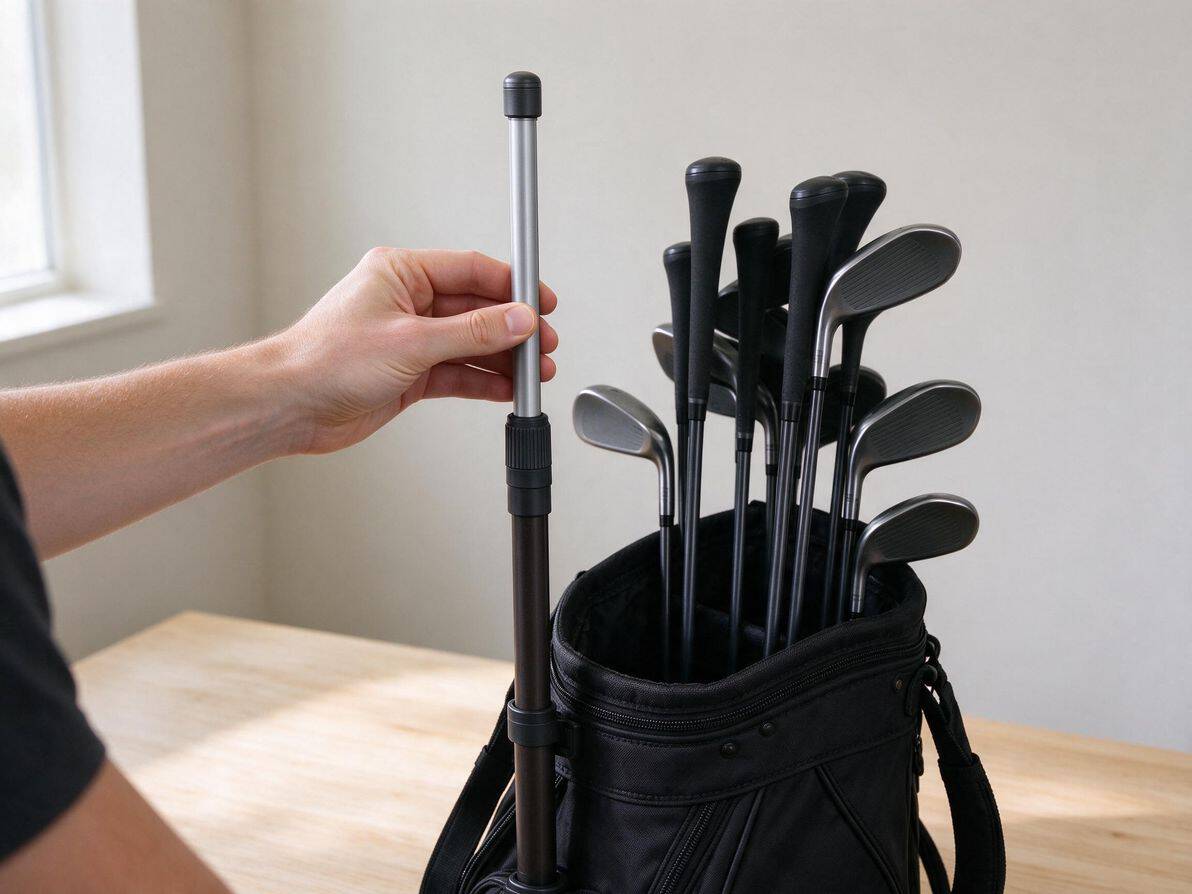
Setting up a stiff arm for your golf travel bag takes under a minute once you know the sequence. The process is the same for most telescoping support rods, including the Club Glove Stiff Arm.
Step 1: Place It in the Bag Like a Club
Slide the collapsed stiff arm into your travel bag alongside your clubs, with the padded foot resting on the bottom of the bag. Position it near the center so it rises straight up through the middle of your club bundle rather than leaning against one side.
Step 2: Extend Slightly Above the Tallest Club
Pull the telescoping sections upward until the top of the rod sits a little above your tallest club, usually your driver. The exact height varies by bag and club set; there is no fixed measurement. The goal is for the rod to meet the cover before your clubheads do.
Step 3: Lock It Snugly Against the Cover
Twist or tighten the adjustment mechanism so the rod holds its length firmly. Press the top of the rod gently against the inside of the travel cover. It should feel snug, not forced. A loose rod will shift during transit and fail to absorb impact.
Step 4: Confirm the Bag Is Supported
Zip or close the travel bag and check that the cover fabric tents slightly over the top of the rod. This tension absorbs the hit instead of your clubs. When you unpack, reverse the steps: release the tension, collapse the rod, and remove it before pulling out your clubs.
After travel, disassemble the stiff arm into its sections and store it flat or alongside your bag so it stays straight and ready for the next trip.
Stiff Arm Length Compared With Your Driver
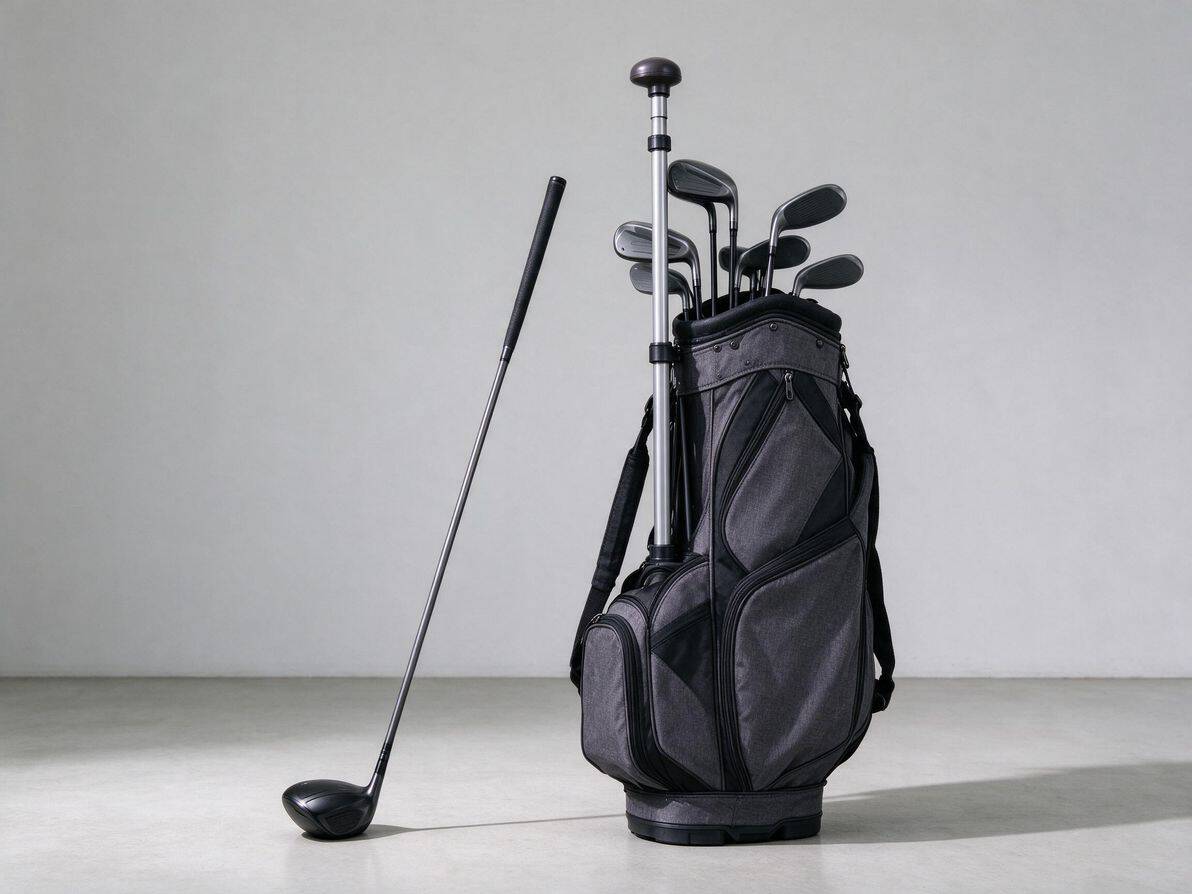
Getting the length right is what makes a stiff arm work. Too short, and the impact still reaches your clubs. Too long, and the rod pushes against the travel cover before it can absorb anything.
Matching Height to the Tallest Club
The standard setup is to extend your stiff arm slightly above the tallest club, which is usually your driver. When the rod sits a little higher than the clubhead, any top-down force hits the stiff arm first instead of the driver crown.
Your driver is the reference point because it is almost always the longest club you carry. Measure or eyeball your driver standing upright in the travel bag, then set the stiff arm to extend past that height.
The goal is a small gap of extra length, not a large one. A rod that towers inches above your clubs wastes space and can shift during transit.
The Club Glove Stiff Arm is a fully adjustable, 3-piece telescoping rod, so you can dial in the height for your specific set. Other telescoping designs work the same way: extend, lock, and check the fit against your tallest club.
Checking Fit Before You Travel
Before you zip the bag, run through this quick check:
- Stand your driver upright in the travel bag where it will sit during travel.
- Extend the stiff arm beside it and lock it at a height slightly above the driver head.
- Place the stiff arm into the bag like a club, then press the travel cover down gently. The rod should contact the cover with light pressure, not force it outward.
- Shake the bag lightly. The stiff arm should stay in place without sliding or rattling.
If the rod does not reach the cover, extend it one more segment. If it bends the cover outward, shorten it. You want contact, not compression, before the bag ever leaves your hands.
One gap worth noting: most guides describe this setup in general terms but do not publish a fixed measurement or a universal rule. Your exact length depends on your driver, your bag depth, and your travel cover thickness. Treat "slightly above the tallest club" as your starting point, then adjust based on the fit check above.
A stiff arm set correctly turns your travel bag into a supported column. Set it wrong, and you are carrying dead weight that protects nothing.
Common Setup Mistakes to Avoid
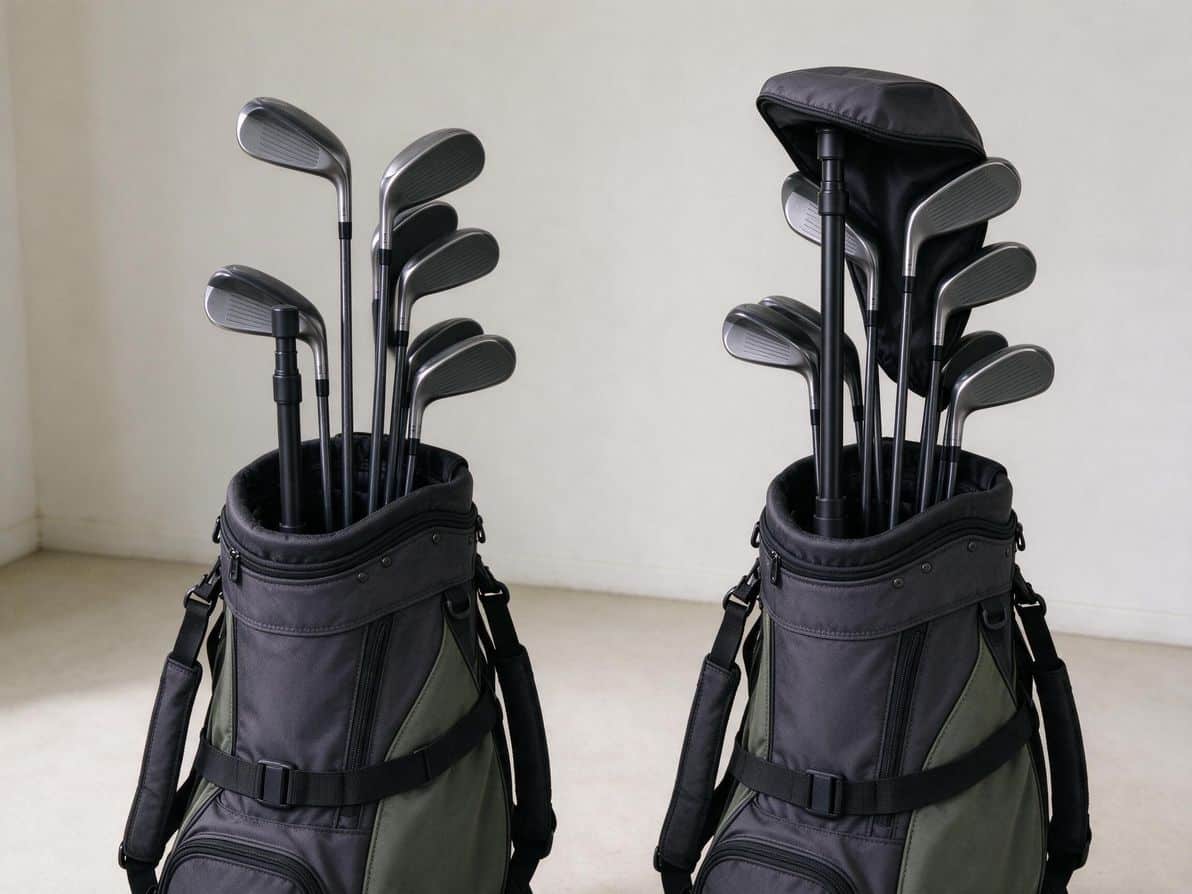
A stiff arm for golf travel bag only protects your clubs when you set it up correctly. Three mistakes show up again and again in how-to guides and reviews, and each one leaves your clubs exposed or your setup unstable.
Setting the Arm Too Short
The most common error is extending the stiff arm so it stops at or below your tallest club. When the rod sits flush with your driver head, any top-down impact transfers straight into the club instead of the rod.
Extend slightly above the tallest club so the rod takes the hit first. If you can see the top of your driver above the rod, the arm is too short.
This mistake often happens because travelers measure the arm against the bag's interior height rather than against their clubs. Your driver with the headcover on is taller than the shaft alone. Account for the full club length, headcover included, when you set the extension.
Expecting Protection From Every Impact
A stiff arm absorbs vertical impact and top-down compression. It does not protect against horizontal crushing, side impacts, or rough handling that squeezes the bag from the sides. Airlines and baggage handlers can drop, stack, or press bags in ways a single internal rod cannot stop.
It is not a crush shield. Travelers sometimes skip external protection because they assume the stiff arm covers all risks. That assumption leads to cracked shafts and dented clubheads when a heavy suitcase lands on the bag sideways. Use the stiff arm as one layer of protection, not the only layer.
Skipping Padding and Internal Straps
The stiff arm holds one point at the top of the bag. It does not stop your clubs from shifting, rattling, or pressing against each other during transit. Without padding between clubheads and without internal straps securing the set, clubs can still strike each other even with the arm in place.
Wrap your irons in towels or use headcovers on every club. Cinch internal straps tight so the club set sits snug against the stiff arm's base. A loose setup lets the arm do its job at the top while the clubs bang around below it.
If your clubs arrive damaged despite a stiff arm, check your golf club warranty and repair guide before paying for repairs out of pocket. Many manufacturers cover transit damage when you file a claim with the right documentation.
Avoid these three mistakes and your stiff arm will do the job it was built for: standing between your clubs and the weight of the world above them.
Storing the Stiff Arm After Travel
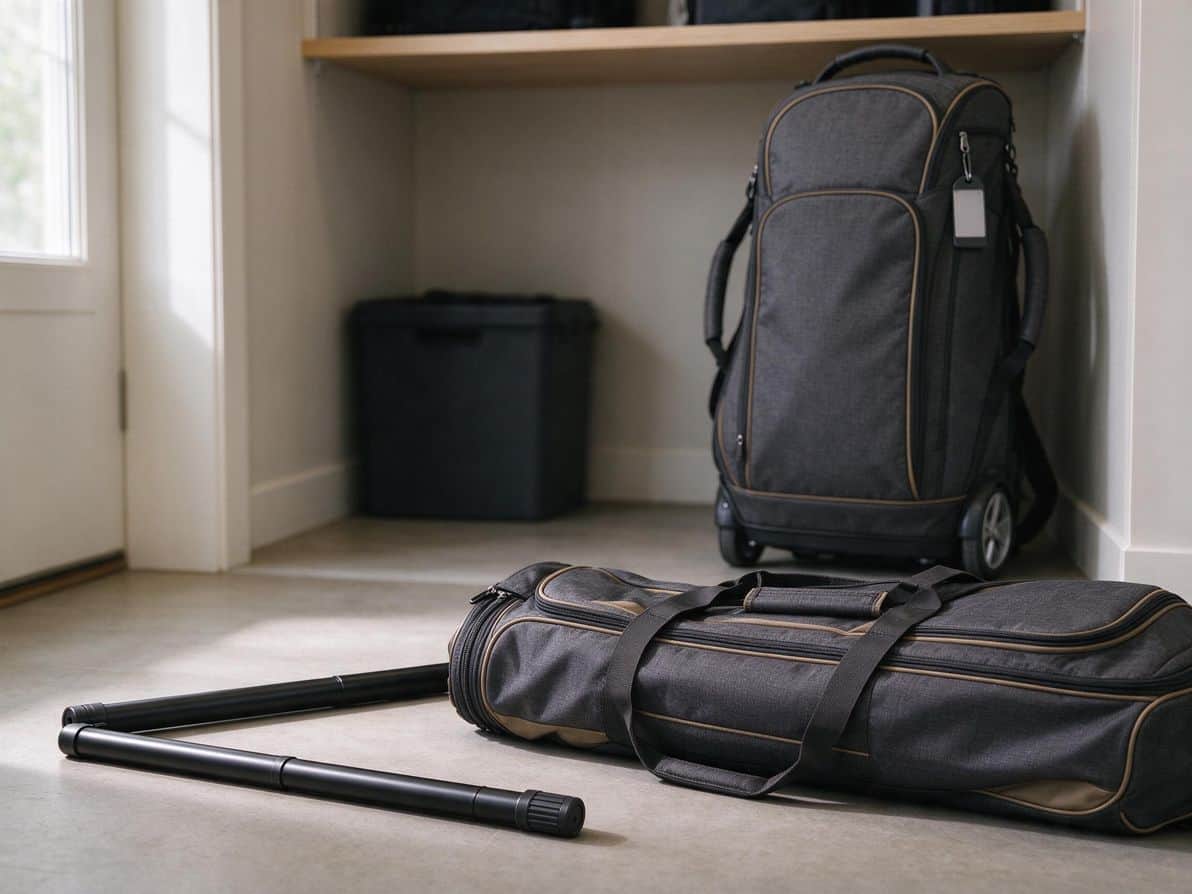
Once you arrive at your destination and unpack your travel bag, the stiff arm needs proper storage so it stays in good shape for the return trip. A little care here takes only a minute and keeps the telescoping sections clean and the threads free of grit.
Collapsing and Disassembling the Rod
Collapse the stiff arm fully before you put it away. Twist each telescoping section counterclockwise to unlock it, then slide the sections together until the rod reaches its shortest length. The Club Glove Stiff Arm, for example, breaks down into three pieces, so you can separate the sections completely if you prefer.
Work slowly and keep dirt off the inner tubes as you collapse them. Sand or grit inside the sections can scratch the aluminum and make the rod harder to extend next time.
After collapsing, give the rod a quick wipe with a dry cloth. Check the soft cushion rubber bottom foot cap for debris. This cap protects your club grips during travel, so keeping it clean helps it do its job on the next trip.
Weight and Storage Notes
The manufacturer listing for the Club Glove Stiff Arm gives a weight of 1.2 lbs with a lightweight aluminum body. That low weight means the rod adds little to your luggage, but you still want to store it where it will not rattle around or bend. A few practical options work well:
- Slide the collapsed rod into a side pocket of your travel bag or your golf bag.
- Store it flat in a closet or garage shelf, away from heavy items that could dent the aluminum.
- Keep it in its original packaging if you have it, which protects the sections from scratches.
Avoid leaving the stiff arm in a hot car for long periods. Heat can warp plastic components and weaken adhesive bonds over time. If you travel frequently, consider keeping the rod in your home golf bag so it is always ready.
For occasional trips, a garage or closet shelf works fine. When you pack for your next round, check that the telescoping action still moves smoothly. If it feels gritty or sticks, rinse the sections with water and let them dry completely before use.
Taking care of your golf gear between trips keeps it working longer. A stiff arm that slides freely and locks firmly protects your clubs every time you travel. Pair this storage habit with regular club cleaning and your travel setup stays reliable season after season.
Frequently Asked Questions
What does a stiff arm protect against?
A stiff arm protects your clubs from vertical impact and top-down compression inside a travel bag. It creates a rigid support column between the top of the travel cover and your longest club, so force from above lands on the rod instead of your clubheads. It is not designed for horizontal crushing or sideways pressure.
How do you set up a golf bag stiff arm?
Place the stiff arm in your travel bag like a club, resting the bottom foot cap on the bag floor near your driver. Extend the telescoping sections upward until the top sits snugly against the inside of the travel cover. Tighten the adjustment mechanism so the rod holds firm, then check that no club extends above the arm's top.
How long should the stiff arm be compared with the driver?
Set the stiff arm to extend slightly above your tallest club, usually your driver. This positions the rod to absorb impact before the force reaches the clubhead. There is no fixed measurement rule; the goal is a snug fit between the bag floor and the travel cover with the arm standing a bit taller than your driver.
Is a stiff arm enough for soft travel bags?
A stiff arm adds vertical support, but soft travel bags still leave your clubs exposed to side impacts and crushing. For full protection, pair a stiff arm with a hard-shell travel case or a soft bag with reinforced padding. The stiff arm handles top-down force; it does not replace structural side protection.
What products are examples of stiff arms?
The Club Glove Stiff Arm is a common example: a fully adjustable, 3-piece telescoping rod with a soft cushion rubber bottom foot cap. Other products in this category include the Backbone, Club Shield, and North Pole Club Travel Protector. Compare weight, adjustability range, and bottom cap design when choosing between them.
Final Thoughts
A stiff arm for golf travel bag is one of the simplest upgrades you can make to protect your clubs on the road. It creates a rigid support column between your longest club and the top of the travel cover, so vertical impact and top-down compression hit the rod instead of your clubheads, shafts, and grips.
Without it, that force travels straight through the cover and into your gear.
Setting one up takes minutes. Extend the rod slightly above your tallest club, place it in the bag like a club, and adjust it snug against the travel cover. The Club Glove Stiff Arm, a fully adjustable 3-piece rod with a soft cushion rubber bottom foot cap, is a solid example at 1.2 lbs that disassembles for storage.
Avoid the common mistakes: do not set the arm too short, do not assume side-impact protection, and do not skip padding the rest of the bag. A stiff arm handles vertical force, not horizontal crushing.
Before your next trip, check that your stiff arm reaches above your driver, that internal straps hold your clubs secure, and that you have padding around the sides. Store the rod disassembled so it stays ready for the next round.
Your clubs represent a real investment. A stiff arm costs little and takes up minimal space, yet it stands between your gear and the rough handling of airports and cargo holds. Add one to your travel routine, and you travel with confidence knowing your clubs arrive ready to play.