



Flying with golf clubs or shipping them depends on your trip length, budget, and how much you value convenience. Shipping ahead often wins for longer trips or when you want to avoid baggage fees and damage risk. Flying works better for short getaways when you need your clubs immediately upon arrival.
Three options exist: fly with your clubs, ship them ahead, or rent at your destination. Airlines charge sports-equipment and overweight-baggage fees that add up quickly. Shipping services like Ship Sticks and LugLess let you schedule pickup and track delivery, with built-in insurance that often covers up to $1,000 in damage or loss.
This guide compares costs, explains when each option makes sense, and covers how to protect your clubs whether you fly or ship.
- 1) The Three Options for Getting Clubs to Your Destination
- 2) When Shipping Golf Clubs Makes More Sense
- 3) Comparing Costs: Baggage Fees vs. Shipping Quotes
- 4) Common Shipping Services for Golf Clubs
- 5) Protecting Your Clubs When You Fly
- 6) Shipping Protection and Insurance Coverage
- 7) Common Mistakes to Avoid
-
8)
Frequently Asked Questions
- 8.1) When does shipping golf clubs make more sense than flying with them?
- 8.2) What are the main convenience and cost tradeoffs?
- 8.3) Which shipping services are commonly used for golf clubs?
- 8.4) What steps reduce the risk of damage when flying with clubs?
- 8.5) When is renting clubs a better option?
- 9) Final Thoughts
The Three Options for Getting Clubs to Your Destination

You have three ways to get your clubs on a trip: fly with them, ship them ahead, or rent at your destination. Each option trades money, convenience, and protection differently. The right choice depends on your trip length, your airline's fees, and how much you value arriving with your own clubs.
Flying With Your Clubs
Flying with your clubs puts them in your hands the moment you land. You pack them in a travel bag, check them at the counter, and pick them up at baggage claim. This works well for short trips where you need your clubs immediately.
The tradeoff is cost: airlines charge sports-equipment fees and overweight-baggage fees that add up quickly. A round-trip with a heavy golf bag can cost significantly more than expected. You also take on the risk of damage in transit, since baggage handlers do not treat golf bags gently.
Shipping Your Clubs Ahead
Shipping your clubs ahead removes them from the baggage system entirely. You schedule a pickup or drop-off, and the carrier delivers your clubs to your hotel or course before you arrive.
Ship Sticks and LugLess both operate this way. The process is straightforward: schedule the shipment, print your label, and hand off your bag.
LugLess notes that shipping can help you avoid airline sports-equipment and overweight-baggage fees, which makes it worth comparing total costs before you book a flight. Shipping takes more planning than flying, but it removes the baggage claim wait and the risk of lost luggage.
Baggage fees are not always cheaper than shipping, so run the numbers for your specific trip.
Renting Clubs at Your Destination
Renting clubs at your destination means you travel empty-handed. You pick up a set at the course or pro shop when you arrive. This option costs the least upfront if you only play once or twice on a trip.
The tradeoff is fit and familiarity: rental sets vary in quality, and you lose the consistency of playing with clubs you know. If you are particular about your golf club types and uses, renting may not satisfy. For a single casual round, though, renting beats paying to transport your own bag.
Pick the option that matches your trip. Fly when speed matters most. Ship when fees and protection matter more. Rent when you want to travel light and do not mind unfamiliar clubs.
When Shipping Golf Clubs Makes More Sense
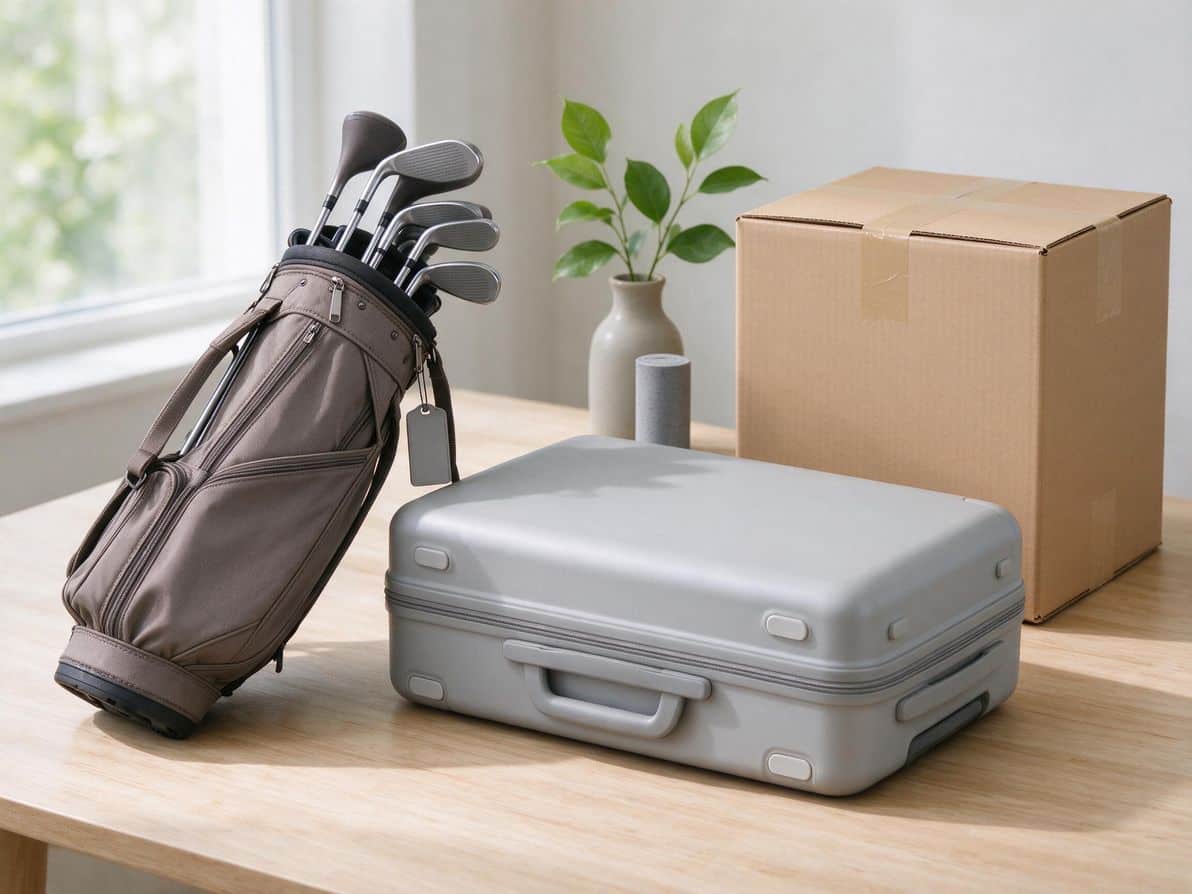
Shipping your clubs ahead of a trip trades some convenience for peace of mind and often lower total cost. The right choice depends on your trip length, budget, and how much you value arriving with your own gear in hand.
When Convenience Outweighs Cost
Flying with your clubs puts them in your hands the moment you land. For a weekend trip or any itinerary where you tee off the same day you arrive, that immediacy matters. You skip the wait for a delivery truck and the risk of a delayed shipment.
Shipping flips that tradeoff. You give up instant access, but you gain a lighter travel day. No dragging a travel bag through the airport.
No worrying about gate-checking a soft bag. Your clubs travel separately while you fly with just a carry-on only, which speeds up check-in, security, and baggage claim.
Ask yourself: do you need your clubs within hours of landing, or can they arrive a day ahead? If you can wait, shipping often wins on comfort.
When Airline Fees Add Up
Baggage fees for golf clubs can surprise you. Many airlines charge sports-equipment fees on top of standard checked-bag rates, and overweight bags add another layer. A travel bag packed with clubs, shoes, and extras can easily cross weight thresholds.
Shipping lets you sidestep these charges entirely. Services like LugLess note that shipping clubs can help you avoid airline sports-equipment and overweight-baggage fees.
Run the numbers before you book: compare your airline's round-trip golf bag fee against a shipping quote. On longer trips or with multiple bags, shipping sometimes costs less even before you factor in the hassle of hauling gear through terminals.
Get a real quote from your airline and a real quote from a shipping service. Fees vary by carrier, route, and season, so check both before deciding.
When Arriving With Clubs Feels Risky
Airlines handle thousands of bags daily, and golf clubs take a beating in cargo holds and on tarmacs. Hard cases help, but they are not invincible. A cracked driver shaft or bent iron can ruin a trip before it starts.
Shipping reduces that exposure. Your clubs move through a dedicated carrier network with tracking at each step. Ship Sticks includes $1,000 in damage coverage at no extra cost, with options to buy higher coverage.
GolfPass notes that shipping protection often covers up to $1,000 against damage or loss. Confirm current terms with your provider before you ship, as coverage limits and exclusions change.
If you have invested in clubs you care about, or if you have seen the signs you need new clubs and cannot afford another replacement, shipping lowers the risk of adding damage to that list. The quieter handling and included insurance make it a practical choice for expensive setups.
Comparing Costs: Baggage Fees vs. Shipping Quotes
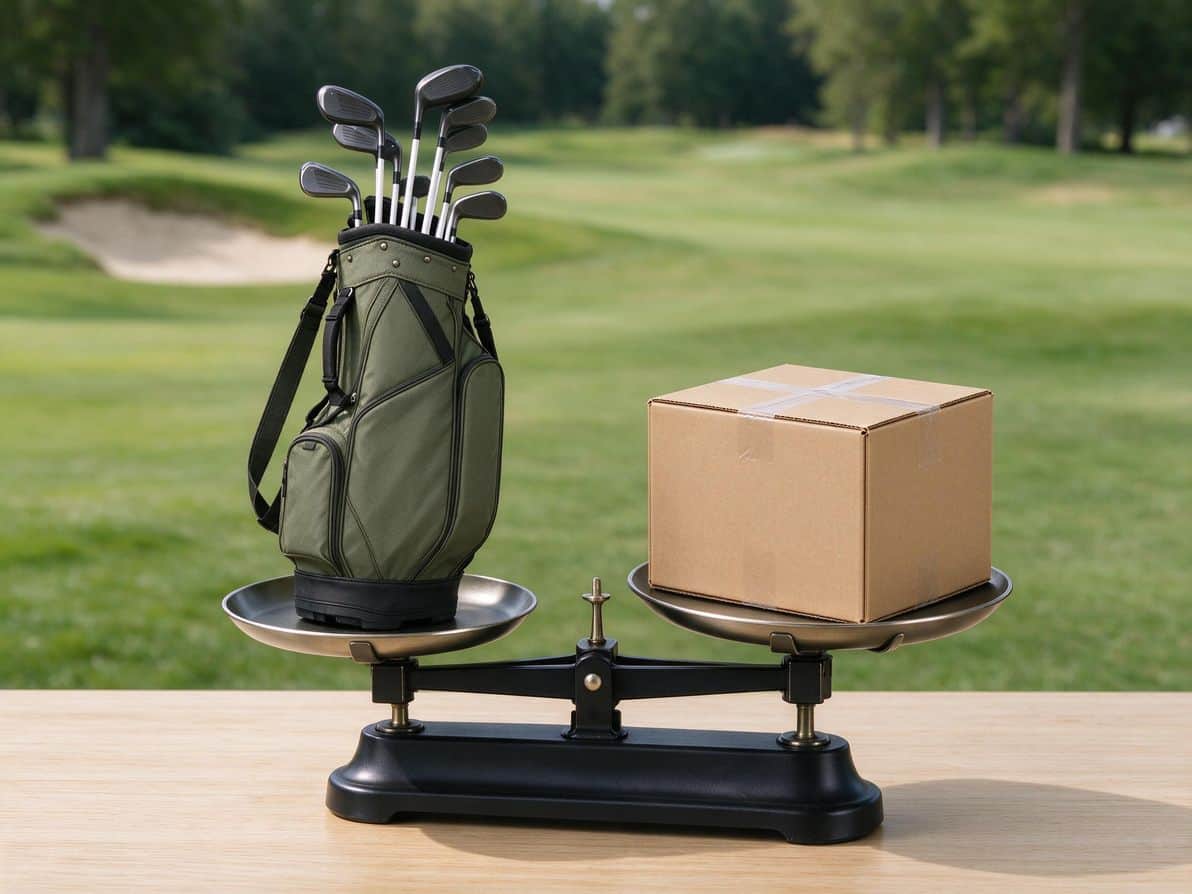
Money decides this choice more often than convenience does. Before you book, run the numbers for your specific trip. Baggage fees and shipping quotes both add up fast, and the cheaper option flips depending on your airline, your bag weight, and how many days you travel.
Airline Sports Equipment and Overweight Fees
Airlines treat golf bags as sports equipment, and most charge a fee on top of your standard checked bag cost. That fee varies by carrier, so check your airline's current sports equipment policy before you pack. Weight matters too.
A travel bag loaded with clubs, shoes, and rain gear can push past the 50-pound limit most airlines set for standard checked bags. Overweight fees stack quickly: a bag at 70 pounds can cost far more than the base sports equipment fee.
Round-trip, you pay these fees twice. Ask yourself what your total out-of-pocket looks like when you add both directions.
Typical Shipping Price Points
Shipping services quote based on distance, speed, and package size. Ship Sticks lists ground service starting around $39 and next-day service around $109.99, but those are starting points only. Your actual quote depends on where you ship from and to.
LugLess operates on a similar model, with pricing that varies by route and delivery speed. FedEx and UPS also carry golf bags, though you arrange those shipments directly. Get quotes from at least two services and compare door-to-door timing against your flight schedule.
Building a Total Trip Cost Comparison
Add up every cost for each option before you decide. For flying, include the round-trip sports equipment fee, any overweight charges, and the risk of damage with no included coverage. For shipping, include the quoted rate, any insurance upgrade, and the cost of your time if delivery arrives late.
A common mistake is assuming baggage fees are always cheaper than shipping. On longer trips or with heavier bags, shipping often costs less and arrives with less hassle.
Run both totals side by side. The lower number usually wins, but factor in whether you need your clubs the moment you land.
Common Shipping Services for Golf Clubs
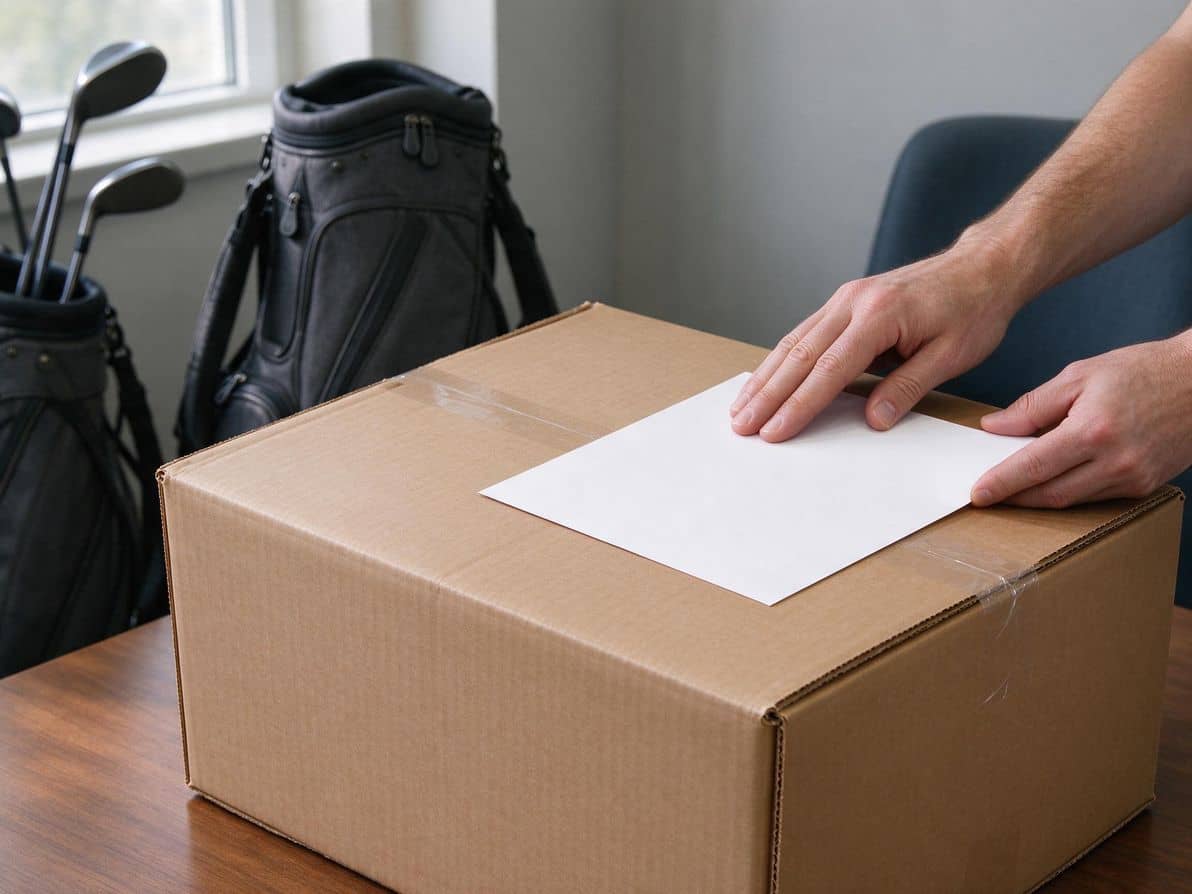
Shipping your clubs ahead of a trip removes the hassle of hauling a travel bag through airports and skips airline baggage fees. Several services specialize in this, and the right choice depends on your timeline, budget, and how much protection you want.
Dedicated Golf Club Shipping Services
Ship Sticks and LugLess are two services built specifically for golfers. Ship Sticks operates a door-to-door model: you schedule a shipment online, receive a shipping label, and either drop your clubs at a carrier location or arrange a pickup from your home.
Listed starting prices run from about $39 for ground to about $109.99 for next-day, though actual quotes vary by distance, weight, and service speed, so check current rates before booking.
LugLess works similarly, connecting you with carriers to ship your bag. Its main pitch is cost avoidance: by shipping ahead, you skip airline sports-equipment fees and overweight-baggage charges that can add up fast on a golf trip.
General carriers like FedEx and UPS also ship golf clubs, but they function as transport only. You handle packaging, insurance, and drop-off logistics yourself.
How the Shipping Process Works
The basic workflow is the same across dedicated services:
- Enter your pickup and delivery addresses online.
- Select a service speed (ground, express, or next-day).
- Print the shipping label sent to you.
- Attach the label to your packed travel bag.
- Drop the bag at a carrier location or schedule a home pickup.
Most services provide tracking, so you can confirm your clubs arrive before you do. Ship Sticks includes $1,000 in coverage, with options to purchase higher protection. GolfPass notes that shipping protection often covers up to $1,000 against damage or loss. Confirm current coverage terms directly with your chosen provider, as policies can change.
Pickup or Drop-Off Options
You have two ways to get your clubs into the shipping stream:
- Pickup: Schedule a carrier to collect the bag from your home or office. This is the most convenient option if you lack transport or live far from a drop-off point.
- Drop-off: Take the labeled bag to a carrier location yourself. This usually costs less and gives you control over timing.
Either way, pack your clubs in a sturdy travel bag with padding to limit movement inside. A hard case offers more protection than a soft bag, but adds weight and cost. Whichever service you pick, book early during peak travel seasons to secure your preferred pickup window.
Protecting Your Clubs When You Fly
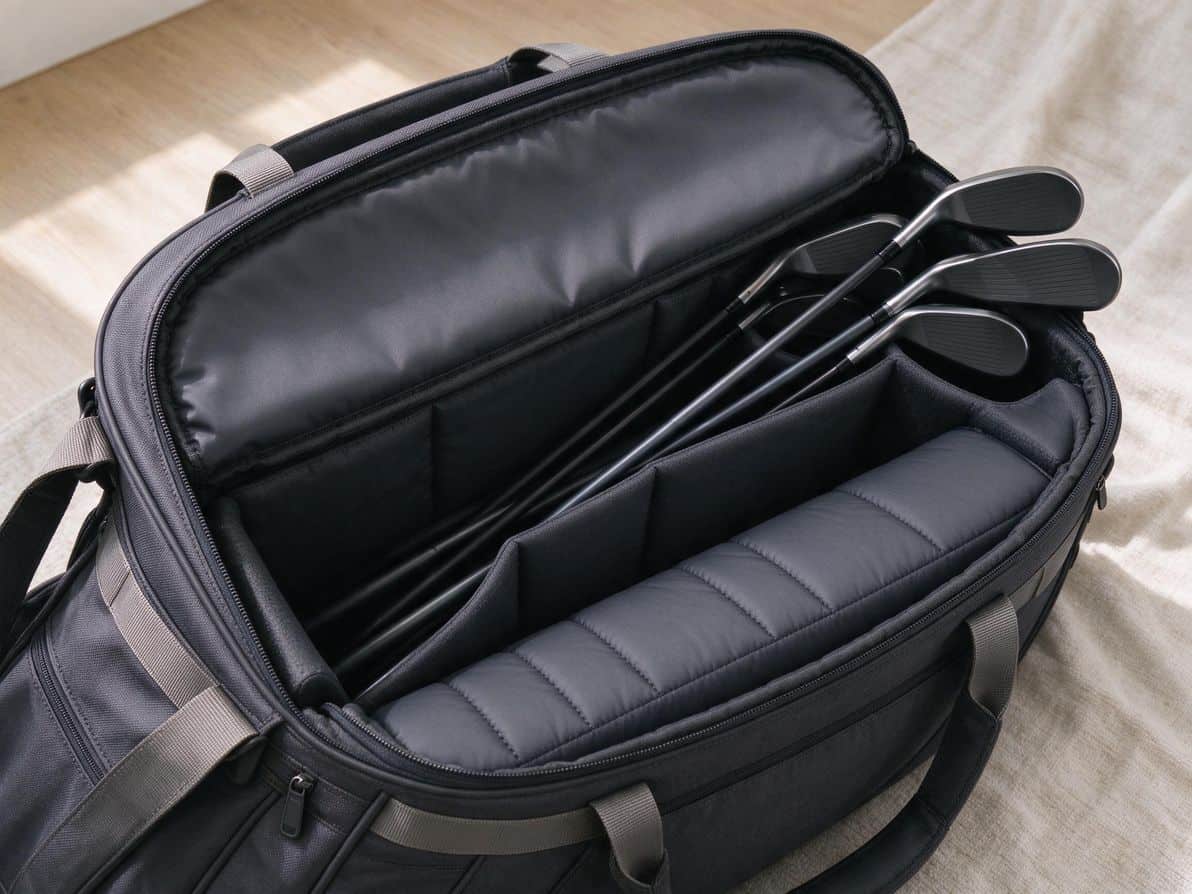
If you decide to fly with your clubs, protection starts with the bag you put them in. A hard case or a durable travel bag with a rigid frame gives you the first line of defense against baggage handlers, conveyor belts, and overhead bins.
Soft duffels leave your clubs exposed to crushing and bending, so they work only for short hops where you keep the bag with you.
Choosing a Durable Travel Bag
Look for a travel bag built specifically for golf. These bags combine a hard shell or reinforced frame with interior straps that hold clubs in place.
A travel cover that fits over a standard stand bag adds padding and weather resistance, but it offers less crush protection than a full hard case. Check that the bag fits your full set, including your driver and putter, with room for shoes and apparel if you pack them inside.
Your airline's baggage rules matter here too. Oversized or overweight bags trigger fees you should confirm before you fly. A bag that hits the weight limit on your scale at home will hit it at the airport counter.
Padding and Limiting Club Movement
Movement inside the bag causes damage. Clubs that rattle around during loading can crack shafts, dent heads, and chip finishes. Two steps fix this.
First, use the bag's interior straps or add your own to separate and secure each club. Second, fill empty space with clothing, towels, or foam so nothing shifts.
Remove the driver head if your bag allows it, and wrap it separately. Put your putter and wedges, the shortest and most wedge-shaped clubs, at the bottom where they take the least leverage from impacts.
Strap the bag closed and lock the zippers. A TSA-approved lock lets security open the bag for inspection without cutting your lock, and it signals that the bag has not been tampered with when you collect it.
Arrive early enough to check the bag at the counter rather than the gate. Gate-checked bags get thrown into smaller bins and handled more roughly. Keep your clubs, valuables, and travel documents with you in the cabin, never inside the checked bag.
Even with a good bag and careful padding, flying carries risk that shipping avoids. If your clubs are expensive or irreplaceable, weigh that risk against the convenience of having them with you. For most recreational golfers, a padded travel bag and tight packing keep damage rare enough that flying stays the simpler choice.
Shipping Protection and Insurance Coverage
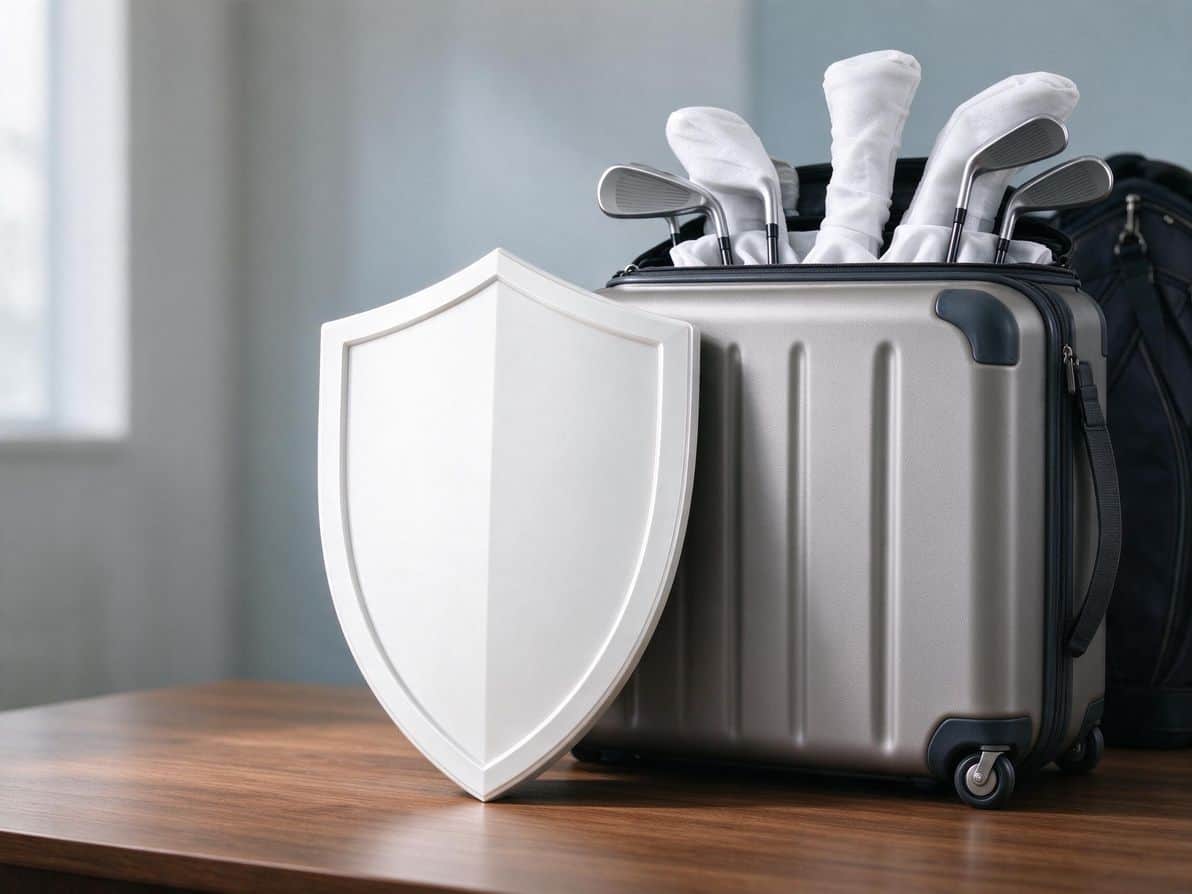
Shipping your clubs removes them from airline handling, but transit still carries risk. Protection coverage fills that gap, and understanding what each service includes helps you decide whether to add extra coverage.
Included Damage Coverage
Ship Sticks includes $1,000 in damage coverage at no extra cost with its shipments. GolfPass reports that shipping protection against damage or loss often reaches $1,000 across providers. This baseline coverage applies to most standard shipments, though terms vary by service and shipment value.
If your bag and clubs are worth more than $1,000, the included coverage may not fully protect your investment. Check the declared value of your equipment before shipping, and compare it against the included limit.
Optional Higher Coverage
Ship Sticks offers optional higher coverage for an additional fee. This add-on increases the protection limit beyond the included $1,000. The cost scales with the coverage amount you select.
Decide whether to upgrade based on your equipment's replacement cost. A full set of fitted clubs with a premium bag can exceed $2,000 or $3,000 quickly. If your gear falls in that range, higher coverage is worth pricing into your shipping quote.
Checking Current Coverage Terms
Coverage limits, exclusions, and claim processes change. Before you book, confirm the current terms directly with your shipping provider. Ask specifically:
- What is the included damage coverage limit?
- What does higher coverage cost, and what limit does it provide?
- Are there exclusions for certain club types or bag styles?
- What documentation is required to file a claim?
- How long do you have to report damage after delivery?
If your clubs are damaged in transit and you need to file a repair claim, knowing your coverage details upfront speeds the process. Keep your shipping receipt, photos of any damage, and your original equipment receipts. These documents support your claim with the carrier and with the shipping service's insurer.
For guidance on filing a claim if damage does occur, see our golf club warranty and repair guide. That resource covers how to document damage and work with manufacturers or repair shops after a shipment arrives with problems.
Protection coverage is one factor in your shipping decision. Weigh it against the convenience of flying with your clubs and the cost of renting at your destination.
Common Mistakes to Avoid
Getting your clubs to a destination should be simple, but a few predictable errors cost travelers money, time, or damaged equipment. Each mistake below is easy to sidestep once you know what to watch for.
Assuming Baggage Fees Are Always Cheaper
This is the most common miscalculation. Airlines charge separate sports-equipment fees for golf bags, and those fees stack on top of standard checked-baggage charges.
A round trip can add up fast, especially if your bag runs over the weight limit. Before you book, run the actual numbers: compare your airline's round-trip golf bag fee plus any overweight charges against a shipping quote.
LugLess notes that shipping clubs can help you avoid both sports-equipment and overweight-baggage fees entirely. The cheaper option depends on your airline, your route, and how heavy your bag is, so check both paths rather than assuming flying wins.
Skipping Padding When Flying
A travel bag alone does not protect your clubs. Without padding, clubs shift and collide with each other and the bag walls during handling. The two steps that matter most are using a durable travel bag and adding padding inside to limit movement.
Clothes, towels, or foam inserts work. Skipping this step is how shafts crack and heads chip, and a damaged club is far more expensive than a few minutes of packing effort.
Waiting Too Long to Ship
Shipping services need lead time. Ship Sticks lets you schedule a shipment, print a label, and drop off or arrange pickup, but last-minute bookings cost more and can mean missed pickup windows.
Arrange shipping several days before you leave, and confirm the delivery date lands before your tee time. Waiting until the night before a trip removes your flexibility and can force you into premium-priced options.
Ignoring the Rental Fallback
Renting clubs is a legitimate third option, not a last resort. For a single round at a destination course, renting can cost less than shipping or flying your own bag. Many courses offer quality rental sets, and you skip the hassle of transport entirely.
If your trip involves only one or two rounds, or if you are traveling light, compare rental costs against shipping and baggage fees. Sometimes the simplest answer is leaving your clubs at home.
Avoiding overspending on gear starts with decisions like this one. A few minutes of comparison before you travel keeps your trip budget focused on the experience, not the logistics.
Frequently Asked Questions
When does shipping golf clubs make more sense than flying with them?
Shipping makes more sense for longer trips or when you want to avoid airline baggage fees and handling risks. You give up immediate access to your clubs, but you arrive at the course without dragging a travel bag through the airport.
Test this option when your trip is five days or longer and your airline charges sports-equipment or overweight fees.
What are the main convenience and cost tradeoffs?
Flying with your clubs is faster and simpler for short trips, but you pay potential baggage fees and risk damage in transit. Shipping costs more upfront and requires planning.
It often avoids airline fees and includes insurance coverage. Compare your airline's total baggage cost against a shipping quote before you decide.
Which shipping services are commonly used for golf clubs?
Ship Sticks and LugLess are two services built for golfers. Ship Sticks lets you schedule a shipment, print a label, and drop off or arrange pickup, with ground service listed from about $39 and next-day from about $109.99. Quotes vary, so check current rates.
LugLess also offers pickup and delivery. FedEx and UPS can ship clubs as carriers, but you handle packaging and insurance yourself.
What steps reduce the risk of damage when flying with clubs?
Use a durable travel bag and pad your clubs so they cannot shift during transit. Remove or secure loose items like rangefinders and extra wedges that could dent shafts. These two steps cut down on the most common damage claims.
When is renting clubs a better option?
Renting works when you travel light, play only once or twice, or do not want to haul or ship your own set. You avoid baggage fees, shipping costs, and damage risk entirely.
Check rental availability at your destination course before you book, since popular resorts fill up fast.
Final Thoughts
Getting your clubs to a destination comes down to three real choices: fly with them, ship them ahead, or rent when you land. Each path trades money, convenience, and risk differently. For most trips, the math favors shipping.
Airlines charge oversized baggage fees on top of standard checked bag rates, and those fees stack up fast on multi-leg itineraries or family vacations. Shipping services absorb that cost predictably and deliver to your hotel door, often with tracking and built-in coverage.
You still fly with your clubs for short trips. You need them in hand the moment you land, and the hassle of coordinating pickup isn't worth it for a weekend round. Just pad the travel cover well and arrive early enough to check the bag without stress.
If you ship, book early. Last-minute arrangements cost more and limit your carrier options. Compare quotes from Ship Sticks, LugLess, and similar services, and read the insurance terms closely. The $1,000 baseline coverage included by Ship Sticks is a solid starting point, but upgrade if your bag holds premium clubs.
Whatever you choose, avoid the common traps: don't assume flying is always cheaper, don't skip protection, and don't forget that renting remains a valid fallback for occasional travelers.
Decide based on trip length, budget, and how much you value having your own clubs. Ship for longer stays and peace of mind. Fly for speed on short trips.
Rent if you travel light and play rarely. The right answer depends on your trip, not a universal rule. Pick the option that matches your itinerary, book it early, and spend your energy on the course instead of the baggage claim.