

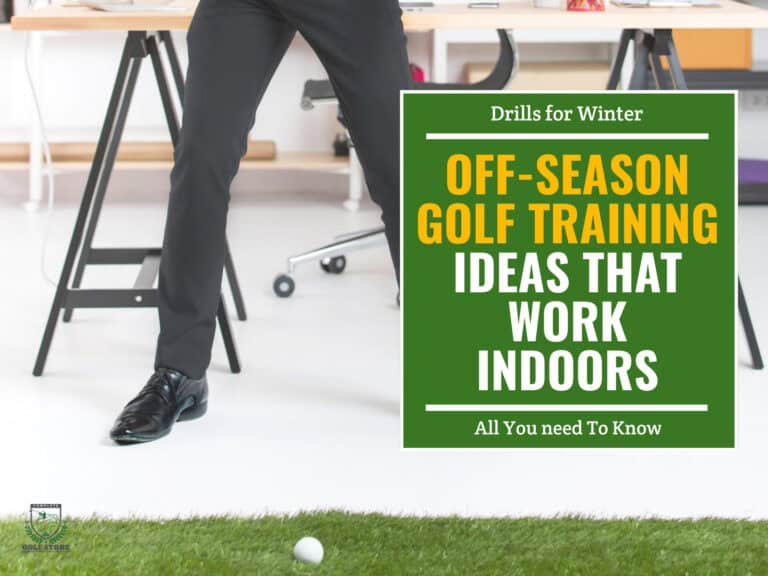
Winter might freeze the fairways, but it doesn’t have to freeze your progress. Cold weather and short days are no reason to lose your swing. Instead, they’re the perfect time to refine your game indoors. Every smooth swing begins long before you strike a ball, and this season offers a quiet window to build better habits.
Turn your living room, garage or hallway into a small training zone. You don’t need high-end gear—just a mirror, a mat, a few foam balls, and steady focus. A handful of consistent reps each day keeps your timing sharp and your confidence strong.
Short sessions, clear focus, lasting progress—that’s how you keep your swing alive when the weather says stop.
- 1) Quick-Start Winter Indoor Routine (20 Minutes)
- 2) Space & Gear That Work in Small Homes
- 3) Mirror-Based Swing Training That Travels to Spring
- 4) Putting & Short-Game Indoors (Score Protection)
- 5) Ball-Flight–Free Skill Builders (No Net Required)
- 6) Mobility, Strength, Balance: Golf Fitness That Fits Your Living Room
- 7) Data-Driven Practice With Simulators & Apps
- 8) Weekly Plan & Progress Tracking
- 9) Common Indoor Practice Mistakes (And Quick Fixes)
-
10)
Frequently Asked Questions
- 10.1) How can I simulate bunker or rough practice indoors without sand?
- 10.2) What footwear should I use for indoor training?
- 10.3) How do I keep noise down in an apartment while practicing?
- 10.4) What’s a safe warm-up when the house is cold?
- 10.5) What’s the best sub-$50 indoor kit to start today?
- 10.6) How do I practice green-reading indoors?
- 11) Final Thoughts
Quick-Start Winter Indoor Routine (20 Minutes)
This 20-minute plan keeps your rhythm, flexibility and feel alive using simple moves you can do in a living room, garage or hallway.
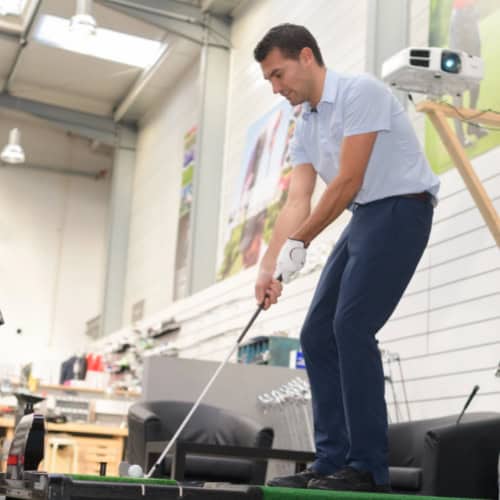
5 Minutes — Mirror Setup & Posture
Stand face-on to a mirror, then down-the-line. Check grip, spine tilt and ball position. Hold the finish for a beat so you feel balance. Say it to yourself—keep it simple—and let the shoulders hang, not strain.
5 Minutes — Takeaway → Top → Impact (Slow → Smooth)
Now groove the sequence with three slow reps per minute. Glide the club back, set the top then rehearse impact with quiet feet and steady head. Hear your own cue: “hips open, pressure forward.”
5 Minutes — Putting Mat: Start Line & 2-Foot Lag Circle
Place a coin as a start-line gate. Roll ten putts through it. Then build a two-foot circle with tees or tape and die the ball inside the ring. If your carpet runs wild, add a book under one edge to mimic a gentle break.
3 Minutes — Mobility Flow (Hips, Shoulders, Hamstrings)
Loosen first, swing better later. Do hip openers, shoulder circles and a hamstring hinge. Keep breathing easy. Aim for range, not pain.
2 Minutes — Balance & Tempo Breaths
Finish on one leg, eyes soft. Count a slow inhale on the backswing, exhale to “impact.” Switch legs and repeat. Quiet mind, stable base, ready for winter golf without leaving the hallway.
Set a 20-minute timer and stop on the bell. Consistency beats marathons for indoor golf drills and seasonal practice.
Space & Gear That Work in Small Homes

You don’t need a garage bay or country club setup to train through winter. A few square feet and some creativity go a long way. The key is safety, feedback and comfort, without wrecking walls or furniture.
Low-Space Setup Essentials
Start with clearance. If you can take a half backswing without brushing the ceiling, you’re good. Use soft lighting so shadows don’t mess with your perception. A mirror is non-negotiable: place one face-on and another down-the-line if possible. These angles reveal posture, path and tempo without hitting a single ball.
Keep your stance area flat and non-slip. A yoga mat under your hitting zone reduces noise and helps stability. Tape a “strike line” on the floor to visualize ball position and swing path.
Budget-Friendly Tools & Smart Hacks
Forget fancy simulators for now; simple tools do wonders.
- Putting mat or carpet lane for stroke work.
- Foam or paper balls for safe contact feedback.
- Alignment sticks or wooden dowels to build checkpoints.
- Open magazine under your feet to find natural balance.
- Sneaker or coffee mug as a putting or chipping target.
Each item helps your body learn positions and motion without needing a real range.
If you want to level up, grab training aids like the Orange Whip for rhythm, SuperSpeed sticks for swing speed or a Divot Board for low-point awareness. Add a TRX or resistance bands to tie in golf-specific strength work. Every one of these fits in a closet.
Simulator & Data Options (Trackman-Style)
If you have room and budget, a golf simulator changes everything. Sims give real numbers on club path, face angle, spin, and low point. That’s gold in the off-season.
Virtual-course play also keeps your mind sharp and practice fun when the world outside is covered in snow. But if tech isn’t your lane, your phone camera and a mirror give plenty of feedback. You’ll still learn what matters: where the club travels and how the body supports it.
Mirror-Based Swing Training That Travels to Spring
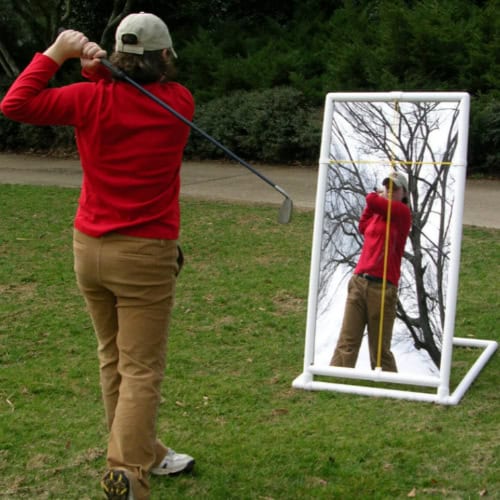
Mirror training is the secret weapon for winter golf. It builds awareness, rhythm and muscle memory that stick once the snow melts.
Posture & Setup (Build the Base)
Stand tall, relax the knees and let your arms hang naturally. Place a mirror face-on, another down-the-line if possible. Watch your spine angle, grip and balance points.
Try the DEAD drill; no club first, then lead arm, then full swing. Feel the load, shift, and post. Slip an open magazine under your feet to sense even pressure across the soles. Your body learns balance faster that way.
Close your eyes during a few slow swings. You’ll feel weight shift from trail to lead side more clearly than you’ll ever see it.
Takeaway to Top (Sequence Over Speed)
Keep the clubhead outside your hands halfway back. The shoulders and chest should do the moving, not your hands.
Try the “look, look, look” method: one glance face-on, one down-the-line, one at the top. Each checkpoint connects the right feels to the right visuals.
When you reach the top, your hands should hover near your trail shoulder; it’s simple, compact and powerful.
Impact & Finish (Pressure Forward)
Rehearse the impact fix: hips open, chest facing target, pressure forward, shaft leaning slightly toward the target. You’re not hitting a ball, just carving the right picture into your body’s memory.
For feedback, stand with your forehead gently touching a wall. Swing to impact while keeping your head still. Feel your hips drive forward without swaying.
Then, let it flow to the finish: weight on your front side, belt buckle facing the mirror. Repeat until the finish feels as natural as the setup.
Keep your mirror work short and deliberate—10 to 15 minutes, max. When spring comes, that reflection will show a different golfer staring back.
Putting & Short-Game Indoors (Score Protection)
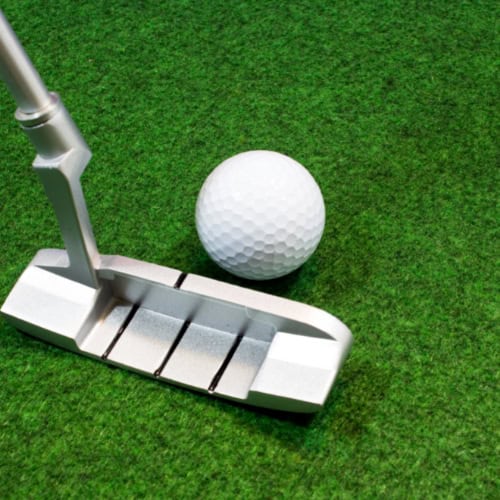
When you can’t hit full shots, focus on what you can control: your putting and short game. Use simple tools, minimal space and a little creativity to build touch, precision and confidence.
Stroke, Start Line and Distance Control
Use a putting mat or smooth carpet to focus on starting the ball on line.
Set two tees slightly wider than a ball and roll putts through them to train accuracy. Next, create a two-foot “lag circle” and practice stopping the ball inside it with soft, controlled strokes; aim for consistency over perfection.
Vary your distances: one foot, then three feet, and notice how grip pressure and stroke rhythm change. If putts feel tense, loosen up; if they lack energy, firm your hold slightly. Each roll helps you build better feel, pace and confidence for when greens reopen.
Takeaway & Chip Patterns
Start with a “sneaker-push” takeaway: place a shoe behind the ball and gently push it back with your club to train a smooth, one-piece motion and steady wrists.
For chipping, stand with feet together and use a 7- or 8-iron to make half-swings, striking a consistent spot just ahead of the ball to produce a slight draw.
In limited space, set foam balls; they provide realistic feedback and keep practice safe. Keep every move smooth, steady and balanced.
If you want a complete breakdown of setup, club selection, trajectory control, and common mistakes, check out everything you need to know to chip like a pro.
Keep these short-game drills short but frequent. A little bit each day, even in tight spaces, will pay off when the season kicks off.
Ball-Flight–Free Skill Builders (No Net Required)

Not every golf drill requires launching balls into the air. With a little creativity and minimal space, you can still make major strides in your game without worrying about ball flight. Focus on the fundamentals, and the ball will do the rest when you’re back outside.
Impact Awareness & Low Point
Focus on the ground. Use a piece of tape or a marker line on your mat. The goal is to strike just after the line, hitting the turf with a clean, controlled motion. It’s the best way to train your body for a solid low point.
To get more specific, you can also use a Divot Board. With each swing, the board provides visual feedback, helping you correct your low-point accuracy. Remember, your goal is consistency. The more you practice hitting that exact spot, the more solid your contact will feel when the ball is back in play.
Clubface & Strike Location Control
You don’t need a full swing to teach your hands how to control the clubface. Start by placing a piece of tape or spray on the clubface. The idea is simple: learn to hit the ball in the sweet spot every time.
Now, set up your target. Use your foam balls and deliberately hit for either the heel or toe of the clubface. Try alternating sides to educate your hands on how to adjust for perfect contact. Understanding how the clubface reacts when you strike off-center is key to improving your control.
Mobility, Strength, Balance: Golf Fitness That Fits Your Living Room
You can improve your swing year-round by focusing on mobility, strength and balance. These exercises don’t require a gym, just space, consistency and a little focus.
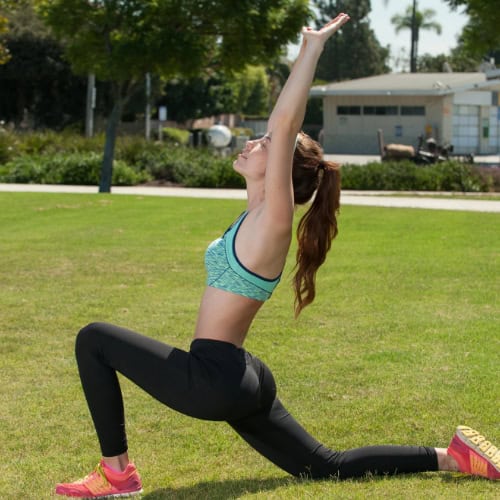
Mobility & Injury Prevention
In the winter, your body can stiffen up fast. Start your day with a few stretches to loosen your hips, shoulders and hamstrings.
Do a simple hip flexor stretch to help with rotation. Focus on shoulders next: do circles, both forward and backward, to keep them mobile. After that, spend a minute or two stretching your hamstrings with some standing toe touches.
Repeat these stretches morning, midday, and night. The goal is to stay limber, so when you pick up a club again, you feel loose and ready to move.
Strength & Speed (Safely)
You don’t need a gym to build golf strength. Focus on core circuits for stability and use resistance bands for squats or shoulder presses to boost balance and power in your swing.
Add Orange Whip sessions to improve tempo, flexibility and muscle activation, especially after time away from the course. For swing speed, follow SuperSpeed training protocols using lightweight sticks to safely increase velocity. Start slow and progress gradually.
Balance & Footwork
Without a stable foundation, the rest of your swing falls apart. Practice a single-leg stance and use tempo breaths. Stand on one leg, breathe in as you load and exhale as you extend. Do this for a minute on each leg, and switch between feet.
Use a transition footwork drill by simulating your swing in slow motion while focusing on shifting your weight from back to front. Picture yourself finishing the swing on one leg, balanced and still. This drill builds stability and teaches your body to transfer weight naturally.
Data-Driven Practice With Simulators & Apps
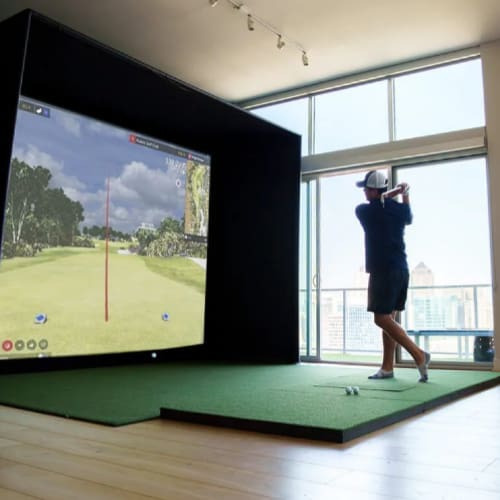
The best way to speed up your progress is to get precise data on your swing. By structuring your practice and tracking your metrics, you can build a swing that’s both effective and repeatable.
Structuring a Sim Session: Calibrate, Drill Blocks, Skills Challenges
Start by calibrating your setup. If you’re using a simulator, confirm that it’s accurately tracking club speed, ball speed and trajectory. If you don’t have a sim, use your smartphone camera instead; record swings from face-on and down-the-line angles to capture full motion.
Next, divide your session into focused drills. Work through swing phases (the takeaway, top and impact) using slow, controlled motions before building speed. Review your form in video feedback to maintain consistency.
Finish with skills challenges like matching low-point control or club speed goals. Tracking a few key metrics each session helps you identify patterns, monitor improvement and make your practice more deliberate and measurable.
Key Metrics to Track: Club Speed, Face-to-Path, Dynamic Loft, Spin Loft, Low Point
Track your club speed and face-to-path numbers. This tells you if your swing is efficient, helping you understand the speed and direction of your club.
Next, monitor dynamic loft and spin loft. These two are critical for understanding your ball flight and trajectory. Too much loft can result in high, short shots, while too little loft can lead to low, weak shots.
Finally, track your low point. Inconsistent contact leads to poor ball-striking. By working on hitting the same low point consistently, you’ll improve your ground contact, which leads to cleaner strikes.
Home Alternatives if You’re Screen-Free: Video, Mirrors, Wrist Sensors
Not everyone has a simulator, and that’s okay. You can still measure your progress. Use video to capture your swing and analyze the key moments.
Another effective tool is a wrist sensor like HackMotion. It gives you feedback on your wrist angles throughout the swing, showing you where you need to adjust.
Mirrors are your best friend here. They provide real-time feedback, helping you monitor your posture and sequence.

Weekly Plan & Progress Tracking
A clear plan and the ability to track progress will keep you engaged and focused. The more structured your practice sessions are, the better your results will be.
Sample 7-Day Winter Schedule (10–30 Minutes/Day)
When you’re working with limited time and space, it’s important to make every minute count. Here’s a weekly schedule that maximizes your practice sessions:
- Day 1: Mirror setup/posture check (5 min), takeaway-to-top sequence (5 min), mobility flow (hips/shoulders) (3 min), balance drills (2 min)
- Day 2: Putting practice (2-foot “lag circle”) (5 min), impact rehearsals (slow→fast rhythm) (5 min), single-leg stance and tempo breaths (3 min)
- Day 3: Mirror swings (hands crossed, eyes closed) (10 min), core stability exercises (5 min), putting mat start line drills (5 min)
- Day 4: Mobility flow (hips/hamstrings) (5 min), takeaway to top sequence (5 min), balance drills (single-leg) (5 min)
- Day 5: Putting practice (gate drills) (5 min), impact rehearsals (pressure forward) (5 min), strength work (TRX or bodyweight) (5 min)
- Day 6: Mirror posture check (5 min), sequence over speed drills (5 min), putting distance control (5 min)
- Day 7: Full mobility/stretch session (10 min), rhythm practice with foam balls (5 min), putting lag circle (5 min)
This schedule keeps things fresh and varied while focusing on the key areas of your game: posture, balance, mobility, and putting.
Clear Benchmarks & Simple Logs
Tracking progress doesn’t have to be complicated. A simple log will do. Here’s what you should measure:
- Reps per day: Record how many mirror swings or putting repetitions you complete each day (e.g., 20 mirror swings/day).
- Low-point accuracy: Track how often you hit the target side of a line or mat, aiming for a higher accuracy percentage as the weeks go on.
- 2-putt distance ladder: How far you can consistently lag a putt within 2 feet of the hole. Aim for consistency here.
- Speed sessions completed: Log your club speed work (e.g., SuperSpeed protocols). Keep track of how often you do speed-based drills.
Small daily blocks (10–20 minutes) compound better than long, sporadic sessions. Consistency is where the magic happens. Don’t overcomplicate things—focus on steady progress and enjoy the journey.
Common Indoor Practice Mistakes (And Quick Fixes)
When practicing indoors, it’s easy to get caught up in habits that hinder progress. Knowing what to avoid and how to correct it can make all the difference.
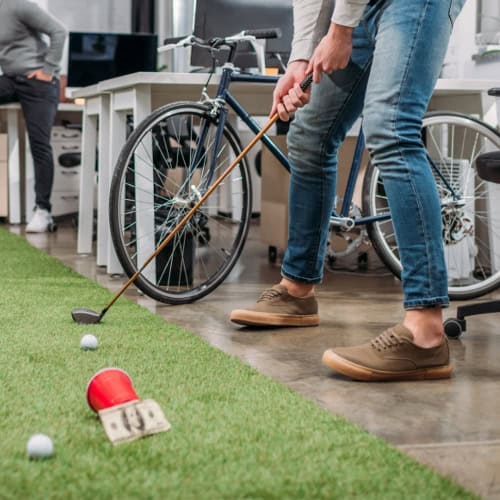
Chasing Ball Flight Instead of Sequence/Posture/Balance
It’s tempting to focus on how the ball reacts to your shots. But if you’re practicing indoors without a net or feedback, that can lead to poor habits.
Instead, focus on perfecting your setup, posture and swing sequence. Use mirrors for instant feedback, making sure each movement is precise.
Skipping Mobility
Mobility is often the first thing people cut from their indoor practice routines. However, skipping mobility work can lead to stiffness and poor rotation.
Dedicate time each session to mobility drills, like stretching your hips, shoulders and hamstrings. Add a few dynamic stretches before practicing to ensure fluidity and better swing mechanics.
Ignoring Safety/Space Limits
Don’t try to force a full swing in tight spaces. Overhead clearance, safety and space limits matter. Use foam balls and keep a designated strike zone. A small, safe area is perfect for mirror work, posture checks and slow, controlled swings.
Remember, quality over quantity; avoid any practice that could damage walls or furniture, and make sure you have enough space to move freely without obstruction.
Speed Work Without Structure
Speed drills are fantastic for building power, but they need to be structured. Going full throttle without a plan can lead to injury and poor technique. Follow progressive protocols like SuperSpeed Golf, which use a structured system to increase clubhead speed gradually.
Speed without a plan is a recipe for poor habits and frustration. Start slow, then work your way up as your mechanics improve.
Frequently Asked Questions
Here are some common questions that can help enhance your indoor practice routine and make it more effective as you work on your game at home.
How can I simulate bunker or rough practice indoors without sand?
To mimic those tough bunker or rough lies, fold a bath towel or use a dense rug under the ball. This setup helps you practice steeper, more committed strikes with foam balls. The thicker the material, the more resistance you’ll feel, making your practice more game-realistic.
What footwear should I use for indoor training?
For mirror-based swing drills, going barefoot is ideal to improve your balance and body awareness. For putting or strength training, flat, grippy sneakers provide a solid base, ensuring stability while you focus on technique and control.
How do I keep noise down in an apartment while practicing?
To minimize noise, lay a yoga mat beneath your hitting or putting mat. This absorbs some of the impact. Also, use foam or plastic balls, which are quieter than regular ones. For strength training, try to schedule those sessions during the day to avoid disturbing others.
What’s a safe warm-up when the house is cold?
Start with light cardio to get the blood flowing. Use stairs or shadow jump rope for two minutes. Follow up with dynamic stretches, like hip and shoulder circles, to loosen up. Finish with 10 slow mirror swings to prepare your muscles for the main workout.
What’s the best sub-$50 indoor kit to start today?
A basic setup for under $50 includes a putting mat (or just a carpet lane), two alignment sticks or dowels, face tape or spray for feedback, painter’s tape for alignment, foam balls for safety, and a full-length mirror to monitor your form.
How do I practice green-reading indoors?
Create slopes by placing magazines under the edges of your putting mat. Roll a few balls and observe how they break. Map the starting lines, then adjust the speed of your putts to simulate realistic green conditions.
Final Thoughts
Winter doesn’t have to mean the end of your progress. By focusing on simple, repeatable exercises that fit within limited space, you can keep your game sharp. Whether it’s refining your mirror mechanics, improving your putting accuracy or working on golf-specific mobility and strength, the key is consistency.
Short, frequent practice sessions that incorporate drills and strength-building exercises can go a long way in maintaining and even enhancing your skills.
When spring arrives, you won’t be starting from scratch; you’ll pick up right where you left off. With the right mindset and a bit of effort during the winter months, you’ll be ready to hit the ground running.
Happy golfing!