



Every golfer hits a wall. You swing, grind and still watch that same slice drift away. So you start wondering if it’s time to change your golf swing. That choice can help your game (or hurt it) depending on your goals and how you go about it.
Swing changes aren’t magic. They need patience, clear targets and a plan you can stick to. Too many golfers chase tips or copy pros without asking what “better” means for them. Maybe it’s more fairways. Maybe it’s finally breaking 80.
Not every fix needs a coach, and not every tip ruins your mechanics. It depends on your goals, time and learning style. This guide keeps it simple: define what better means, know your limits and pick the best path—DIY, coaching or a mix of both.
- 1) The Short Answer: Lessons vs Self-Taught for Golf Swing Changes
- 2) Clarify Goals, Constraints and Skills First
- 3) DIY Golf Swing Changes: Pros, Cons and a Simple Process
- 4) Professional Coaching: Efficiency, ROI and Fit
- 5) Mechanics vs Intentions: What to Change (and When)
- 6) Avoid the Big Pitfalls That Derail Improvement
- 7) The Hybrid Plan Most Golfers Should Use
- 8) Frequently Asked Questions
- 9) Final Thoughts
The Short Answer: Lessons vs Self-Taught for Golf Swing Changes
You can get better without a coach, but you’ll probably get there slower. Lessons buy efficiency. A good instructor trims months of trial and error, showing you what matters and what doesn’t. On the other hand, teaching yourself builds ownership. You learn through failure, which makes every small win feel earned.
Still, there’s a line between independence and stubbornness. Many golfers overhaul everything at once (grip, stance, takeaway) then wonder why their contact vanishes. Big changes rarely stick because your body rebels. It’s like trying to rewrite your signature overnight. Keep the good, fix the one or two moves that hurt your consistency.
Think of it as finding your “sweet spot of change.” Enough adjustment to improve, but not so much that you lose your identity as a player. The best golfers stay true to their swing DNA; they just make smarter edits.

Clarify Goals, Constraints and Skills First
Before you start changing your golf swing, know what you’re chasing. “Getting better” sounds nice, but it’s too fuzzy. Break it down: do you want to break 90, stop slicing or just enjoy hitting the center of the clubface more often? Each goal demands a different kind of work.
Then, face your constraints. How much time can you really practice each week? How much money are you willing to put into lessons or tools? Golf doesn’t care about your schedule, but your plan should. A two-hour practice plan won’t help if you only have 20 minutes on weekdays.
Next, take inventory of your current skills. List your common misses, strengths and shot patterns. Notice what actually affects your score. Many golfers chase cosmetic fixes like prettier backswings while ignoring weak wedges or poor tempo that costs strokes.
Finally, keep your focus on transferable skills. These are moves that hold up under pressure: centered contact, balance and awareness of your clubface. Pretty swings don’t win rounds; repeatable ones do.
DIY Golf Swing Changes: Pros, Cons and a Simple Process
Changing your swing on your own can be both freeing and frustrating. You control your time, pace and focus, but you also risk chasing fixes that don’t fix much. Doing it yourself works best when you have structure, patience and a clear target.

Advantages and Risks
The biggest upside is control. You set the plan, decide what to work on and adjust as you learn. That freedom makes practice more enjoyable. You also save money and build a stronger understanding of your swing. When you figure out why the ball curves left or flies thin, the learning sticks.
The danger comes when you mistake knowledge for insight. Watching a dozen YouTube videos won’t fix your slice if you don’t know what your swing needs. Without feedback, you can groove bad habits that feel right but aren’t. Self-taught golfers often chase too many ideas, confuse feel with real and stall out.
A Short DIY Workflow
Keep it simple. Pick one problem and one cause at a time. For example, if you’re hitting behind the ball, focus on contact—not everything else. Film a few swings, then compare what you feel to what you see. Video is your mirror; it tells the truth without ego.
Once you identify the move you want to change, build short, focused sessions:
- Start slow. Hit half shots with a clear cue like “finish balanced” or “brush the grass after the ball.”
- Add pressure. Mix in different clubs or targets once the move feels natural.
- Track progress. Use ball flight and contact quality as your guide, not just how the swing looks.
Self-Discovery Wins
Some of the best breakthroughs happen when you stop thinking like a student and start experimenting. Maybe you feel like swinging “softer” makes you hit it farther. Maybe aiming more right fixes your slice. Trust those discoveries—they’re data, not luck.
Still, don’t reinvent the wheel every week. Give each concept time to work before moving on. Structure beats randomness. Golf rewards the grinder who tests one idea until it either breaks or holds up. And when it holds, you’ll know that improvement came from you, not a quick fix.
Professional Coaching: Efficiency, ROI and Fit
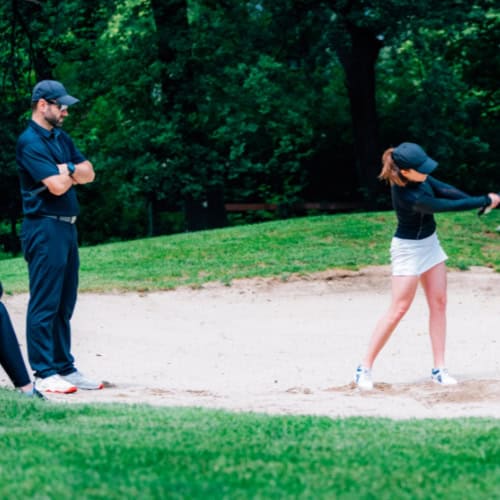
Hiring a golf coach can feel like investing in your own shortcut. A good one trims the learning curve by showing you where effort pays off and where it’s wasted. Instead of tinkering in the dark, you get a roadmap, and someone who knows the detours.
What Good Coaching Looks Like
The best coaches don’t throw ten tips at you. They watch, diagnose and sequence your learning. One fix at a time, in the right order. They explain the why behind every move and give feedback that actually makes sense. The goal a functional swing you can trust under pressure. You should leave a lesson knowing exactly what to practice, not guessing what went wrong.
A good coach also slows the process. Golfers often crave quick change, but smart teachers guard against overload. One clear thought, one repeatable feel. You learn faster by doing less, better.
Costs and Return on Improvement

Lessons aren’t cheap, but wasted range balls aren’t either. Local instructors might charge $60–$150 an hour, while elite schools can cost thousands. The real question isn’t the price—it’s the return. If a few hundred dollars shave five strokes off your game, that’s value. A coach who targets your biggest leaks (contact, direction or decision-making) delivers the best ROI.
Improvement also compounds. When you work with a coach who measures progress, you fix root causes instead of chasing symptoms. That’s where the investment pays off: fewer wasted reps and faster scoring gains.
Find and Vet the Right Instructor
Choosing the right coach matters as much as taking lessons at all. Ask around at your course or range, as word travels fast about who communicates well. Check reviews, but trust your gut. During your first chat, describe your game, your goals and your frustrations. Then listen closely to their response. If they jump straight to swing theory without asking questions, walk away.
Good coaches tailor their plan to your habits, time and goals. They’ll tell you how long change might take and how to track progress. The right fit doesn’t just fix your swing, but builds trust, which turns lessons into lasting improvement.
If you want a deeper plan for getting more from every session, the maximize golf lesson value guide breaks down how to prepare, what to focus on, and how to track improvement so coaching actually sticks and delivers a return.
Mechanics vs Intentions: What to Change (and When)
Every golfer hits a fork in the road. One path leads to tweaking intention—what you think about when swinging. The other dives into mechanics—how your body actually moves. Picking the wrong one can turn progress into chaos.

Intentions shape motion. Sometimes, a simple thought fixes everything. Think “swing toward first base,” and suddenly your slice straightens. Focus on “brush the grass after the ball,” and your contact cleans up. These cues work because they direct your body without overloading your brain. You’re changing the outcome focus, not the motion itself.
Mechanical changes, though, have their place. When the clubface is miles open or your grip is so weak it can’t square up, thoughts won’t save you. That’s when you adjust fundamentals like grip, setup or pressure shift. Big flaws need real structure, not imagination.
The trick is knowing which hill to climb. If your shots start improving from a new intention, stay the course. If the problem refuses to budge, dig into mechanics with video or a coach. The sweet spot lies in balance—fix the feel first, rebuild the move only when you must.
Avoid the Big Pitfalls That Derail Improvement
Progress in golf feels fragile because it is. One small misstep—too many tips, too many swing thoughts—and your confidence collapses faster than a bad drive into a headwind. Avoiding the big pitfalls can save months of frustration.

Tip-Chasing and Overload
The temptation hits hard after a poor round. You scroll through videos, find a new “fix” and head straight to the range. For a few swings, it works. Then it fades, so you grab another tip. Before long, your swing is a jumble of half-learned ideas fighting for control. That’s the loop: quick win → fade → new tip → confusion.
Breaking it starts with discipline. Pick one focus, one feel and commit for at least a couple of weeks. Small, steady progress beats constant tinkering.
Misdiagnosis and Mixing Systems
Many golfers work on the wrong thing. They see poor contact and assume it’s rotation, when it’s really pressure shift. Or they blend advice from different coaches: one preaching “one-plane,” another “two-plane.” The mix creates chaos because each system depends on different fundamentals. Like mixing two languages mid-sentence, it just doesn’t translate.
Stick with one philosophy until you’ve proven it works or doesn’t. If you’re unsure what’s broken, use video or get an expert eye.
Expectation Creep and Emotional Toll
The mental side can wreck more swings than mechanics ever will. You start seeing small gains, then expect perfection. One bad shot feels like failure, and soon you’re chasing ghosts again. Progress isn’t linear: it’s a messy, jagged line with dips between peaks.
Protect your confidence like it’s part of your equipment. Celebrate small wins. Keep perspective. You’re not rebuilding your swing overnight, but shaping it over time. And sometimes the best progress happens when you stop forcing it.

The Hybrid Plan Most Golfers Should Use
The smartest golfers blend DIY practice with professional guidance. This hybrid plan gives you structure without the handcuffs, freedom without the guesswork.
Simple Two-Week Cycle
Break your work into short, focused blocks.
- Week 1: Focus on diagnosis. Identify one priority from a recent lesson or video check. Practice that single idea in slow, deliberate sessions. Don’t chase ball flight; chase movement quality.
- Week 2: Test it. Take that same idea to the range and course. Mix lies, targets and clubs to see if the new move holds up under pressure. Keep a notebook or phone log. Write what feels good, what fails and what repeats.
Then reset. Use your results to decide whether to stay the course, tweak or schedule another lesson. The loop keeps learning alive without chaos.
Transfer to the Course
Most players crumble when their swing thoughts leave the range. Fix that by easing the change onto the course. Start small: nine holes, casual play, no scorecard. Your only goal is execution. If the old habit creeps in, slow down, breathe and recommit to the feel.

You’ll know progress is real when you can trust the new motion on autopilot. Until then, protect it like wet cement, as it’s still setting.
Many golfers also struggle to judge whether their practice routine is balanced. The range vs course practice guide explains what each environment teaches, how to structure weekly sessions, and how to transfer skills under pressure.
Measure and Decide
Numbers don’t lie, feelings often do. Track your shot patterns: fairways hit, proximity, dispersion. Those metrics tell you whether the swing change works where it matters. If your misses shrink and your confidence grows, keep building. If not, pause and recheck your foundation with a coach.
Frequently Asked Questions
Every golfer faces new challenges when making swing changes or choosing between self-taught practice and professional guidance. We compiled answers help clear up common concerns that you might still have.
How can I tell if a swing change is too big to handle on my own?
If you lose consistency fast or can’t repeat contact after a few sessions, the change is too large. Simplify or get a coach to confirm what needs adjusting.
What’s a good way to track swing progress over time?
Use a simple system: record a few swings monthly and note ball flight, distance and strike quality. Small, steady improvements matter more than looks on camera.
How do I keep practice sessions productive?
Set one clear goal per session, like improving contact or start line. Stop once progress fades; tired swings teach bad habits.
When should I return to my old feels or moves?
If performance drops for more than a week despite smart practice, revisit what used to work. Sometimes your baseline swing just needs minor tuning.
How do I stay patient when results take time?
Focus on process, not perfection. Improvement comes in waves, so trust the work and let results follow naturally.
Final Thoughts
Changing your golf swing doesn’t have to mean tearing it down. The best players rarely rebuild—they refine. They define their goals, stay within their limits and commit to simple, measurable progress.
Before you chase a new swing, ask what you actually want from the game. Do you need a mechanical fix, or do you just need better contact and confidence? Once you answer that, the path gets clear.
If you’re going solo, keep structure. Track what works, film what doesn’t, and stay patient through the plateaus. If you’re working with a coach, find one who listens first, teaches second and moves slow enough for the change to stick.
Golf rewards clarity. The more specific your goal and process, the faster you’ll improve. The hybrid approach—lessons for direction, DIY for ownership—isn’t just efficient. It’s how most players finally stop searching and start scoring.